
20 Music Genres and Styles Compared by Rhythm and Sound
To identify a style of music, listen for where the low drum hits land and which instruments carry the tune. The time and place where the music developed can also help. Two songs can share the same four-beat count and feel different if the kick lands on every beat in one song and between beats in the other.
This guide introduces 20 names through five ways into the music, from singing and bands to club rhythms and the tools used to make sound. Start with two pairs of tracks to compare rhythm and tone. When a genre catches your ear, follow its guide for more history and recordings.
Listen for where the kick lands in four beats
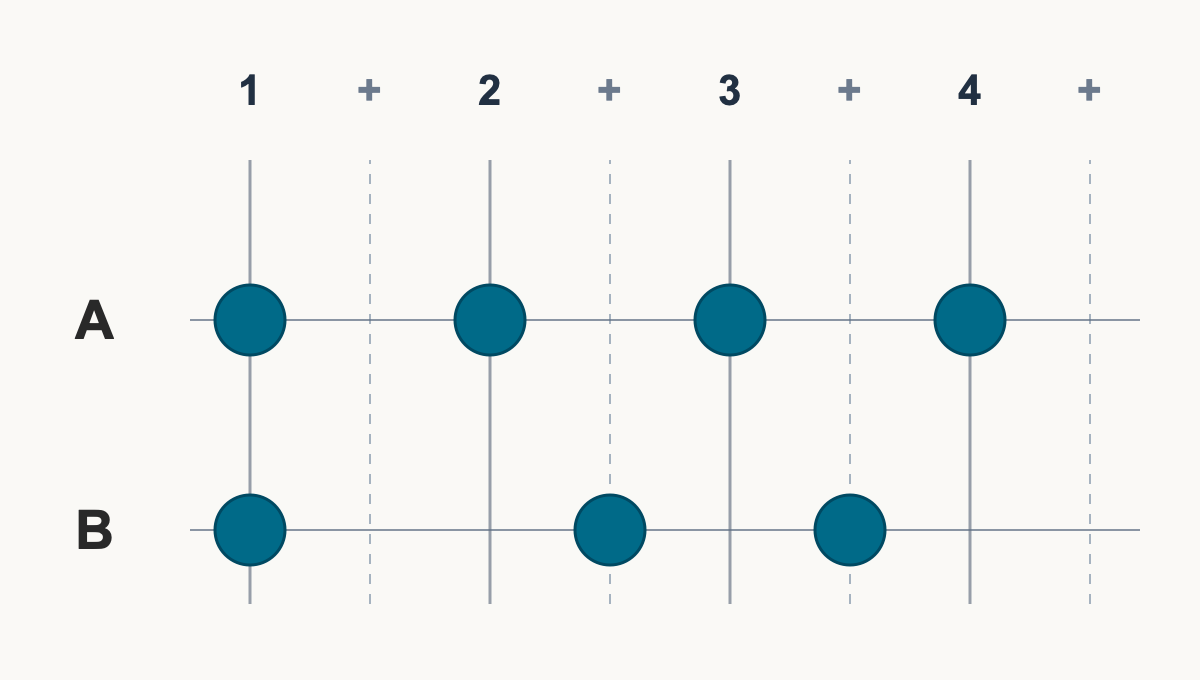
Count 1, 2, 3, 4 at even intervals. Each plus sign marks the halfway point before the next beat. In row A, a hit lands on every number. In row B, the hits land on beat 1 and halfway after beats 2 and 3. Tap your foot on the numbers and clap where you see a dot to feel the difference.
Open the official video at 17 minutes 41 seconds for “A Path of Light for the Birds.” Start counting when the short, low kick repeats. In the same video at 13 minutes 8 seconds, “The Lens Begins to Turn” plays an arpeggio, or the notes of a chord sounded in sequence. Keep tapping your foot while listening for the short drum sounds underneath it.
Rows A and B are practice patterns. Once you have heard how the drum hits relate to the beat in the two tracks, listen to the house and drum and bass examples in their own guides. Compare how the sounds are layered as well as the places where the styles developed.
References
Listen for tone and overlapping melodies
Put the drum part aside and listen to the tune. “Candy Factory Tour” is a modern track with a chiptune sound. From 17 minutes 41 seconds in the official video, try following the short electronic notes first and the repeating parts behind them second.
“Armillary Fugue” is a modern track that draws on Baroque technique. Listen from 13 minutes 8 seconds for the opening musical idea to return at another pitch or within a different layer of sound. When you switch between the two tracks, pay attention to whether you are following the sound of an instrument or the way the melodies enter.
Songs and bands in pop, rock, heavy metal and R&B
Pop covers a wide range of sounds. Start by noticing which part of the song comes back and what changes in the accompaniment when it does. Songs with a similar structure can be backed by strings, synths or a band.
In rock, listen for a short guitar phrase between vocal lines or the way a drummer drives the beat. Early rock and roll drew on blues and country music, among other traditions.
A distorted guitar riff is one feature you can listen for in heavy metal. Compare the low notes that cut off sharply with those that ring out to hear how that guitar part creates weight.
The sound described as R&B has changed over time. When comparing an older recording with a recent one, listen to the phrasing of the singer, then to the bass and drums supporting the voice.
Words and rhythm in hip-hop, blues, jazz and funk
Hip-hop grew in part out of Bronx DJs extending short passages of records for dancers and MCs performing over the music. When listening to rap, notice where the ends of lines and pauses land against the beat.
In some blues recordings, the voice and an instrument trade short phrases. In a 12-bar blues, follow how the chords change and return to the start while the singer carries on.
Jazz players may reshape the tune or rhythm as they play. After the theme, listen to how the other musicians respond when one player takes a solo.
In funk, bass, guitar and drums can lay short sounds in different places to make a groove together. Follow each part on its own to hear how a repeated phrase keeps the groove moving.
Dance and place in reggae, bossa nova, tango and disco
Reggae emerged in Jamaica and shares a background with ska and rocksteady. Follow the bass line. In recordings with short guitar or keyboard chords in the gaps, notice where they land against the beats you are tapping.
Bossa nova developed in Brazil with roots in samba. When the low guitar notes and chords fall in different places, follow the bass notes first. Then listen to the singing or the chords to hear how they fit around those notes.
Tango is a tradition of music, dance and poetry rooted in Buenos Aires and Montevideo. In a recording with a bandoneon, listen for the difference between sustained notes and short, sharp attacks.
Disco spread through dance venues in the 1970s. Where the kick keeps a steady pattern, listen for how the strings, vocals or guitar enter over it. You can track the beat and hear the song change at the same time.
References
Club sounds in house, techno, trance and drum and bass
In house, start by counting a kick on each beat. Then follow where a vocal sample or bass phrase enters. Chicago’s club history gives context for the repeated parts that kept people dancing.
Four-on-the-floor turns up in techno as well. In an early Detroit track or another techno example, listen for the moment a sound drops out of a repeating pattern or gradually changes tone.
In trance, follow a repeating melody as sounds accumulate, fall away and give way to the return of the beat. Listen near the start and again after the arrangement has changed.
Drum and bass grew in the UK alongside jungle. Follow the sustained bass and the quick drum hits separately to hear how the lower and higher sounds move.
Musical eras and methods in classical, Baroque, ambient and chiptune
Classical music can refer to a long Western art-music tradition. A soloist, a chamber group and an orchestra create different layers of sound. Listen for how many players are involved and which instruments pass the melody between them.
Baroque names a period and style within that tradition, roughly from 1600 to 1750. Listen for overlapping melodies above a foundation of bass notes and chords.
With ambient music, you can listen for how long a sound lasts and how the layers slowly change. The tone and sense of space can be as important to the experience as a tune.
Chiptune is associated with the sound chips of older game systems and computers, as well as modern ways of recreating and working with their sound. Try following the short electronic notes as melody, then bass, then percussion.
Why one piece can have several names
Names can describe a pattern you hear, a time and place, or the context of a piece. Four-on-the-floor describes the placement of drum hits, Baroque names a period and style, and game music describes where the piece is used. A track made for a game can also be jazz or chiptune because the names describe different features.
Japan’s National Diet Library classifies recordings in its historical audio collection to help people find them. Check what that collection covers when you use its categories. When you want to identify a particular recording, compare the terms used by the artist, the label and the original release.
Using the four examples in a video or stream
The four tracks featured in the listening exercises are royalty-free background music. Download them for free from their track pages. The terms allow commercial videos and streams, and credit is optional. Standalone redistribution and use for AI training are prohibited.
When editing a video, try two tracks over the same footage. Check whether you can hear the dialogue, what happens at each cut and whether the sounds from the scene still come through. A genre can help you find options and the scene can help you choose.
Pick one of the names that interests you. Listen to the same part of a track for the beat, the tune and the tone in turn. Then play another track with a similar rhythm or instrument and describe one difference you hear.
FAQ
- How many music genres are there?
The number depends on the source and how it groups music. This guide introduces 20 names as starting points for listening and finding out how a recording came about.
- How can I identify the genre of a song I have just heard?
Listen for where the low drum hits land, which instrument plays the melody and in what order the sounds enter. Check how the artist or label describes the recording.
- Can I tell house and techno apart by the four-on-the-floor beat?
Both styles can use that beat. Listen for repeated vocals and bass phrases, changes in layers and tone, and look up when and where the track was released.
- Can I use the example tracks in a monetized video?
The four original tracks featured in the listening exercises can be used in commercial videos under the usage terms. Download them for free from their track pages. Credit is optional.