
What Is Tango? Its History and How to Listen for the Bandoneon
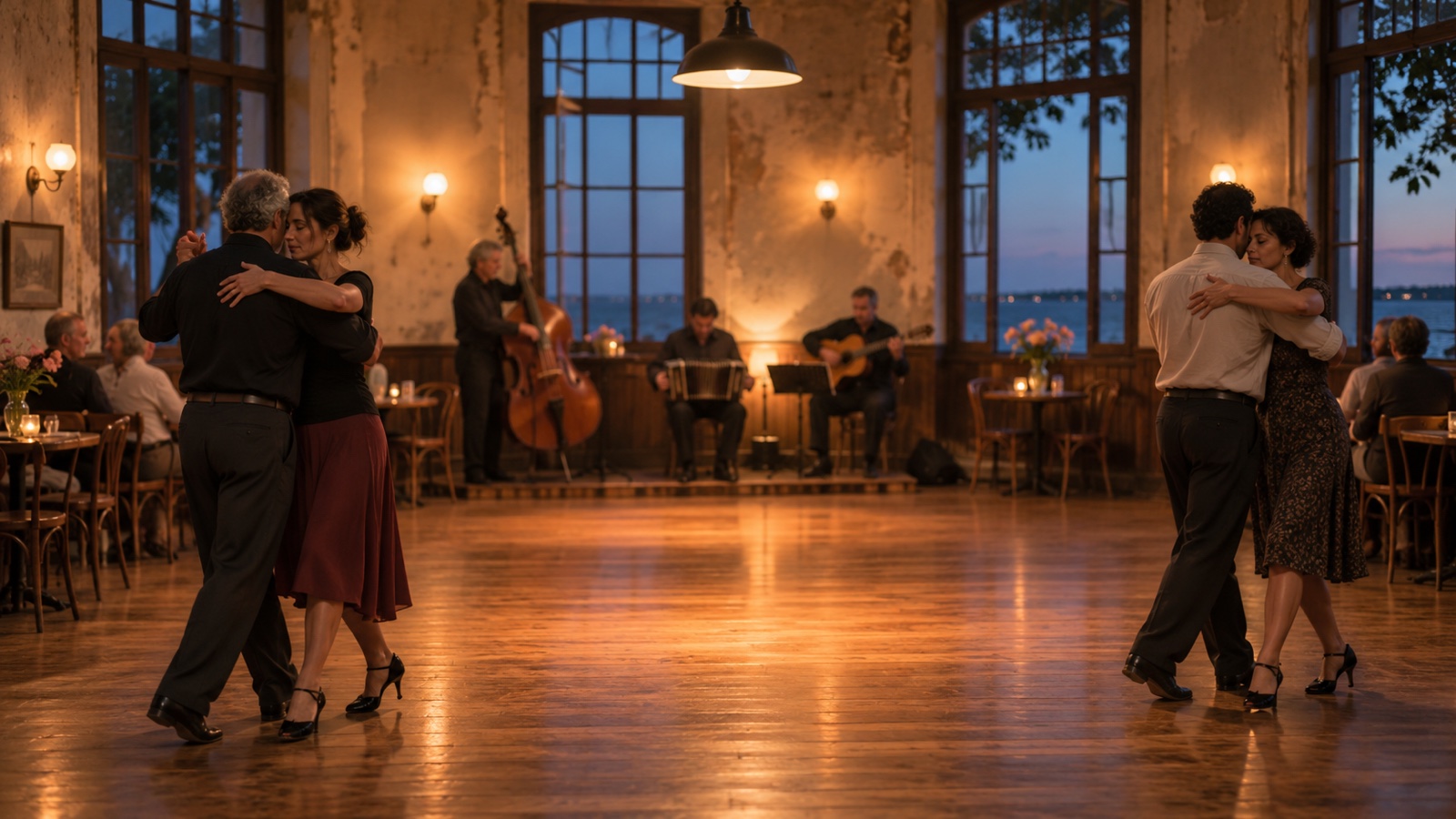
Tango is a culture that took shape in the late nineteenth century in Buenos Aires and Montevideo, on opposite banks of the Río de la Plata in South America. Music, dance, song, and poetry came together and spread through life in both cities.
The bandoneon, often heard in tango, produces sound by moving its bellows. As we follow tango's history, we will use a diagram to compare the instrument with the accordion, then listen to two tracks for the points where a bellows-driven instrument and the ensemble overlap.
Tango developed in Buenos Aires and Montevideo
In the late nineteenth century, customs and performing traditions met in the cities on both banks of the Río de la Plata. They came from European immigrants, residents of African descent, and people already living in the region. Tango developed as people in this area danced, played music, and sang poetry.
Uruguay's Ministry of Education and Culture explains that, in the early twentieth century, tango spread from the outskirts of the two capitals into their central districts as well. When listening, listen to how performers mark the beat and how the voice and instruments answer one another. Ensembles and the way a piece unfolds vary by period and style.
From La Cumparsita in 1917 to the present
A cultural guide published by the City of Montevideo says that La Cumparsita, composed by Gerardo Matos Rodríguez, was first performed in the city in 1917. In Buenos Aires, tango singer Carlos Gardel's former home is now a museum that preserves his works and materials documenting the culture of his time.
From the 1950s onward, bandoneon player and composer Astor Piazzolla expanded the possibilities of ensemble playing and composition through tango nuevo, which also incorporated elements of jazz and classical music. From social dancing in the city to songs and instrumental works, tango has been heard in many settings.
In 2009, tango, jointly nominated by Argentina and Uruguay, was inscribed on UNESCO's Representative List of the Intangible Cultural Heritage of Humanity. It continues to be passed on in cities on both banks through social dances, performances, and opportunities to learn.
A bandoneon uses air from the bellows to sound its reeds
A bandoneon sends air through the instrument by expanding and compressing the bellows at its center, causing thin metal reeds to vibrate. The player holds the instrument from both sides and selects notes with the buttons on each end. Listen from the moment a sound begins through its sustain and release, and you can hear small changes even within a long melodic line.
A 142-note tango bandoneon shown by the German Harmonica Museum has 33 buttons on the player's left and 38 on the right. On this example, the same button produces a different pitch depending on whether the bellows are compressed or expanded. Other bandoneons produce the same pitch in both directions.
Compare the bandoneon and accordion in a diagram
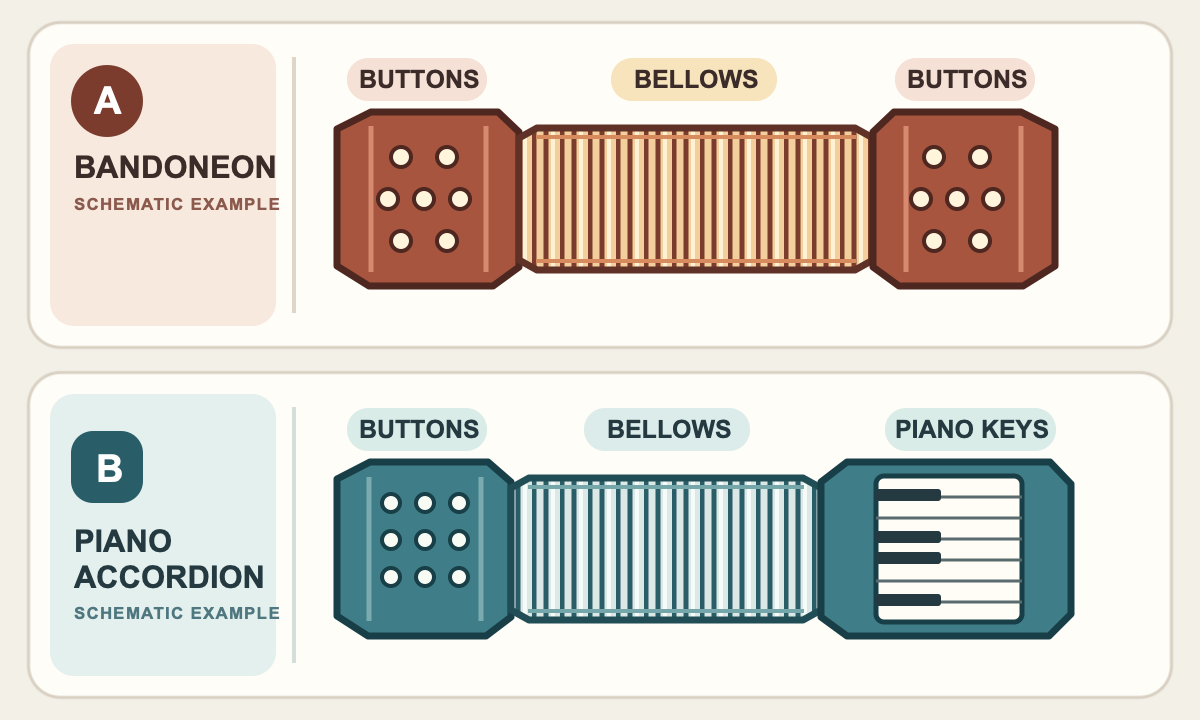
An accordion also uses its bellows to send air across metal reeds. In the piano-accordion example shown in the diagram, the player performs the melody on the right-hand keyboard and selects bass notes or chords with the left-hand buttons. The bandoneon example in the diagram uses buttons for both hands.
To tell the instruments apart, examine the controls on both sides and how their notes are arranged. Some accordions have buttons for the right hand, while other designs let the left hand play individual notes. The relationship between bellows direction and pitch also varies by model.
Follow one sound, then listen to the instruments around it
On the first listen, follow the bellows-driven instrument as its sound begins, sustains, and ends. When you find a passage with a series of short notes, compare it with a passage where the melody is held for longer.
On the second listen, shift your attention to the surrounding instruments, such as the violin. Look for passages where they play the melody together and others where a different instrument takes it over. This makes it easier to hear how a sound's role changes within the ensemble. If you would like to approach dance music by counting beats, you can also compare tango with the three beats of a waltz.
Hear accordion and bandoneon examples on our official YouTube channel
The original BGM "Cinema Billboard Tango" begins at 30:50 in the official YouTube video and runs for 4 minutes 15 seconds. Follow the melody using the accordion as your guide, then listen for its overlap with the violin and koto. The royalty-free track can be downloaded at no charge and used commercially within the terms of the usage guide. Attribution is optional. Redistribution or sale of the audio by itself and its use for AI training are prohibited.
"West Aldia - Tango del Asesino" is an unofficial fan arrangement that begins at 12:11 in the official YouTube video and runs for 2 minutes 25 seconds. First focus on the bandoneon sound, then find where it overlaps with the orchestra. This track is for listening only and cannot be downloaded or used commercially.
When listening to tango, first follow the melody played by the bellows-driven instrument, then listen again for its exchanges with the instruments around it. Even a simple comparison between clipped and sustained notes can reveal how the music's character changes within the same ensemble.
FAQ
- What kind of music is tango?
It is a culture that developed on both banks of the Río de la Plata, bringing together music, dance, song, and poetry. Ensembles and approaches to the beat vary by period and style.
- Where did tango originate?
It took shape in the late nineteenth century within the urban cultures of Buenos Aires and Montevideo. In 2009, following a joint nomination by Argentina and Uruguay, tango was inscribed on the Representative List of the Intangible Cultural Heritage of Humanity.
- What is the difference between a bandoneon and an accordion?
Both use bellows to send air across reeds. A representative tango-bandoneon example has buttons on both ends. In a common piano-accordion example, the right hand plays a keyboard and the left hand uses buttons. Other designs include button accordions.
- Can I use the featured tracks in videos or streams?
"Cinema Billboard Tango" is royalty-free, can be downloaded at no charge, and may be used commercially within the usage terms. "West Aldia - Tango del Asesino" is for listening only. Check the track page and usage guide before downloading or using a track.