
What Is Reggae? Jamaican Roots, Ska, Rocksteady and Dub
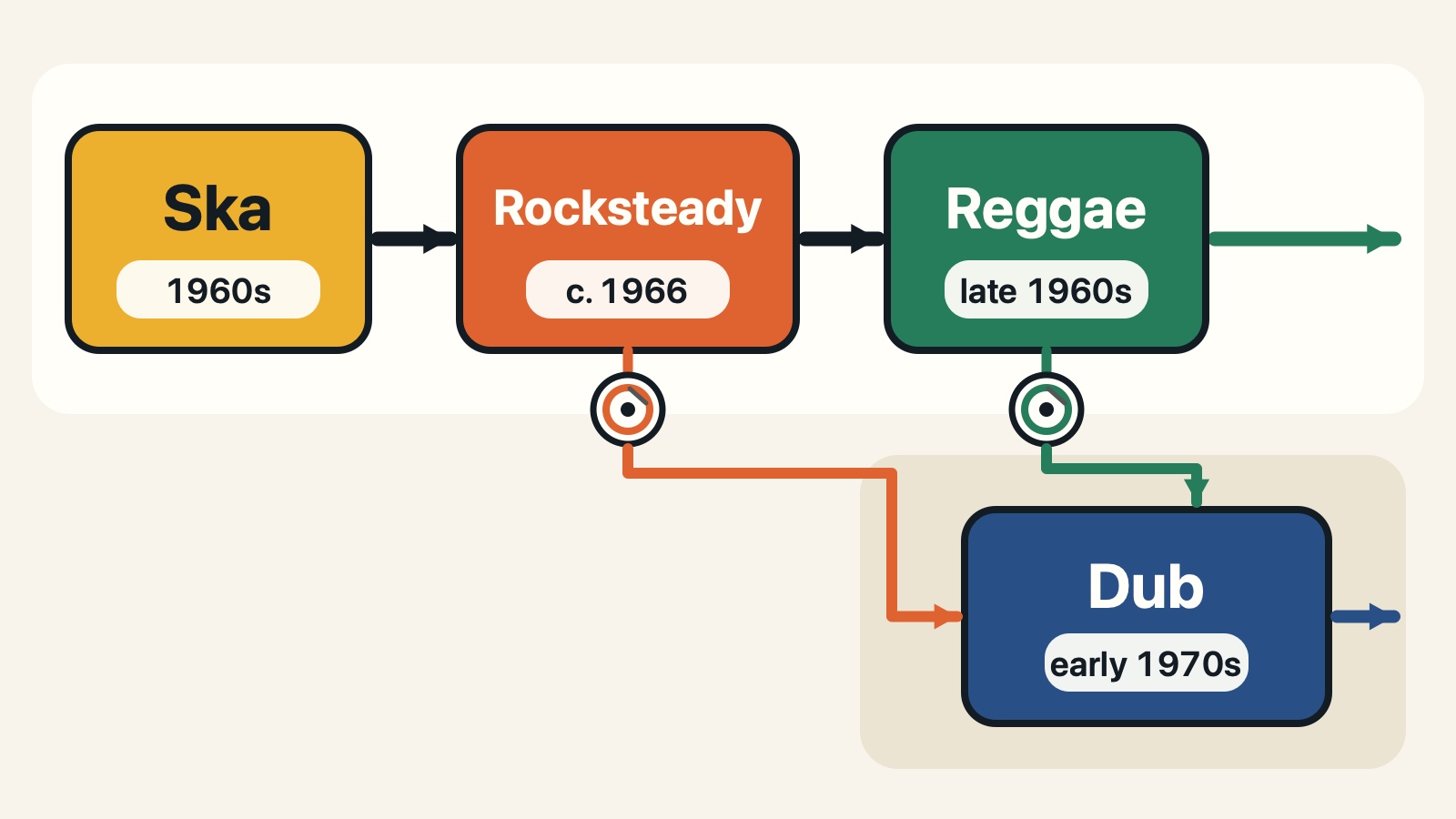
Reggae developed in Jamaica in the late 1960s, building on ska and rocksteady. Listen for short guitar or keyboard notes between the beats, then follow the bass line. Ska also uses offbeats. Compare how quickly the notes come and how much the bass stands out.
How are ska, rocksteady and reggae connected?
According to UNESCO, reggae grew in places such as West Kingston, among communities whose voices were often marginalized in society. Earlier Jamaican music combined with Caribbean rhythms and North American soul and R&B, and performance practices changed from ska through rocksteady to reggae. The Jamaican government's account explains that rocksteady had a more relaxed tempo than ska and brought melodic bass lines further forward.
These styles developed in overlapping periods. Many singers and musicians active in rocksteady also worked in reggae. The music created spaces for dancing while also carrying social messages. In 2018, “Reggae music of Jamaica” was inscribed on UNESCO's Representative List of the Intangible Cultural Heritage of Humanity.
How can you tell ska, rocksteady and reggae apart?
Tap your foot evenly as you count “1, 2, 3, 4.” Now count “1 and 2 and 3 and 4 and.” Each “and” falls on an offbeat. Listen for one short sound between the taps, then listen for the bass.
Open the Skatalites' “Guns Of Navarone,” Alton Ellis & The Flames' “Rock Steady,” and Toots & The Maytals' “Pressure Drop” in that order. Keep counting 1 to 4 with your foot for all three tracks. First choose one sound you can follow clearly and check whether it falls on the beat or between beats. Then listen only to the low end and compare the spacing of the beats and the movement of the bass. All three styles can use offbeats. Listen to where the bass and accompaniment land as well as how quickly the beats pass.
What changes in dub when the backing track is the same?
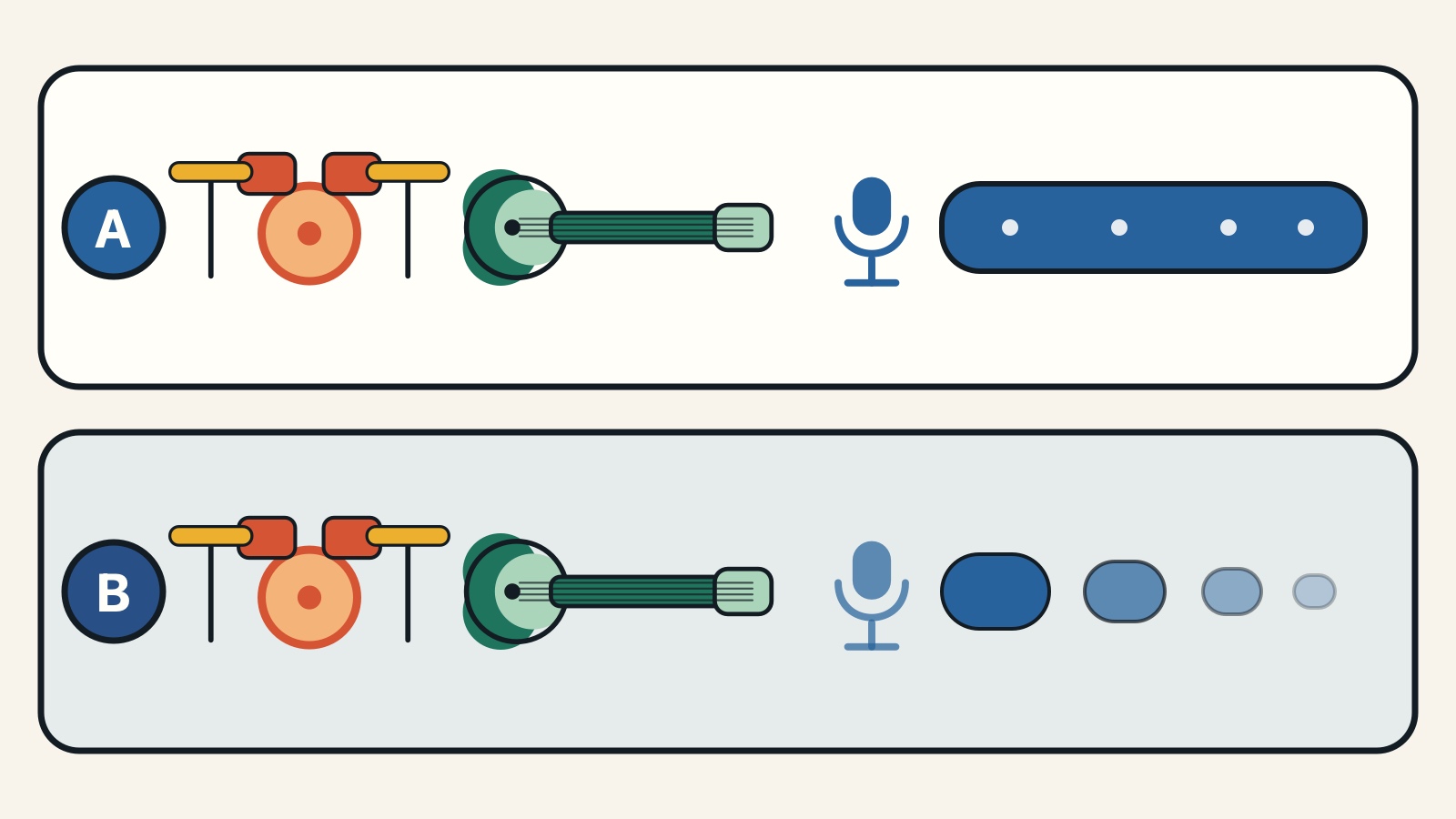
Dub developed as music made by remixing recorded material. With bass and drums as its foundation, mixers bring voices and instruments in and out, repeat sounds with echo, and reshape their decay with reverberation. In 1970s Jamaica, engineers and producers such as King Tubby developed these mixing practices. Some dubs are based on vocal songs, while others are created as works in their own right.
To compare two recordings based on the same backing track, use Jacob Miller's “Baby I Love You So” and Augustus Pablo's “King Tubby Meets the Rockers Uptown.” In the vocal track, follow the vocal phrases. In the dub, listen to the low end and the lingering sound after the voice drops out. Guillermo de Llera Blanes's analysis of the dub mix explains that delay and reverb are applied to the voice, melodica, and the guitar and organ group, while the original drums are retained and processed. The diagram is a schematic guide to this listening exercise.
Practice hearing where the guitar comes in
If the offbeat is hard to hear, first keep the beat with only your foot, then narrow your attention to the guitar. In Arcalune's game-style BGM “They Are Not Waiting For Orders,” you can start at the beginning of the track on YouTube and practice hearing whether prominent guitar sounds begin on the beat or between beats. This track is an exercise in syncopation.
This original BGM is free to download and may be used royalty-free in commercial projects under the usage guide. Credit is optional. Reselling or redistributing the audio by itself and using it for AI training are prohibited. Check the usage guide before using it. The external recordings introduced for the historical comparison are official listening links. If you want to use one in your own video or another project, check the terms set by its respective rights holder.
Keep the beat with your foot and, across the three tracks, compare one sound between the beats and the low end in turn. Then listen to the vocal track and the dub back to back to hear how the placement of the voice and lingering sound can change the impression of the same backing track.
FAQ
- Where did reggae originate?
It originated in Jamaica. West Kingston was one of its main formative areas, and reggae developed in the late 1960s through ska and rocksteady.
- What is the difference between reggae and ska?
Both can feature short offbeat accompaniment. As ska developed through rocksteady, performances with a more relaxed pulse and more prominent melodic bass lines emerged. Comparing the speed with where the bass and accompaniment fall makes the styles easier to distinguish.
- How is dub different from reggae?
Dub is a recording practice that developed alongside Jamaican reggae. It centers recorded bass and drums, brings voices and instruments in and out, and reshapes the mix with echo and reverberation.