
What Is House Music? Chicago Roots and How to Listen
House music is dance music that took shape in Chicago's clubs and DJ culture from the late 1970s into the 1980s. A four-on-the-floor kick holds the beat while bass, vocals, keyboards, and other sounds gradually change above it. When a DJ blends records, the layers of sound shift while the beat keeps flowing.
Follow house from Chicago clubs to the 1987 UK chart. Listen for three things in a track, then try them on a disco house fan arrangement from the official YouTube channel.
The kick that holds the dance beat and the repeating bass
When listening to house music, first find the steady beat you can follow with your feet. Count four beats as “1, 2, 3, 4.” A low bass-drum hit on every number is a four-on-the-floor pattern. Repeating bass joins that beat, while the way vocals, short vocal samples, keyboards, and percussion enter gives the track its character.
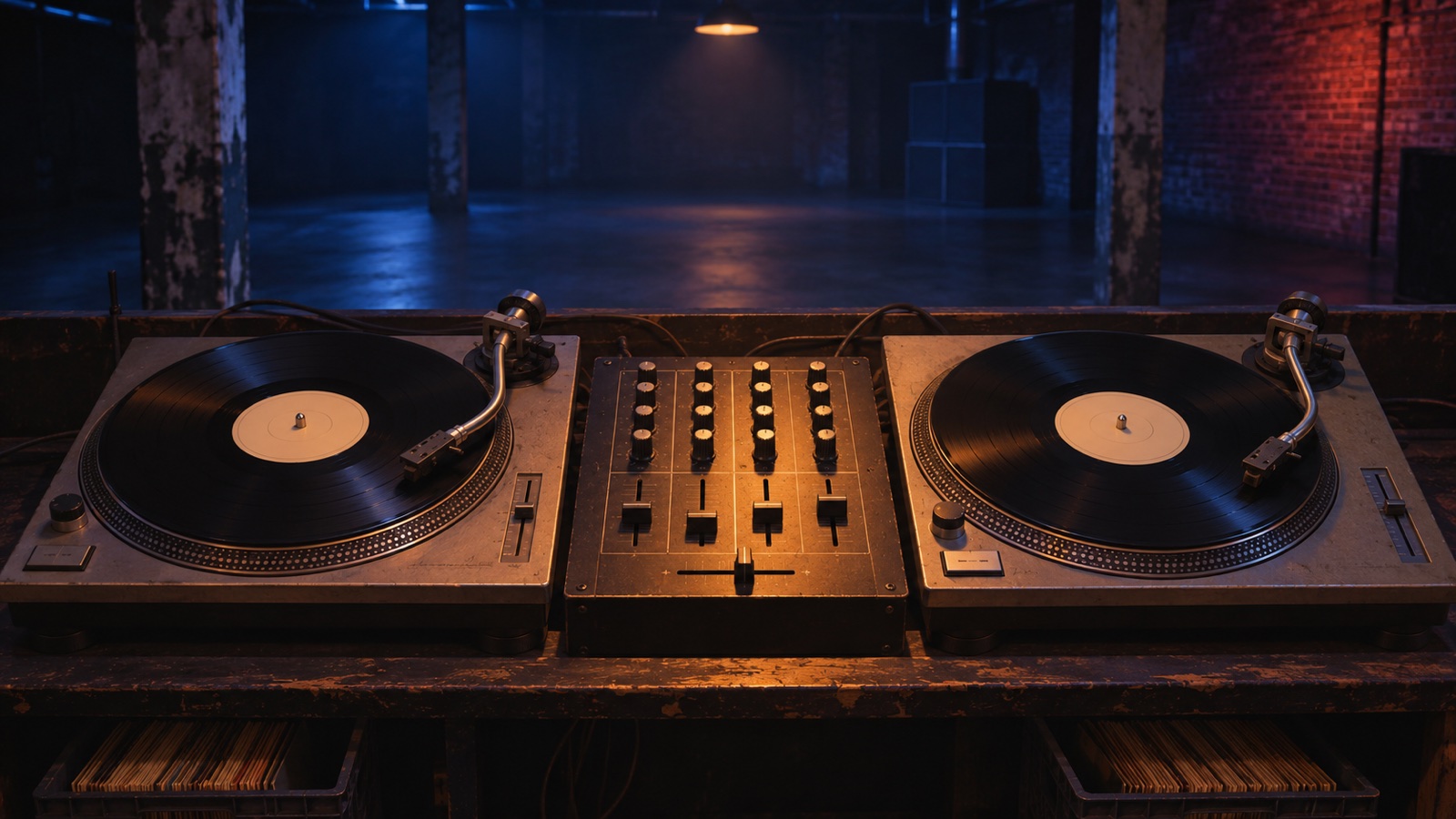
A DJ can align the beats of two records and layer the next track over the first while lowering the first track's volume. An Illinois museum displays a turntable that Frankie Knuckles used at The Warehouse in Chicago. Its account also describes his practice of building up the sound with multiple turntables.
From a Chicago club to the UK chart in 1987
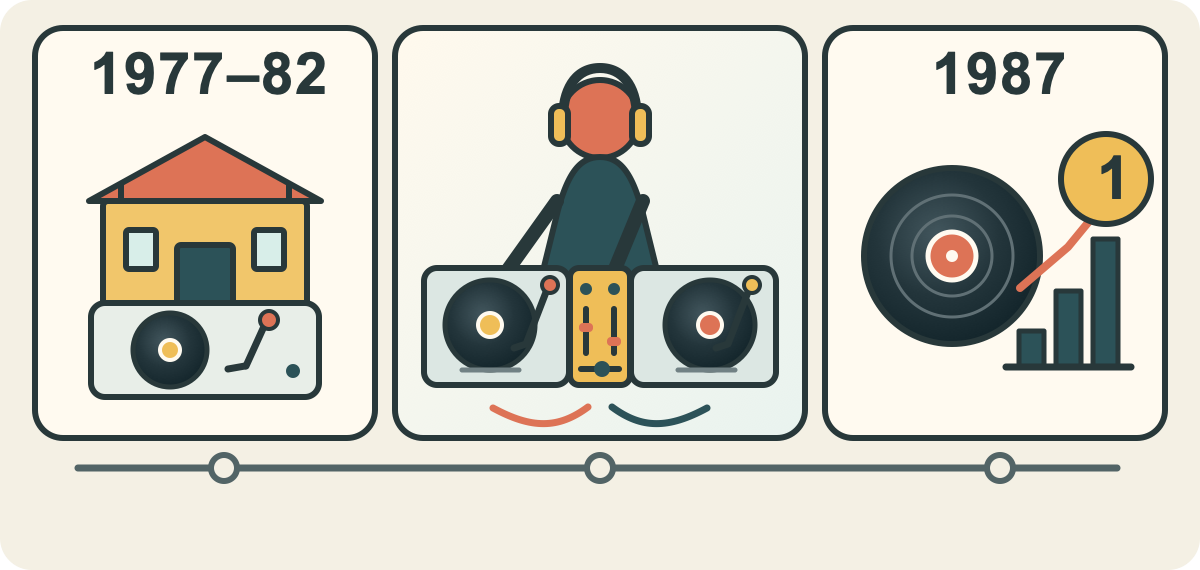
From 1977 to 1982, the Chicago building housed the dance club The Warehouse. The city's designation document describes DJ Frankie Knuckles and the Black, Latino, and LGBTQ communities that supported early house music. Disco, soul, and other music came together in a place shared by DJs playing records and people dancing.
For the week of January 18–24, 1987, “Jack Your Body” by Chicago's Steve “Silk” Hurley reached number one on the UK Singles Chart. It records how a sound nurtured in Chicago clubs reached the chart in another country.
Listen to house and Detroit techno through their clubs and sound-making
House and techno share elements you may hear in both, including a steady kick, drum machines, and synthesizers. Chicago house grew from a club history in which DJs blended records such as disco and soul, so you can listen for the way vocals and keyboards move in and out above the bass.
A Detroit history resource explains how Juan Atkins and others in the 1980s drew on a wide range of music heard on the radio, as well as synthesizers and drum machines, to expand both music production and local club spaces. When comparing tracks, listen to the repeated bass and changing electronic sounds alongside BPM, the measure of tempo.
Listen for bass, vocals or keys, and transitions
First, separate the kick from the bass. Count the beat by the low drum hits, then follow the bass as its pitch changes around them. Compare the places where the two land on the same beat with the places where the bass enters between the beats.
Next, choose a vocal or keyboard part to follow. Listen for a short vocal phrase repeating, a sustained chord, or a moment when the keys drop out.
Finally, listen before and after a transition. Find places where the melody disappears and only the beat remains, or where the bass returns. When a DJ blends two tracks, noticing what enters first and what remains until the end helps reveal how the transition works.
Hear a disco house rework from 3:38 to 6:11
“The Man with the Machine Gun - Disco House Rework” is a 2-minute-33-second fan arrangement in a six-track medley. It starts at 3:38, and the next track begins at 6:11. The public catalog describes how the arrangement sets the original bass pattern against a four-on-the-floor kick.
Listen for the kick and bass first, then the sounds above them and what changes near the end. This fan arrangement is available for streaming.
Count the beat with the four-on-the-floor pattern, then follow the bass, the vocals or keys, and the track's transitions. This lets you hear what changes while the same beat continues. In a DJ mix, compare the moments before, during, and after two tracks overlap.
FAQ
- What kind of music is house music?
It is dance music shaped in Chicago's clubs and DJ culture. Vocals, keyboards, and other sounds are layered over four-on-the-floor beats and repeating bass, while DJs connect the beats to create a continuous flow.
- What is the difference between house and techno?
Both can use four-on-the-floor rhythms and electronic instruments. Chicago house can be traced through a DJ culture that blended disco and soul, while synthesizer- and drum-machine-based production and local clubs are useful historical markers for Detroit techno.
- Is every four-on-the-floor track house music?
No. Four-on-the-floor is a pattern with a kick on all four beats of a bar, and it also appears in disco, techno, and other genres. Bass, the instruments layered above it, and the track's structure offer further clues when identifying a genre.
- What should I focus on when hearing house music for the first time?
Follow the kick and bass first, then the vocals or keyboards, and finally the transitions. Focusing on one element during each listen makes the changes within the repetition easier to hear.