What Is Baroque Music? History, Features, and Instruments in Photos and Audio
Baroque music is the name of a period and set of styles used mainly to describe Western art music from about 1600 to 1750. It did not begin everywhere in one year or end everywhere at once in 1750. The roughly 150 years include regional differences and change, so no single feature describes every work.
This article follows the development of new dramatic and instrumental forms in Italy, the places where music was performed, basso continuo, multiple melodic lines, and the difference between the harpsichord and early piano. It concludes with three modern original tracks and ways to listen separately for keyboard patterns, the transfer of a melody, and movement in the bass and above it.
How this list was chosen
- About 1600–1750 is a convenient division for understanding; regional and individual differences remain part of the explanation.
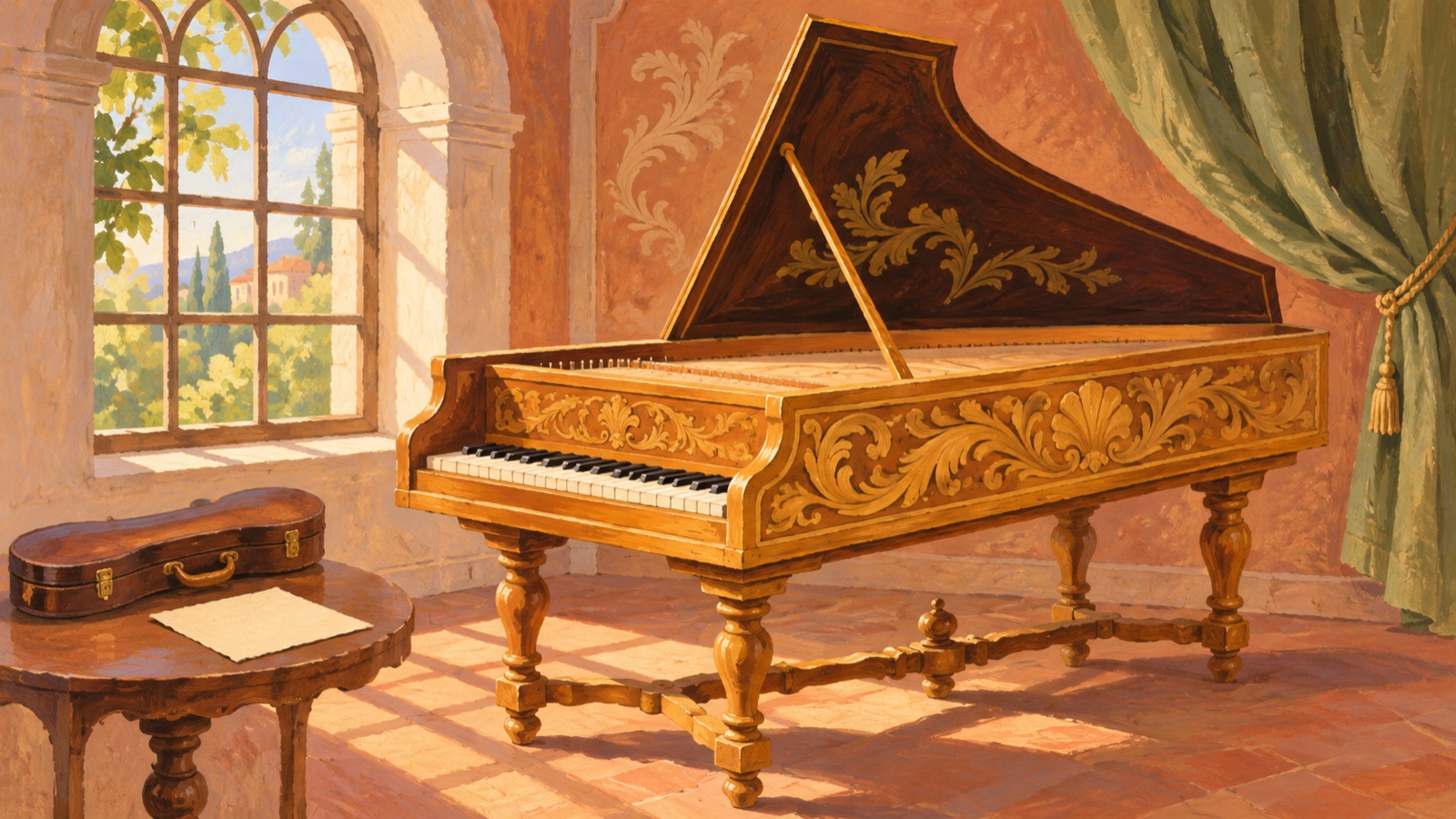
- The opening image is an illustration evoking the period, while the instrument photos in the article show actual museum objects.
- The three listening examples are modern original recordings, not works by historical composers or recordings of the pictured museum instruments.
Baroque music refers to a period and styles from about 1600 to 1750
Baroque music is not merely the name of one modern genre. It is used to describe a period of Western music history and the varied styles created within it. About 1600 to 1750 is a useful guide, but 150 years of music cannot be reduced to one method: country, city, date, and purpose all made a difference.
In the broad sense of classical music, Baroque music is included. The Classical period in music history, however, is a different period. Rather than treating Baroque as nonclassical or equating it with the Classical period, it is clearer to see broad classical music as containing several eras, one of which is Baroque.
New forms developed in Italy and spread differently by region
In Italy, forms such as opera, which joined song and drama, as well as the sonata and concerto, developed during this period. Musicians and works traveled across Europe, but the result was not one uniform music. Differences emerged according to local language, performance setting, and the role music was expected to serve.
Monteverdi offers a point of entry into the early developments, Vivaldi into later Italian instrumental music, and Bach and Handel into the later part of the era. The point is not to memorize names in order, but to understand that new operatic and instrumental forms grew in Italy and changed through exchange and regional difference.
Courts, churches, and public theaters were tied to musical work
Baroque composition was closely connected to who requested music and where it was performed. Court occasions and church worship provided work for musicians and influenced ensembles and the roles pieces served.
Public opera houses later expanded performance beyond audiences inside courts. Even within one period, music for worship and music for the stage had different purposes. When listening, consider not only sound but also the place and role for which a work was written; this helps preserve regional and individual differences instead of forcing everything into one pattern.
Contrasts between solo voice and accompaniment, or soloist and ensemble, draw the ear
As opera developed, writing in which accompaniment supported one singer's words and melody became important. Following how the singer conveys story or character while instruments support the line makes the distinct roles of melody and accompaniment easier to hear.
Instrumental music can likewise contrast a solo instrument with the full ensemble as each comes forward in turn. Listen not only for loud and soft, but for who is in front and how the ensemble answers the soloist. Not every Baroque work uses this contrast; it is one approach found within a long period.
Basso continuo builds a foundation from a bass line and chords
Basso continuo combines a melodic bass line supporting the piece with chords placed above it. A score may add figures to bass notes, allowing performers to supply chords from those indications. An important part of the method is that performers have room to determine chord shapes rather than everyone merely reproducing identically written notes.
Harpsichord or another keyboard, lute, or harp may provide chords, while a bass instrument such as cello may reinforce the bass line. This is not a fixed rule that harpsichord plus cello always equals continuo. Follow how the low notes continue, then how chords and melodies move above them, and the accompaniment becomes a foundation rather than one undifferentiated background.
Following several melodies at once reveals how the music is built
Polyphony is writing in which multiple independent melodies proceed at once. Rather than one main melody with everything else as accompaniment, separate lines overlap, pass material, and answer one another. At first, look for the moment a short melody appears at another pitch or in another voice.
Multiple simultaneous melodies are not unique to Baroque music, and a piece with many audible notes is not automatically a fugue. In a fugue, focus not on speed or note count but on where the same subject enters and how it passes to another voice.
A harpsichord is a keyboard instrument that plucks strings
Pressing a harpsichord key causes an internal string to be plucked. The instrument could supply chords in basso continuo and also serve as a solo instrument. Do not assume it sounds like a modern piano merely because both have keyboards; listen to the onset produced by plucking a string.
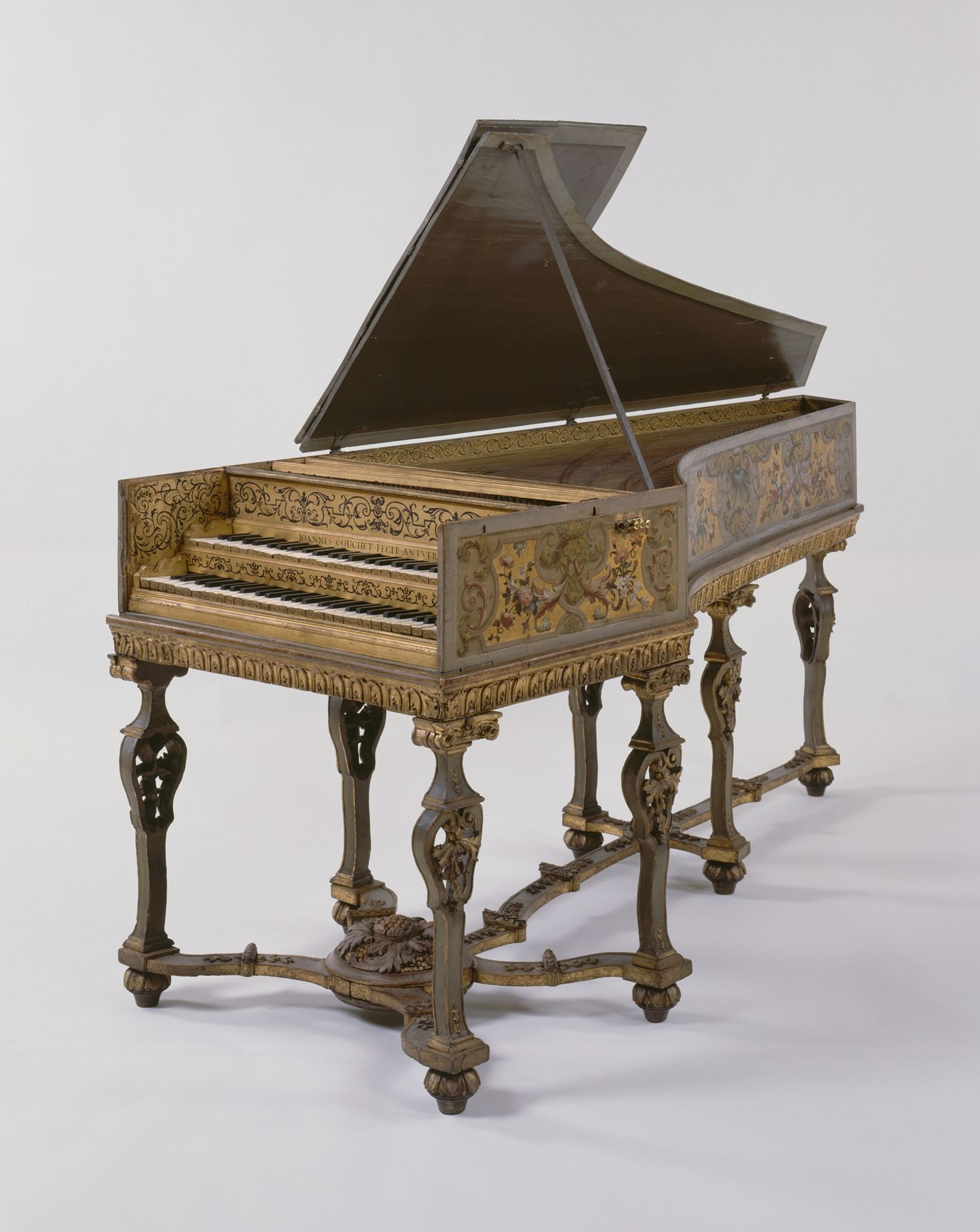
The photograph shows a harpsichord made around 1650 by Jan Couchet the Elder. Its two keyboards and decoration across the wooden body are visible. Keyboard count and exterior design are clues to differences among instruments. Compared with the early piano below, both have keyboards and strings, but they produce sound differently.
The early piano appeared before the Baroque period had ended
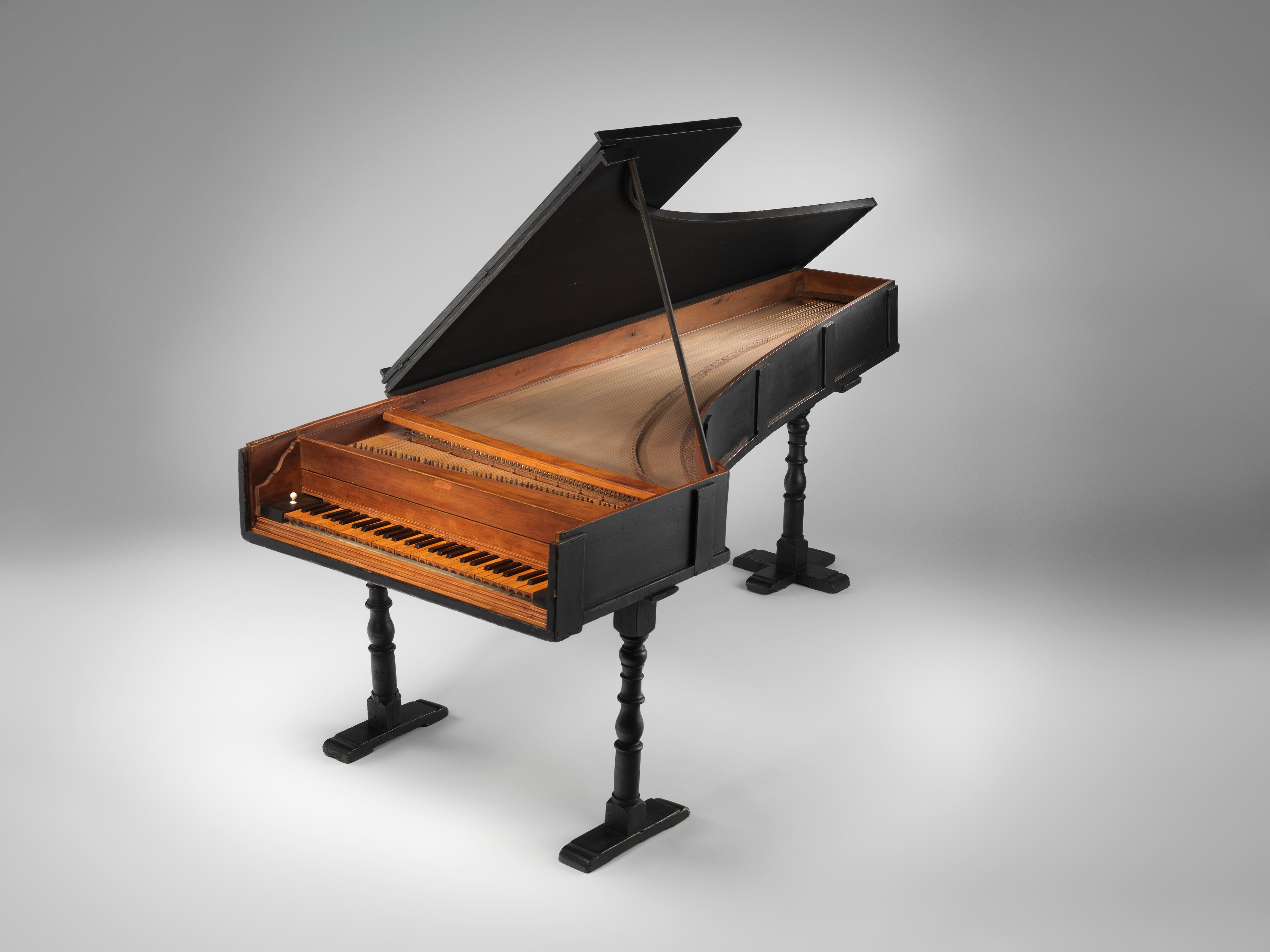
Cristofori is credited with inventing the piano around 1700. A harpsichord plucks strings; a piano strikes them with hammers. Saying that no piano existed during the Baroque period therefore overlooks early pianos made during its later years.
The instrument in the photograph is a grand piano made by Bartolomeo Cristofori in 1720. Strings are visible inside the open lid, with the keyboard at the front. The year 1720 is the date of this museum object, not the year the piano was invented. When comparing harpsichord and piano, note both their similar appearance and the difference between plucking and hammering strings.
Try three ways of listening with modern original tracks
The following examples use Baroque terms as guides for comparing our modern original tracks. They are not works by historical composers or recordings of the museum instruments in the photographs. Listen first for one element, then replay the same passage while following another to compare how the sound is organized.
“Prelude for the Night Shift” is a 4:15 prelude using broken chords on harpsichord. A broken chord plays its component notes in sequence rather than all at once. Follow how the keyboard notes are arranged and what moves above or below them. Open the track page or start at the beginning of the YouTube video.
“Armillary Fugue” is a 4:30 fugue in which a subject passes from voice to voice. Find one short recurring melody and notice where it reenters at a different pitch or in another voice. Listen on the track page or from 13:08 in the YouTube video.
“Starting the Sums Again” is a 4:59 passacaglia that layers variations over the same bass. Follow the bass first, then shift to the upper melody and chords to compare what changes with what repeats. Basso continuo is an accompaniment method using bass and chords; passacaglia here means a variation form built on a repeating bass. Listen on the track page or from 30:50 in the video.
All three tracks are downloadable. Under our usage guide, they may be used in commercial or noncommercial games, videos, and streams; there is no additional charge for each use or play, and credit is optional. This is what royalty-free means here. Copyright has not been waived: selling or redistributing the audio by itself and using it for AI training are prohibited. An old historical composition does not make a modern recording by another performer or distributor free to use, so check the terms for each recording.
- 1
Baroque
Compare broken chords, a subject passed between voices, and variations over a repeating bass in three modern originals—not historical works or recordings of museum instruments.
Use it forFollow broken chords, Follow a subject between voices, Separate repeating bass and variations
These sounds from arcalune
Baroque music does not fix all Western music from about 1600 to 1750 under one feature. Following the operatic and instrumental forms developed in Italy, performance at courts, churches, and theaters, solo voice and accompaniment, soloist and ensemble, basso continuo, and multiple melodies reveals both common ground and difference across a long period.
Next time you listen, choose one thing to follow: the pattern of keyboard notes, the point where a subject reenters, or movement in the bass and above it. When choosing audio to use, check the current terms for that recording and distributor rather than relying on the age of the historical composition.
FAQ
- When was Baroque music?
The term mainly describes Western art music from about 1600 to 1750. Regions changed at different times, so it does not mean the period began and ended everywhere simultaneously.
- Is Baroque music part of classical music?
Baroque is included in classical music in the broad sense. The Classical period in music history is a separate era, so Baroque and Classical do not mean the same thing.
- What are the features of Baroque music?
Basso continuo, multiple simultaneous melodies, and contrasts between solo voice and accompaniment or soloist and ensemble are useful guides. Not every work across roughly 150 years has the same features.
- How do harpsichord and piano differ?
A harpsichord plucks strings; a piano strikes them with hammers. Because the piano is thought to have been invented around 1700, early pianos existed during the later Baroque period.
- Can recordings of old Baroque works be freely used in videos?
The age of a composition alone does not make a modern recording free to use. Check the distributor and terms for each recording. The three tracks here are our modern originals and may be used in games, videos, and streams within our usage guide.