
How Does a Piano Work? Hammers, Strings and the Pedal
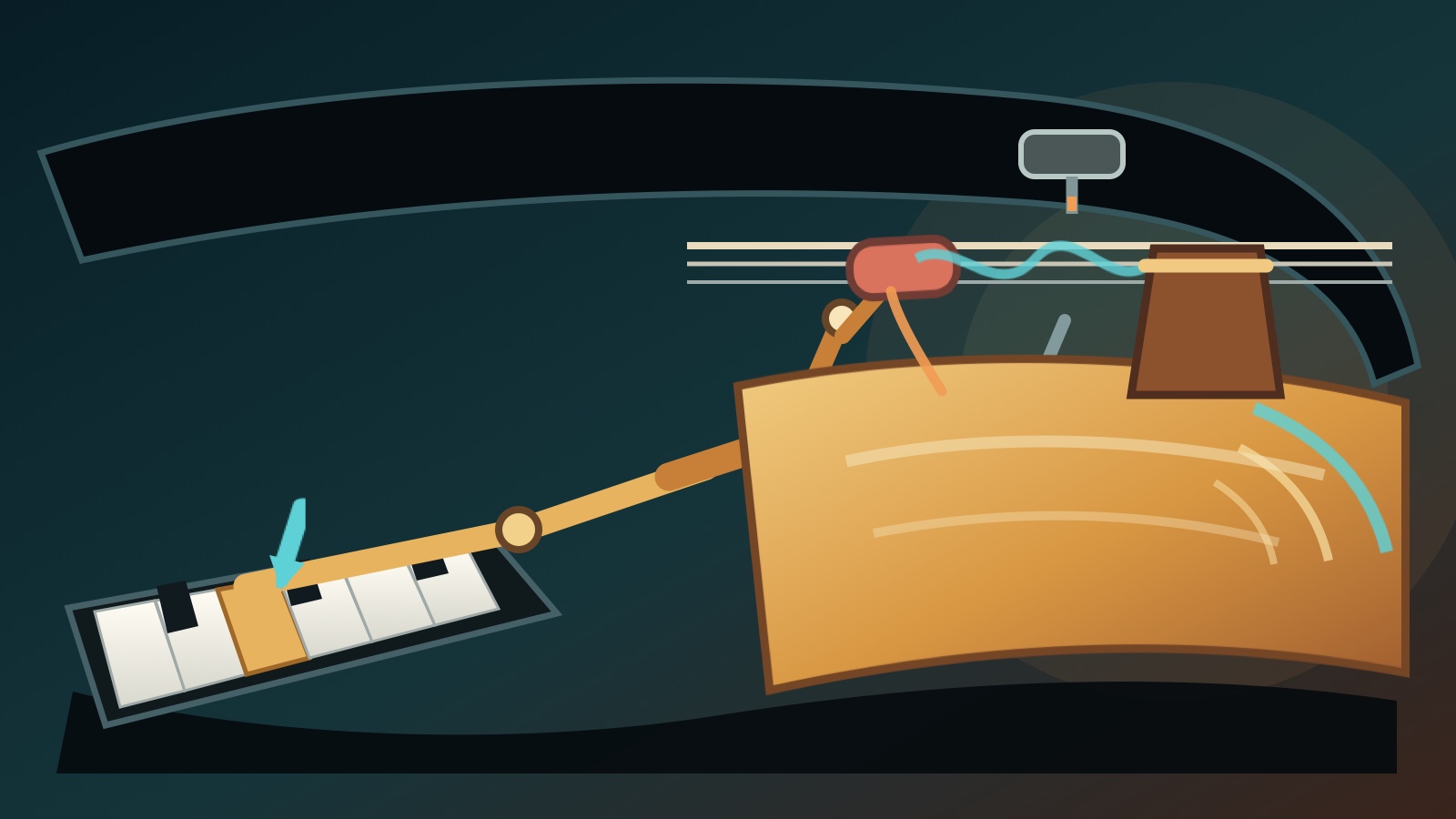
On an acoustic piano, pressing a key causes a hammer to strike the strings. When the strings' vibrations travel through the bridges to the soundboard, the broad board sets the air in motion and the sound spreads. The keys are where the performance begins, and the strings are the source of the sound.
The speed at which a key is depressed can change the loudness of a note. The point at which the finger leaves the key and the use of the right pedal can also change how long the sound remains. We will first trace one note through a modern grand piano in a diagram, then look at a piano made by Cristofori in 1720.
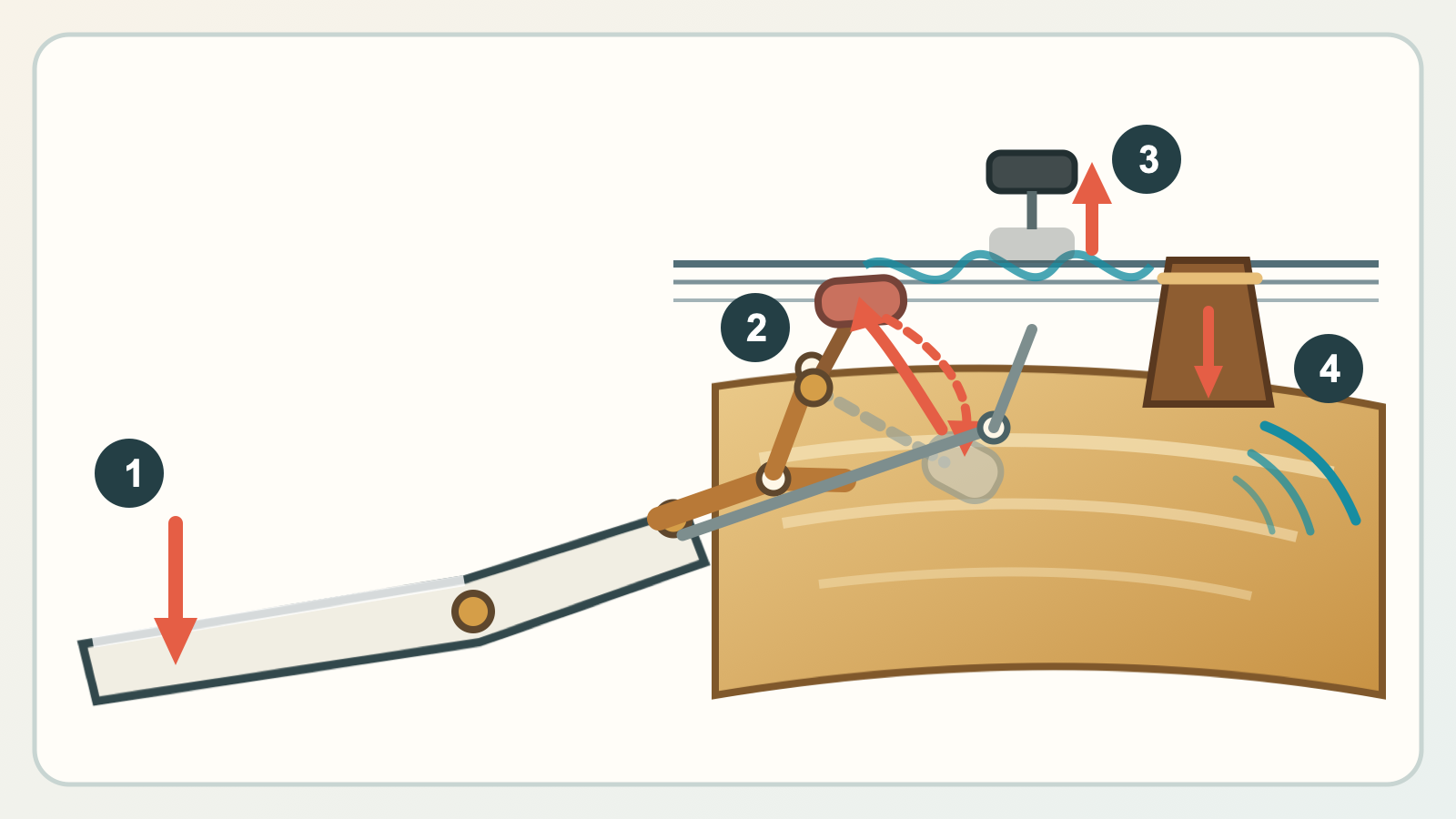
Pressing the front of a key makes a hammer strike the strings from below
A grand piano key is a lever that moves around a balance point. When a finger lowers the front, the rear rises. The group of parts that transmits this movement to the hammer and other components is called the action. The hammer travels upward toward the horizontally strung strings.
Just before the string is struck, the part that has been pushing the hammer upward disengages. This is the escapement. The hammer continues under its own momentum, strikes the string once, and moves away. The string is then free to vibrate.
String vibrations travel through the bridges to the soundboard
Strings alone move only a small amount of air when they vibrate. The bridges, which touch both the strings and the soundboard, transfer those vibrations. The broad wooden soundboard then moves the air. This transmission of vibration turns the sound of hammers striking strings into the piano sound that spreads through a room.
Classified by the source of its sound, the piano is a string instrument. Classified by how it is played, it is a keyboard instrument operated with the fingers. Because hammers strike the strings, sound is also produced by a striking motion like that of a percussion instrument. If the classifications seem confusing, consider which part of the instrument each term describes.
Dampers stop the sound, while the right pedal lets it ring
Many strings have felt dampers resting on them to stop their vibration. Pressing a key lifts that note's damper away from the strings. Releasing the key returns the damper to the strings and suppresses the vibration. The highest register has an undamped section, where the short strings are allowed to decay naturally.
Pressing the right damper pedal raises the fitted dampers together. Notes continue to ring after the fingers leave the keys, and strings that were not struck directly may also resonate. Releasing the pedal returns the dampers to the strings for notes whose keys are no longer held.
To test this on a piano, play the same key in the middle register once at a time. First, release the key and let the sound stop. Next, hold down the right pedal, release the key, and then release the pedal while the note is still ringing. Comparing when the sound diminishes reveals the role of the dampers.
References
The speed of a descending key changes the loudness of a note
Depressing a key quickly generally makes the hammer move quickly through the action and produces a louder note. Depressing it slowly enough for the note to sound generally produces a softer note. The movement leading up to the string strike determines the loudness.
Once the note has sounded, pressing harder against the bottom of the key does not affect a hammer that has already moved away from the strings. Holding a key down in the middle register keeps its damper raised, allowing the note that has sounded to remain.
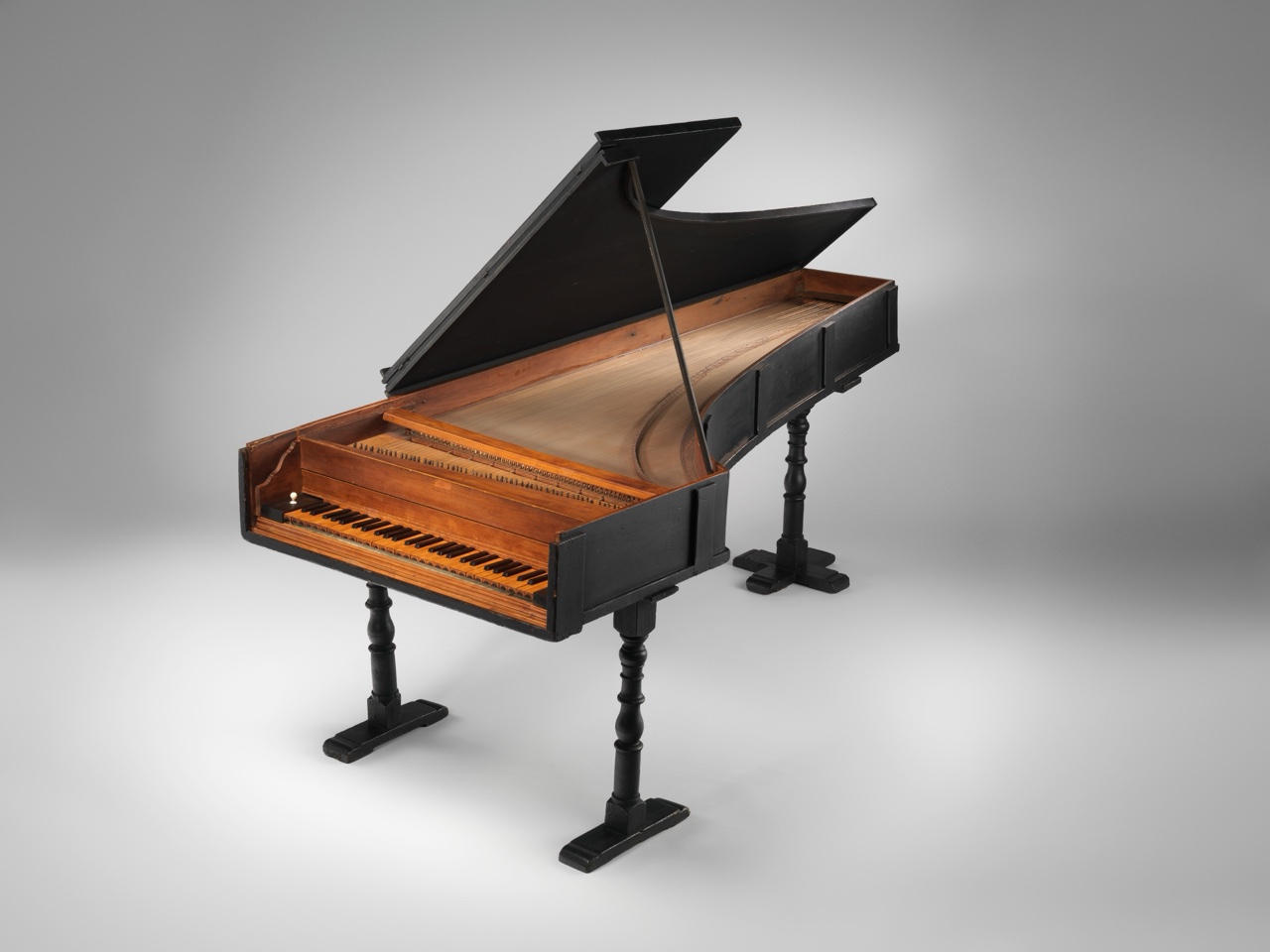
The piano emerged around 1700. The instrument in the photo dates from 1720
On the harpsichord, a keyboard instrument that preceded the piano, pressing a key makes a plectrum attached to a jack pluck a string. Bartolomeo Cristofori devised a mechanism that struck the strings with hammers and allowed the player to vary the loudness of individual notes through the keystroke. An inventory of Medici instruments from 1700 records his instrument with hammers and dampers.
The photograph shows a grand piano made in 1720, the oldest of three surviving pianos by Cristofori. Its case resembles a harpsichord of the period. The mechanism that strikes a string and lets the hammer move away was passed on to later pianos.
Hear the beginning of each sound and how it blends into the background in three modern tracks
The following examples are modern original background music. First listen for the instant when each sound begins, then shift your attention to what remains audible before the next note. Comparing the same passage while focusing on the piano and then on the other sounds can change how you perceive it.
“White Breath” (2:28) is a piano track. Follow the instant each opening note begins and the space before the next note. You can hear it on YouTube from 12:23.
“It Was Not Only Your Fault” (4:04) is game-style background music in which the piano carries the main melody. Follow the melody first, then listen again and turn your attention to the accompaniment beneath it. You can hear it on YouTube from 19:17.
“Sepia Summer” (2:11) layers piano with a synth pad. Listen for where the piano notes begin, then focus on the background resonance of the synth pad. You can hear it on YouTube from 13:41.
The three tracks are royalty-free to download and use
All three tracks are free to download and may be used commercially in videos, streams, games, and other projects within the usage guide. There is no additional fee each time they are used, and credit is optional. Selling or redistributing the audio on its own and using it for AI training are prohibited.
- 1
Three tracks for hearing piano attacks and layers
Listen first to the start of a note, then to how notes form a melody and how other sounds sit around the piano.
Use it forAttack, Melody, Layers
These sounds from arcalune
When listening to a note, picture the instant the hammer strikes the strings, the vibrations spreading from the bridges to the soundboard, and the time before the dampers return. In a piece of music, following both the start of a sound and the interval while it remains can make the piano's role easier to identify.
FAQ
- Is the piano a string instrument or a percussion instrument?
Classified by the source of its sound, it is a string instrument because its strings vibrate. Hammers strike the strings to produce sound, and the player operates the instrument through a keyboard.
- What does a piano soundboard do?
It receives the strings' vibrations through the bridges, and the broad wooden board vibrates to transmit sound to the air.
- What happens when the right pedal of a piano is pressed?
The dampers fitted to the strings rise together, so notes continue to ring for a while after the keys are released.
- When was the piano invented?
By around 1700, Bartolomeo Cristofori had built a piano that used hammers to strike strings. The instrument in the photograph is the oldest surviving piano by Cristofori and was made in 1720.
- Can the three featured tracks be used commercially?
They may be used commercially within the usage guide and can be downloaded for free. Credit is optional. Selling or redistributing the audio on its own and using it for AI training are prohibited.