
What Is Chiptune? History, 8-Bit Sound, and How to Listen
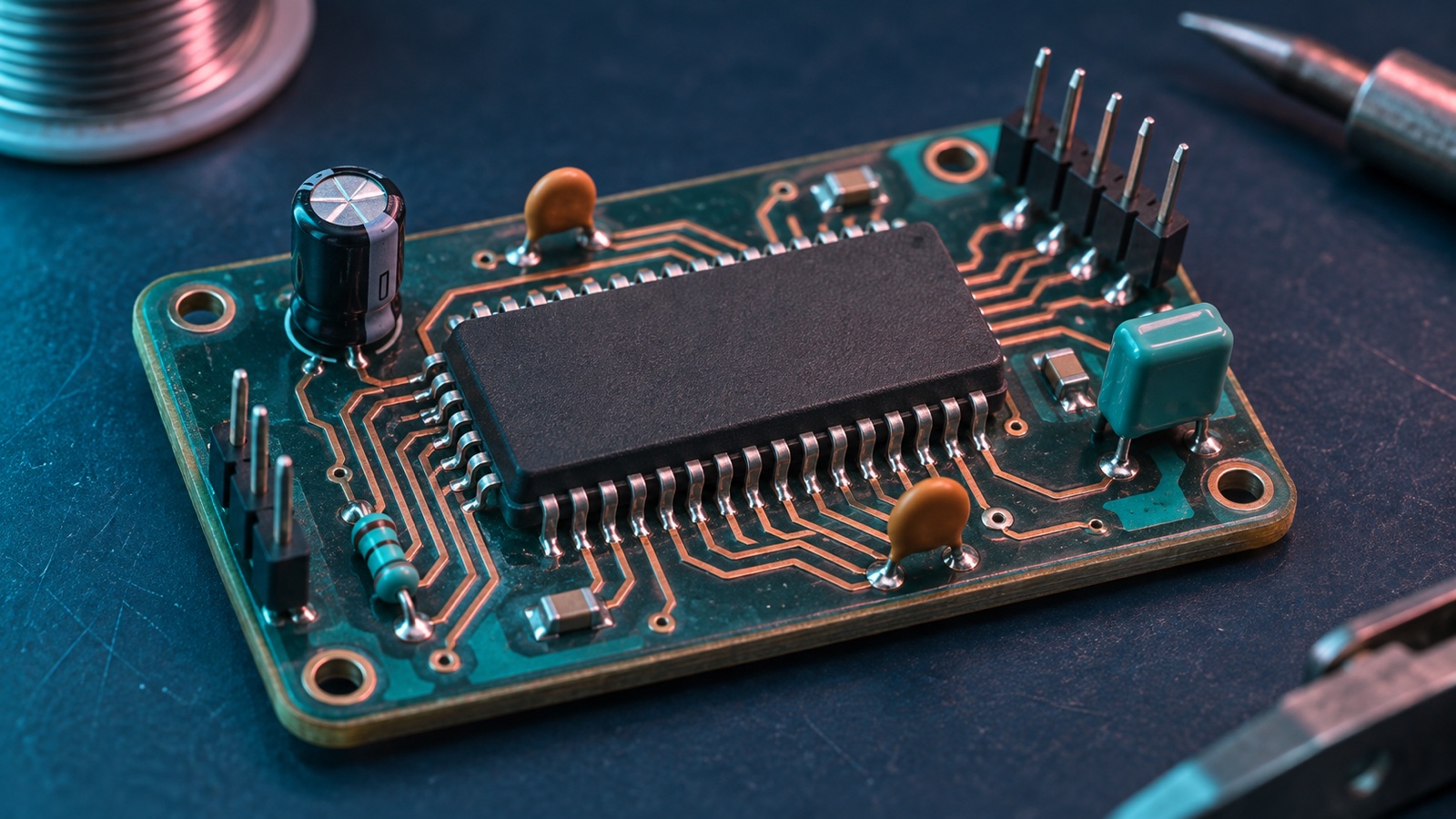
Chiptune is music that incorporates sounds associated with the sound chips in older game consoles and computers. Short electronic tones and ways of combining a small number of sounds are central to its character. Some works run on original hardware, while others create similar timbres with modern software.
Follow sound chips from early games to music made for their distinctive tones. The Game Boy’s four channels give us a concrete example. Then try the listening method with one original track.
How this list was chosen
- The Game Boy is the example for how channels can overlap or take turns.
- The listening example is one original track with an 8-bit-style sound.
Game music grew from the constraints of sound chips
The first installment of a series by Haruhisa Tanaka, published by Seibundo Shinkosha, describes a sound chip as a small electronic component that brings together the main functions of a synthesizer. Early sound chips that appeared in the 1970s offered fewer timbres and simultaneous sounds than general-purpose synthesizers. Rather than beginning as tools designed for rich musical expression, they first met the need to produce game sound effects on small devices and later came to be used for background music as well.
The simple electronic tones and limited number of simultaneous sounds were not originally chosen as nostalgic effects. Dividing melody, accompaniment, bass, and rhythm within restricted hardware was a condition of making the music. This led to ways of combining a small number of layers, including short repeated figures, alternating sounds, and noise-like percussion. The available timbres and channel counts, however, differed from one machine to another.
Later creators deliberately chose old constraints and textures
As hardware became more capable, creators no longer had to follow the limitations of old sound chips. Even so, musicians familiar with game music chose those electronic tones and limited numbers of sounds as a form of expression. Tanaka's series distinguishes earlier game background music from later chiptune by this deliberate choice to use old sound-chip sounds at a time when more capable sound sources were available. It describes the music spreading in the late 1990s alongside techno and renewed interest in retro games, using either sound chips themselves or modern production tools to recreate their texture.
Some musicians define chiptune by the hardware they use, while others define it by its sound. The original track below is a modern example whose description mentions an 8-bit sound.
8-bit can refer to both hardware and sound data
8-bit-style is a convenient way to describe simple electronic tones reminiscent of older games. However, an 8-bit CPU in a game console and 8-bit resolution in waveform or sample data are different matters. A CPU category alone does not determine timbre, polyphony, or waveform types. Machines from the same era can have different sound systems, and later software can create a similar texture.
For that reason, this article does not make a claim such as 'an 8-bit machine can play only four sounds.' When the machine is known, its sound layout can be described. When it is not, the description stays with audible qualities that have actually been identified, such as short electronic tones, a small number of layers, and noise-like hits.
How four channels can be divided on the Game Boy
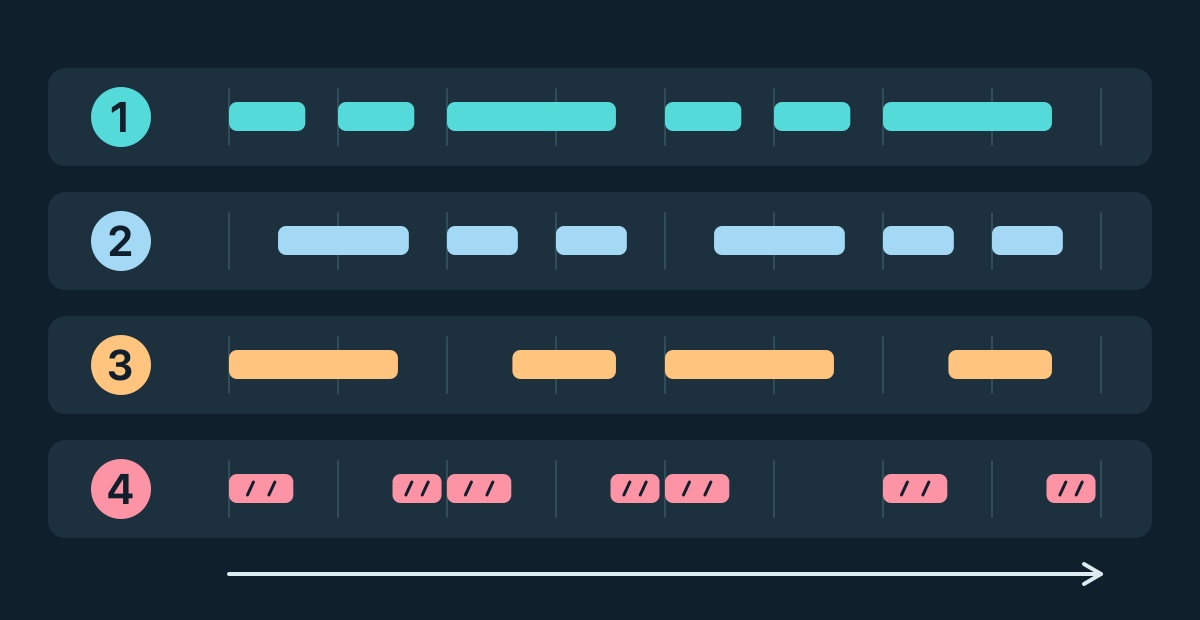
The v8.5.1 manual for Little Sound Dj, music-making software for the Game Boy, treats Game Boy sound as four channels: two pulse channels, one wave channel, and one noise channel. This is a Game Boy example, not a specification that can be applied unchanged to all chiptune or other game consoles.
The two pulse channels provide two simultaneous pitched lines. One can carry a main melody while the other supports it, but those roles can switch within a piece. The wave channel can create another pitched layer. The noise channel handles short, rough sounds distinct from a pitched line and can provide rhythmic cues. It would be inaccurate, however, to say that pulse must always be melody, wave must always be bass, and noise must always be drums. A creator assigns roles to limited channels and can change those roles along the way.
Hear short repetition one layer at a time
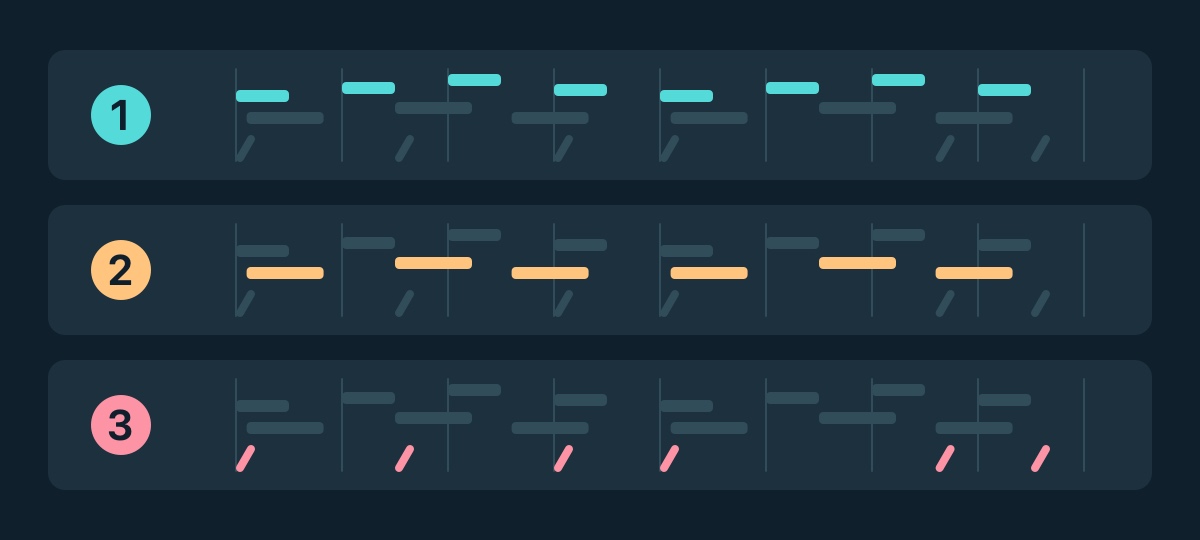
Do not try to identify all four channels at the outset. Listening to the same short passage several times makes the layers easier to organize. First, find where a short pitched figure returns. You do not need to name the notes. Follow only the point where the same shape comes back.
On the second pass, move your attention to another pitched layer that moves at the same time as the repetition. Do more than separate high and low sounds. Compare where one rests while the other sounds and where both sound together. With only a few channels, alternation and empty space are as much a part of the arrangement as continuous layering.
On the third pass, follow short, rough sounds and the gaps between them. Hearing whether they return at regular intervals or appear only at boundaries can reveal a rhythm separate from the pitched layers. Finally, return to the whole and check where the short repetition, the other pitched layer, and the noise-like sounds overlap or leave space.
This method reveals relationships among the layers you can hear. The finished sound alone cannot establish which original device was used, which channel held each role, or which waveform data was selected.
Hear a modern example in Candy Factory Tour
Candy Factory Tour is a 4-minute-15-second original track from this site. Its public description calls it lively chiptune pop with a cheerful 8-bit lead for game streams or game development. It is a modern example for hearing a chiptune-style lead and following short repetition and another layer in the order described above, not evidence of particular hardware or an original-console recording.
The track starts at 17:41 in the compilation. Follow a short electronic phrase and listen for where it returns and which sounds overlap it.
Using Candy Factory Tour in videos and streams
Candy Factory Tour is royalty-free BGM available as a free download. Under the usage guide, it can be used in commercial videos and streams without required credit. Reselling or redistributing the audio on its own and using it as AI training data are prohibited. Before use, check the download status on its track page and the current audio usage guide.
Open the track card below to check the download option. For music from other sources, check the terms on its own distribution page.
References
- 1
A modern chiptune-style example
Listen for the repeating electronic phrase and the sounds moving underneath it.
These sounds from arcalune
Chiptune began with the constraints of sound chips in game hardware. Later creators chose those constraints and electronic textures as forms of expression even when more flexible production environments were available. Modern chiptune can therefore include both works made with original hardware and works that create an 8-bit-style texture in current tools, with more than one view of the boundary.
When listening, try following the return point of a short repetition, another pitched layer moving alongside it, and short noise-like sounds and rests in sequence before guessing a machine or waveform. The Game Boy's four channels provide one concrete example for understanding those relationships, not a universal specification for every device.
FAQ
- What is chiptune?
Chiptune is music that places the constraints and electronic textures associated with sound chips in older game consoles and computers at its center. Some views include not only works made on original hardware, but also works that deliberately choose those textures in modern production environments.
- Are chiptune and 8-bit-style music the same thing?
They overlap, but they are not perfect synonyms. The term 8-bit can refer to different things, including a CPU or sound data, so the number alone does not determine the sound-system specification or production method. Check separately which hardware or audible quality is being described.
- Does all chiptune use the same four channels as the Game Boy?
No. The two pulse channels, one wave channel, and one noise channel discussed here are a Game Boy example. Other machines have different sound layouts.
- Do pulse, wave, and noise channels have fixed roles?
Their roles are not fixed. Pulse and wave can be understood as pitched layers and noise as a place for short, rough sounds, but melody, accompaniment, bass, and rhythm assignments can change with the piece and passage.
- Can I identify the original hardware or waveform just by listening?
The finished sound alone cannot establish them. You can separate short repetitions, multiple pitched layers, and noise-like sounds by ear, but the production hardware and waveform require other evidence such as production records.
- Can I use Candy Factory Tour in videos or streams?
Under the usage guide, it can be used in commercial videos and streams without required credit. Reselling or redistributing the audio on its own and using it for AI training are prohibited. Check the track page and the latest usage guide before use.