
What Is Electronic Music? History, Sound-Making Methods, and the Difference from EDM
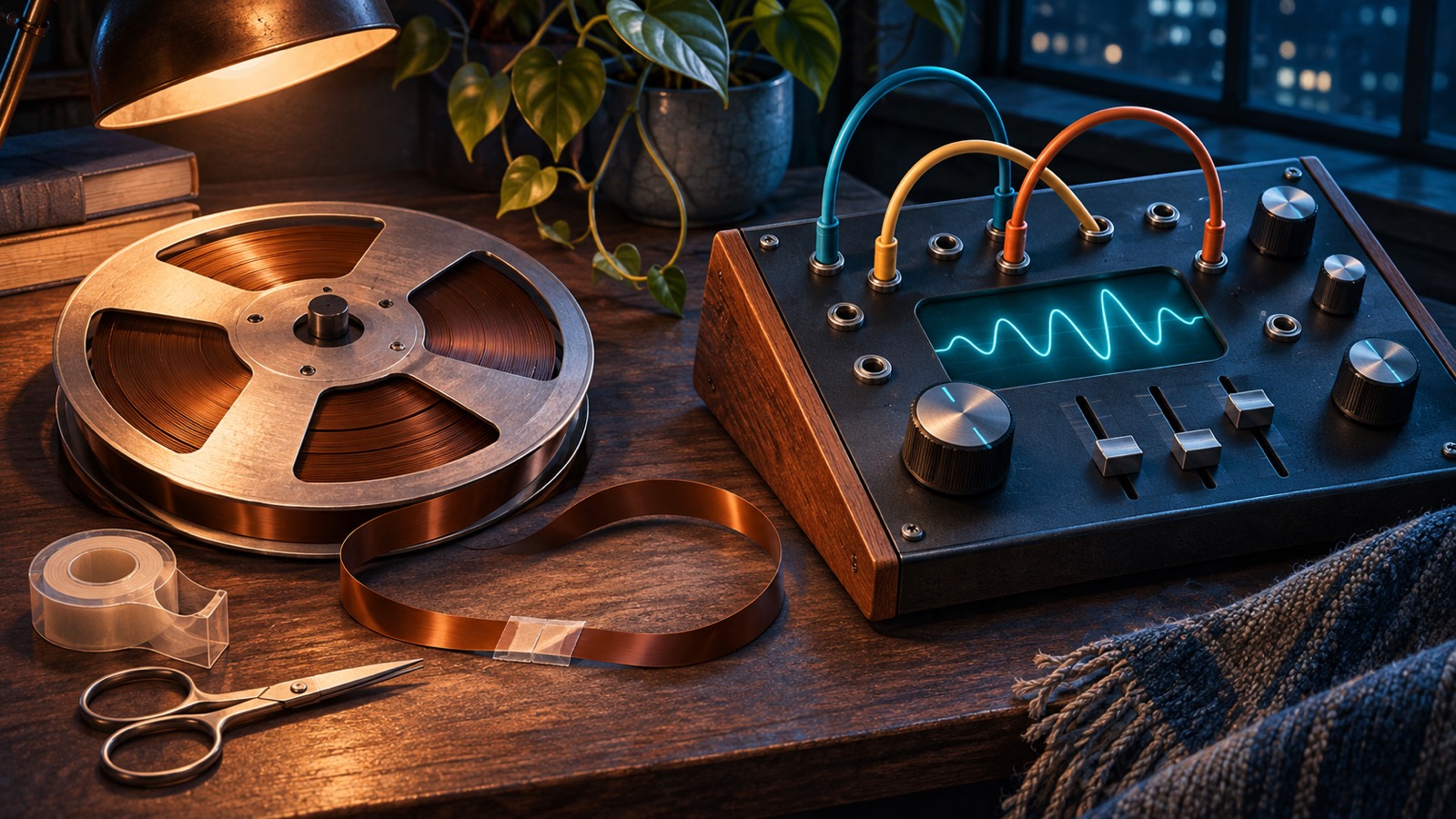
Electronic music history includes not only synthesizer sounds, but also attempts to build works by transforming recorded piano and natural sounds. Looking beyond the instrument used to how sound is created, changed, and combined reveals the breadth of electronic music.
This article compares production that transforms recorded sound with production that generates sound electronically. Examples from Columbia University and the BBC, together with a technical history of electronic instruments, show how production methods expanded from tape to synthesizers and computers.
The second half explains the difference from EDM and introduces three modern original background tracks from our catalog. They are listening examples for choosing current music for work, visual media, or breaks—not recreations of historical recordings.
How this list was chosen
- Compare editing recorded sound with generating sound electronically.
- Follow production examples that used tape, synthesizers, and computers.
- Understand the difference from EDM and compare three modern tracks by the setting in which you want to use them.
Electronic music is not defined by synthesizers alone
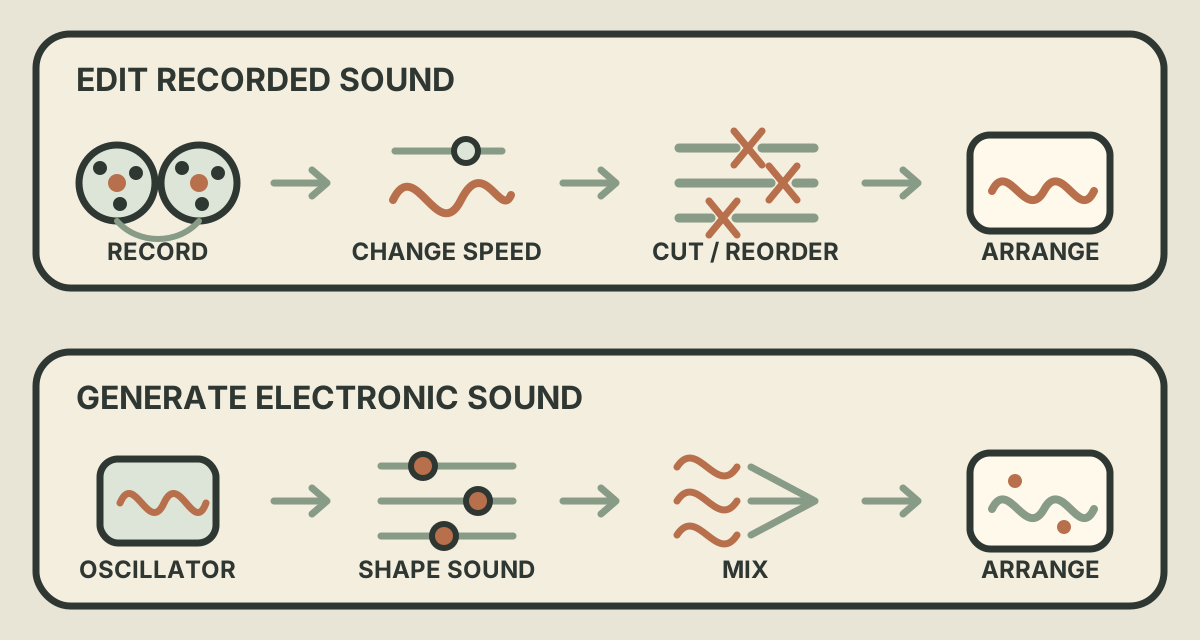
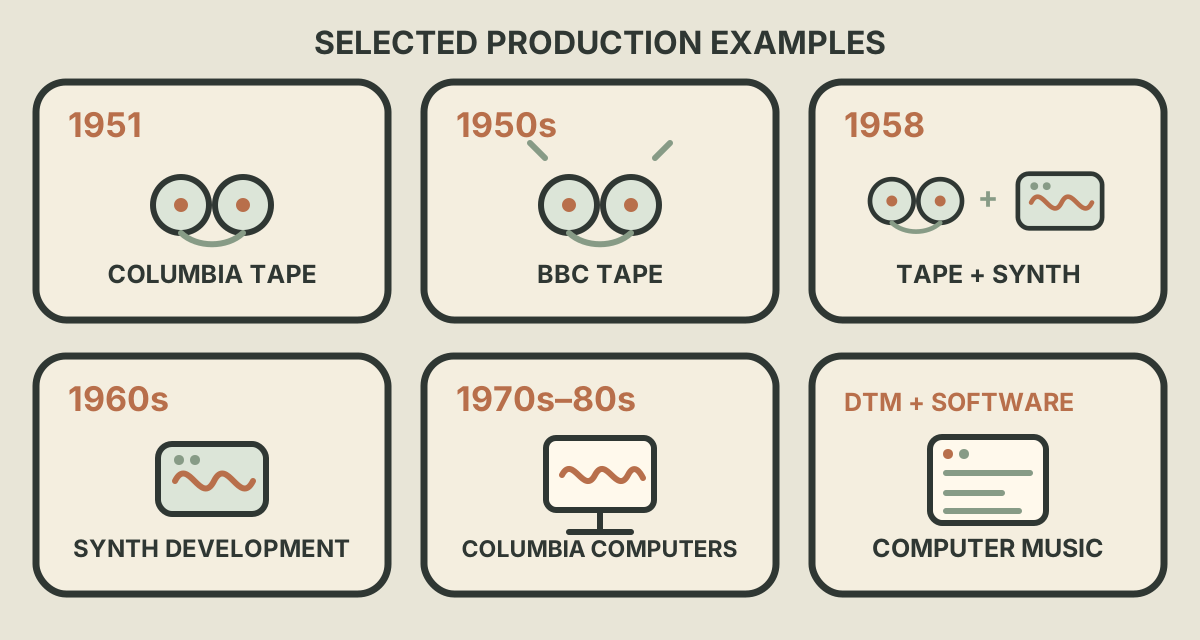
A clue to understanding electronic music lies not only in which instrument was played, but also in how sound was created, recorded, and assembled. Columbia University’s history says that experiments in manipulating electronic sound with a tape recorder began there in 1951. A BBC learning resource likewise describes changing tape speed, cutting tape, and reordering it as production methods alongside electronically generated sound and music.
Playing a synthesizer is one way to make electronic music, but it is not the only way. Nor does recording with a computer automatically place every piece in the same genre. The name of the equipment and the way sound is treated within a work need to be considered separately.
Transforming recorded sound: speed, cutting, and reordering
Magnetic tape records sound as changes in magnetization. Changing playback speed alters the perceived pitch and duration. Cutting tape and reconnecting it in a different order can create a sequence unlike the original performance or natural sound. The BBC resource describes speeding tape up or slowing it down, cutting it into pieces, changing the order, and editing prerecorded sequences for playback.
The same resource includes an early BBC example in which Daphne Oram used a piano’s resonance. She held down the sustaining pedal, placed a microphone inside the open piano, recorded the strings resonating, and played the recording back more slowly. Even when a natural or instrumental sound is the starting point, operations after recording can produce a different resonance and duration.
Columbia University’s history also records that its 1951 tape experiments were followed by equipment for changing speed and feedback, as well as additional tape machines. Feedback returns part of a device’s output signal to its input. These examples treat a recording not only as a finished document, but as material that can later be transformed and assembled.
To explore the relationship between recorded material and genre further, read how environmental sound can be one kind of material in an ambient work. A separate article on Lo-fi explains recording fidelity and the deliberate creation of textures associated with older recordings.
Creating sound electronically: oscillators, filters, and mixers
A different approach creates the source signal with electronic circuitry instead of transforming a recorded sound. An oscillator produces a periodic signal, a filter adjusts selected frequency ranges, and a mixer brings multiple signals together. Columbia University’s history records the addition of tone-generating oscillators, filters, and a custom mixing console alongside more tape machines.
The National Museum of Nature and Science’s technical history of electronic instruments begins with controlling an oscillator to change pitch, duration, and volume. It also covers the ability to control oscillators from a keyboard and the spread of the Hammond organ, which emerged in the 1930s. Ease of performance, not only the technology for creating new sounds, mattered to the wider adoption of electronic instruments.
One approach did not simply replace the other. The Columbia-Princeton Electronic Music Center, established in 1958, housed four purpose-built tape studios for electronic composition and experimentation alongside the RCA Mark II Synthesizer. It is an example of facilities for recorded sound and a device for electronic sound creation coexisting at the same center.
Synthesizers and computers widened the range of production methods
A synthesizer is an electronic instrument that creates and combines electronic signals to shape timbre. The National Museum of Nature and Science report explains that synthesizer development advanced in the 1960s and initially focused on sound synthesis. It later follows the digitalization of electronic instruments into DTM—desktop music, or computer-based music production—and the growing use of software for electronic instruments.
Computer technology was used at Columbia University in the 1970s and 1980s and became increasingly important. Tape editing, electronic instruments, and computers are easier to understand as different means of making sound than as technologies in which one made another unnecessary.
Computers can be used both to edit recorded sound and to generate or control sound. Rather than asking only which device was used, it is more useful to examine where the sound began, what changed after recording, and how the signals were combined.
EDM is not another name for all electronic music
EDM stands for Electronic Dance Music. Yet defining it as every kind of electronic music that can be danced to is too broad. The introduction to a Cambridge University Press volume mainly connects the term with post-disco and post-rave dance-music forms and identifies tendencies such as repeating phrases, electronic production, and foregrounded timbre and rhythm. Those points describe EDM, not requirements for electronic music as a whole.
The same introduction explains that EDM can serve as an umbrella term for many subgenres, while in the United States since the early 2010s it has also been used more narrowly for a pop-dance subgenre. Because the scope changes with place, period, and context, a page using the term EDM should be read for what it means there.
Electronic music includes works made by transforming recorded sound as well as works made by creating sound electronically. EDM is a term used for dance-music genres and cultures within that broader field. It cannot be used interchangeably with electronic music as a whole.
Choose three modern tracks for work, visual media, or a break
The following examples are modern original background tracks from our catalog, not recordings from the historical sources. All three appear in the same 56:52 video, carry the Electronic tag, and run from 3:44 to 3:45. Even with nearly identical durations, their other labels and published descriptions help narrow the setting in which you might use them.
“Clouds Beneath My Feet” runs 3:44 and begins at 7:35 in the video. It carries the Ambient and Focus tags, and its published description suggests contemplation or quiet work. This is a place to start when choosing music to play while working.
“The Clear Frozen Fall” runs 3:45 and begins at 11:22. It carries the Cinematic and Epic tags, and its published description suggests a change of mood. It is an example of choosing from a visual-media classification or for a marked change of scene.
“Tea in a Patch of Sun” runs 3:44 and begins at 18:57. It carries the Warm, Gentle, and Cafe tags, and its published description suggests lunchtime or a moment to pause. It can be compared as a candidate for breaks or calm scenes.
Do you want music while you work, something to match a visual scene, or something to hear during a break? Even within the Electronic tag, these uses provide ways to compare tracks. To keep browsing, check the tags and descriptions of each track in the electronic background-music catalog.
Separate listening from the conditions for using a track as an asset
To compare the three tracks, play them from their track pages or their starting points on YouTube. To use one in a video, stream, game, or other production, check the download label on that track and the current audio usage guide rather than relying on the Electronic genre label.
The three featured tracks are currently available to download and may be used commercially under our usage guide without a credit requirement. Under the current conditions they are royalty-free assets: no additional fee is charged according to the number of uses. This does not mean that copyright has been waived.
Reselling or redistributing the audio on its own and using it as AI training data are not permitted. Check the page for the track you use and the latest usage guide each time.
- 1
Electronic Music
Compare three modern original tracks by the setting in which you want to use them: work, visual media, or a break. They are not recordings from the historical sources or reconstructions of early electronic music.
Use it forChoose music for work, Choose music for visual scenes, Choose music for a break
These sounds from arcalune
Electronic music is not determined by a single synthesizer. Even examples from the 1950s include production that changed the speed and order of recorded sound and production that created sound electronically with oscillators. In 1958, purpose-built tape studios and a synthesizer coexisted at the Columbia-Princeton Electronic Music Center. Electronic instruments and computers later expanded the available production methods further.
When choosing music, do not treat electronic music and EDM as interchangeable. Check the tags, duration, and published description on each track page. “Clouds Beneath My Feet,” “The Clear Frozen Fall,” and “Tea in a Patch of Sun” share one video and nearly identical durations, but offer different clues for use. If you use one as an asset, also check its track page and the latest usage guide.
FAQ
- Is electronic music only music performed on synthesizers?
No. A synthesizer is one method. Historical sources show both production that changes, cuts, and reorders recorded sound on tape and production that creates sound electronically with oscillators and other equipment.
- Does editing recorded sound make every result electronic music?
The editing method alone does not automatically determine the genre of every piece. This article shows examples in which recorded-sound editing was used in electronic-music history. Consider the work’s context and published description as well.
- Does using one electronic instrument make a piece electronic music?
One instrument alone does not decide it. Along with the instruments used, looking at how sound changed after recording and which sounds were combined makes differences in production methods easier to understand.
- Do electronic music and EDM mean the same thing?
No. Electronic music includes works that transform recorded sound and works that create sound electronically. EDM is a label related to dance-music genres and cultures; it may be used as a broad umbrella term or in a narrower sense depending on place and period.
- Can I use the three featured tracks in videos or games?
The three tracks are currently available to download and may be used commercially under our usage guide without a credit requirement. Reselling or redistributing the audio on its own and using it as AI training data are not permitted, so check each track page and the latest guide before use.