
What Is Trance Music? History and How to Hear the Breakdown
Trance is a style of electronic dance music that layers melody and harmony over a repeating beat. Listen for a steady kick that drops away, a melody that carries on and the beat coming back underneath it. That contrast is one way to recognize the sound.
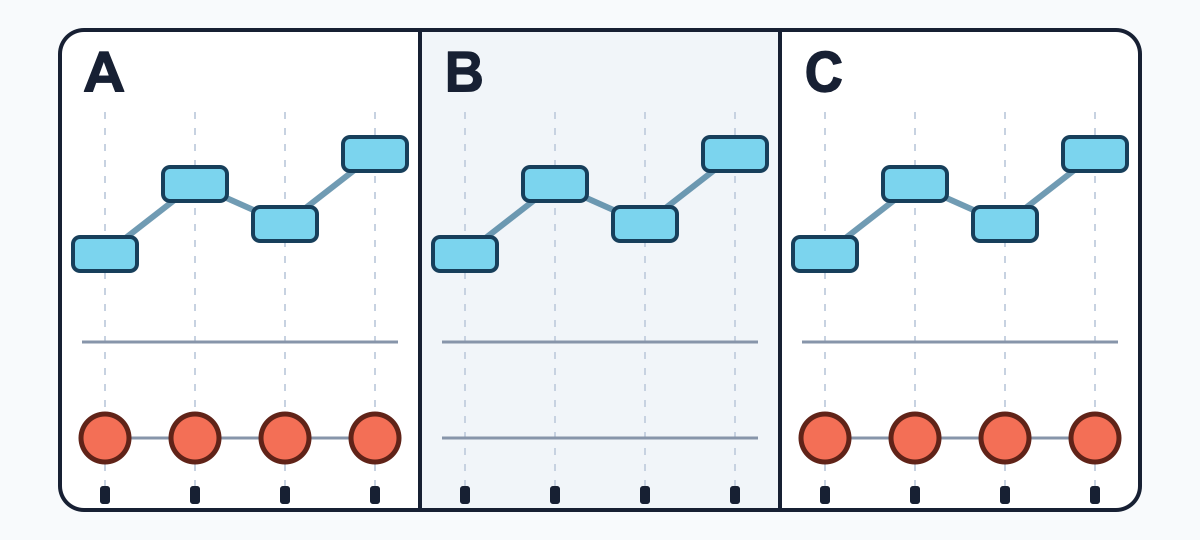
Start by listening to the kick and the melody separately. Then use the diagram to follow what drops out and returns, and hear two recordings from the 1990s, “Café Del Mar” and “Sandstorm,” on the artists’ official channels.
Listen to the four-on-the-floor beat and the melody separately
Start with the low thud of the kick drum. Count one, two, three, four. If the kick lands on every beat, that’s four-on-the-floor. Now listen higher up and pick out a short tune of a few notes. When the first note of the tune comes around again, check whether the kick has kept the same spacing underneath.
Armada Music, a label that releases trance, points to melody, harmony, spacious effects and extended breakdowns and buildups. House and techno share the four-on-the-floor beat, so listen to what the melody does over that steady kick.
Hear the kick drop out and the beat return
In section A of the diagram, the circles mark kick hits and the rectangular notes show a melody. In B, the kick drops out while the same notes continue. In C, the kick comes back underneath the melody. A change in what plays underneath can make a new section stand out even when the melody stays the same.
In a recording, the bass may drop away with the kick while other sounds ring out. A rise in percussion or volume before the kick returns is a buildup. Listen for the moment the kick drops out, the sounds that remain and the moment it comes back. The length and sound of a breakdown vary from track to track.
Early 1990s clubs and “Café Del Mar”
Armada Music traces trance to the sound that took shape by the early 1990s, spread through German clubs and reached other parts of Europe. Energy 52’s “Café Del Mar” is one recording from that period.
The reissue label Bonzai Classics documents the 1993 recordings. The link here is the DJ Kid Paul Mix on Energy 52’s official channel. Other remixes came later, so check the mix name when looking for this recording. Listen to the low beat, then follow the tune that repeats over it.
“Sandstorm” on the UK chart and trance on the radio
Darude’s “Sandstorm” dates to 1999. It entered the UK singles chart in June 2000 and peaked at number three. In the official video, count the spacing between kick hits, then listen for the short synth pattern as it repeats.
In 2001, Armin van Buuren began broadcasting “A State of Trance.” Alongside clubs and recorded releases, the singles chart and a weekly radio show introducing tracks help explain how trance reached listeners in different places.
Compare what changes over the beat in house, techno and trance
In house, try following the groove between the kick and bass, then listen for vocals or keys that come in over it. In techno, follow layers such as hi-hats or short synth sounds as they come and go over the beat. In trance, keep your attention on the melody or harmony while you compare the moments before the beat drops away and after it comes back.
These sounds overlap across genres. If two tracks are close in tempo, compare the movement of the bass, how often the same tune comes back and what you hear when the beat thins out. The recording date and the way the artist or label describes the release can also help put the sound in context.
Hear the four-on-the-floor beat and arpeggio from 26:17
“The Map Unfolds at Noon” is an electronica track from our catalog with a light four-on-the-floor beat, a lead sound and an arpeggio. An arpeggio plays the notes of a chord one at a time. The track runs for 4 minutes and 44 seconds and starts at 26:17 in our official video. First count the kick, then follow the repeating notes as they change pitch.
“The Map Unfolds at Noon” is available as a free, royalty-free download. Commercial use is allowed under the usage terms, and credit is optional. The terms restrict standalone redistribution and use for AI training. Check the track page and usage guide before using the audio in a project.
Pick “Café Del Mar” or “Sandstorm” and move your attention from the kick to the melody. If you want to practice counting the beat first, start with the illustrated guide to four-on-the-floor.
FAQ
- What kind of music is trance?
Trance is a style of electronic dance music that layers melody and harmony over a repeating beat. One recognizable pattern is the kick dropping out, the melody carrying on and the beat returning underneath it.
- How can I tell trance, techno and house apart by ear?
In trance, listen for the melody as the beat drops away and returns. In techno, follow layers coming and going over a steady beat. In house, try following the groove between the kick and bass. Styles overlap, and the artist or label can provide context for what you hear.
- What should I listen for in a breakdown?
Listen to what remains when the kick or bass recedes. Focus on a short tune or a sound that rings out, then compare what you hear just before the breakdown and just after the kick returns.
- When did trance spread?
Trance had taken shape by the early 1990s and spread from German clubs to other parts of Europe. The 1993 recording of “Café Del Mar” and the 2001 launch of “A State of Trance” offer two ways to explore that history through records and radio.