What Is Jazz? History, Features, Instruments, Photos, and Listening
Jazz is music that developed in the United States, especially in and around New Orleans at the turn of the twentieth century, on a foundation of African American musical culture. Shared themes and harmonies meet improvisation, while rhythmic placement and the players’ responses shape each performance.
This guide moves from jazz’s cultural background to improvisation, syncopation, swing, blue notes, and call and response. It separates the front line of early ensembles from the roles of common melody instruments and the rhythm section, then follows how the center of performance shifted through swing and bebop. Finally, three tracks from our catalog let you compare lead instruments and rhythmic approaches.
How this list was chosen
- The history is presented as music shaped by intersecting cultures around African American communities in New Orleans, not as a single invention.
- The listening steps follow a steady beat, the spacing of two notes within one beat, and the roles of melody instruments and the rhythm section.
- Each of the three listening examples focuses on one lead instrument and one rhythmic approach.
Set forms and improvisation meet in one performance
Many jazz performances begin with shared material: a theme, a harmonic progression, sections of the tune, and an arrangement. Players can use that framework while changing melody or rhythm in the moment. Improvisation is not the absence of guidance; it is the act of hearing the tune and the other players, then choosing what comes next.
Start by remembering one short theme and listening for its return. Between those returns, follow how the melody changes and where another instrument answers. The balance varies from one tune and performance to another, and an arranged ensemble passage can sit beside an improvised solo.
Jazz grew around Black communities in New Orleans
In late-nineteenth- and early-twentieth-century New Orleans, blues, ragtime, sacred music, brass-band music, and other practices met within and around African American communities. Jazz took shape as people and music from different backgrounds came into contact.
That history cannot be reduced to one inventor or one year. Blue notes and call and response were not isolated techniques appearing from nowhere; they were carried through African American musical culture and history, then changed as jazz spread.
Compare swing and shuffle rhythms over the same beat
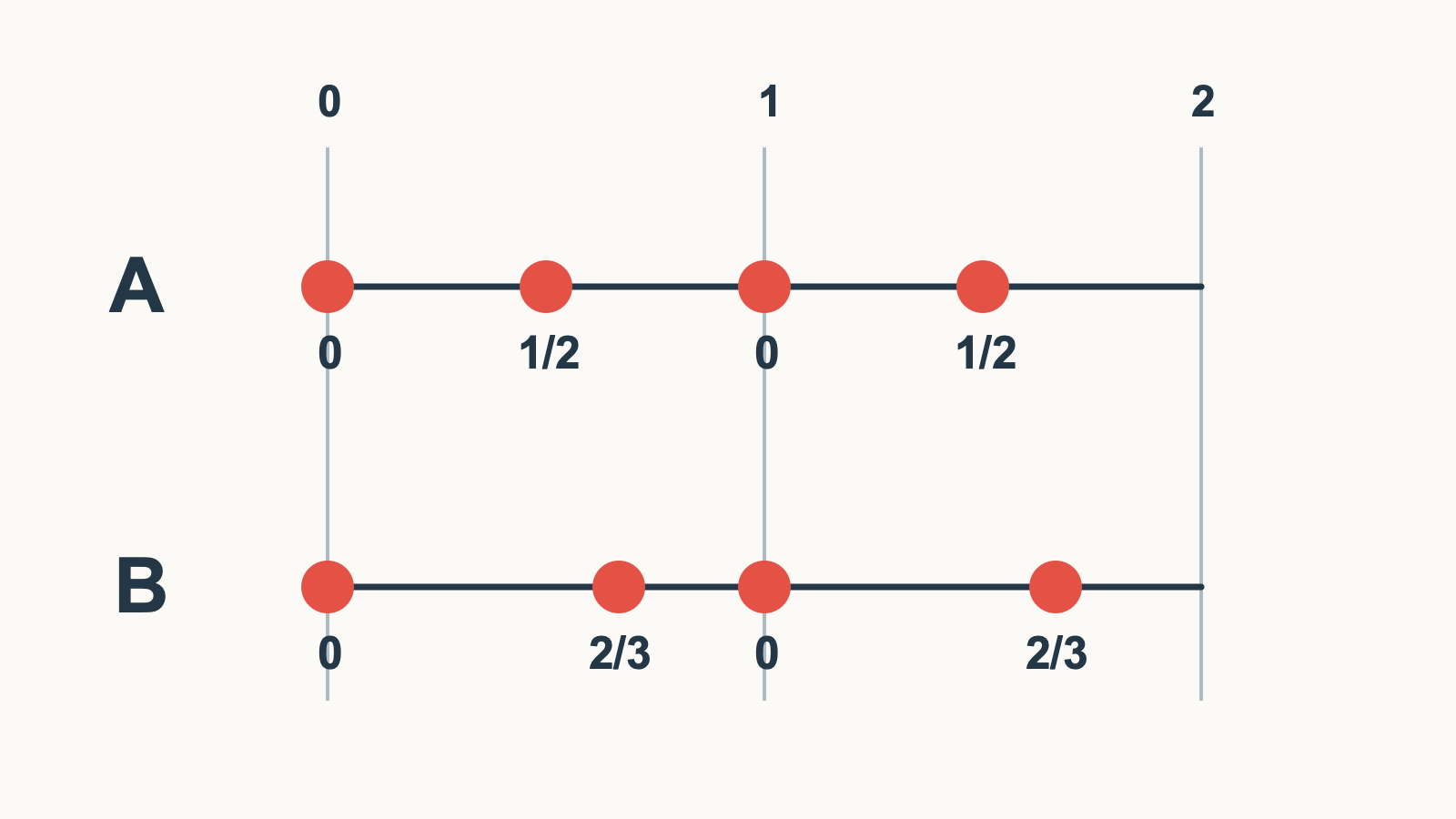
Keep a steady beat with your foot while counting “one, two, three, four,” and listen for when the second note sounds within each beat. Straight eighth notes place the two notes evenly. In swing and shuffle rhythms, the interval from the first note to the second may sound longer, while the interval from the second note to the next beat sounds shorter.
In Figure A, the second note sounds exactly halfway through the beat, at the 1/2 point. Figure B divides one beat into three and shows a shuffle example in which notes sound on the first and third subdivisions. The second note sounds at the 2/3 point. The 0, 1, and 2 above the diagram mark the shared beat boundaries, while the numbers below the dots show positions within each beat.
You can hear this long–short pattern in swing as well, but the actual spacing varies with the tempo and the performance. Also listen for accents that emphasize beats two and four, and for syncopation, which places accents in normally less-emphasized positions such as the offbeat. Keeping the beat with your foot lets you compare where the sound is emphasized with where the second note begins.
To try it with your hands, keep your foot moving at the same speed. For Figure A, clap when your foot marks the beat and again halfway to the next foot tap. For Figure B, divide the time between foot taps into three by counting “ta, ta, ta,” and clap only on the first and last counts. Once this feels comfortable, alternate between A and B without changing the speed of your foot, and listen to how the spacing between claps changes. To practice accents, mark four beats with your foot and clap only on beats two and four.
“Salt on the Ropes” is a swing track led by accordion and starts at 31:25 in the video. “Cards Until Morning” is a shuffle track led by organ and starts at 55:58 in the same video. First mark the beat of each track with your foot, then shift your attention to the intervals at which the finer subdivisions in the accompaniment begin. The diagram is an example of how to count. Listen to each track to hear its actual spacing.
In melody, listen for blue notes that lean below a pitch or bend between pitches. In call and response, a short melodic or rhythmic statement is answered by another voice or instrument. Follow the call and its answer as a pair.
References
Three horns shaped the melody in the early front line
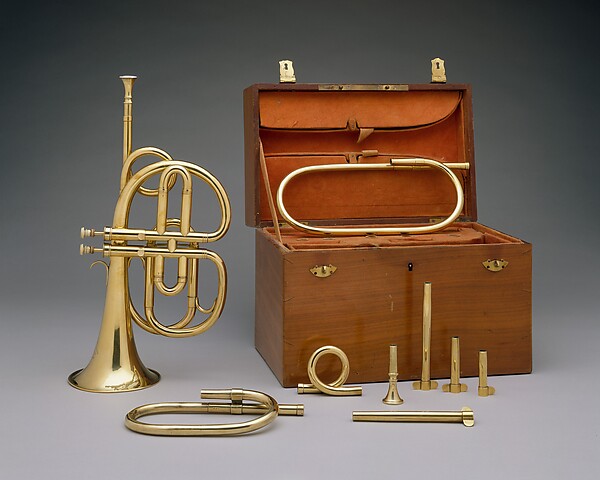
In early New Orleans ensembles, cornet, clarinet, and trombone formed the front line alongside instruments that supported the rhythm. Rather than simply doubling one melody at one pitch, the three horns combined separate lines into an ensemble texture.
The cornet in the photograph is a B-flat instrument made in Paris by Courtois frères in 1833. The instrument, case, and interchangeable tubing are visible. Because it predates jazz, the photograph is not a record of an early jazz performance; it helps us see the form and construction of a cornet.
Separate melody instruments from the rhythm section
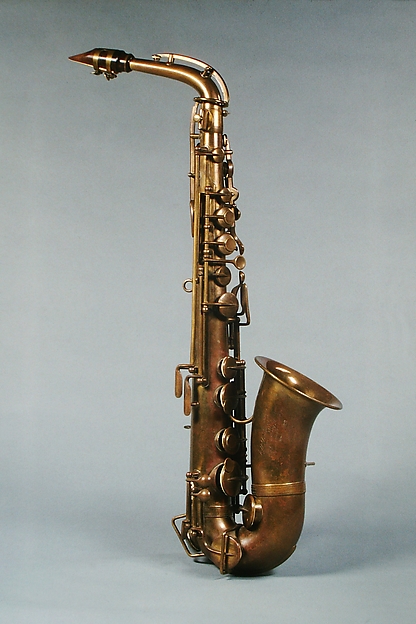
Common jazz instruments include saxophone, trumpet, trombone, piano, bass, drums, and guitar. Saxophone, trumpet, and trombone can carry written themes and improvised solos. The alto saxophone in the photograph was made in Paris by Arsene-Zoe Lecomte & Cie after 1887.
Piano, bass, and drums support the ensemble as a rhythm section. Piano supplies rhythmic chords behind the melody and can also take melodic solos. Bass anchors the low register and pulse, while drums maintain the beat and answer soloists with accents. Guitar can play either single-note melody or chordal accompaniment. These are not locked roles: rhythm-section players also take solos.
Listen in stages. Choose one melody first, then move to the bass line, the drum pulse, and the piano or guitar chords. Return to the whole band to hear how the instruments share time and harmony behind the lead.
From small-group interplay to swing sections and long bebop solos
Jazz spread from New Orleans to other cities. In 1920s Chicago, Louis Armstrong and others expanded the expressive role of the soloist. Attention moved from the intertwined lines of the early ensemble toward the time one player spent reshaping a theme.
In the swing of the 1930s and 1940s, larger bands used several brass and reed sections to create arranged ensemble sonorities. Solos remained inside those arrangements. Listen for the contrast between a section moving together and a single player stepping forward.
Bebop grew from late-night jam sessions by small groups in 1940s New York and centered longer solos with complex harmony and rhythm. Comparing a swing big band with a bebop combo reveals not only a difference in size, but also in the time given to arranged ensemble writing and solos. Avant-garde approaches developed in the 1960s, while older styles continued, returned, and coexisted.
Jazz, swing, and blues are related but distinct terms
Swing can name the rhythmic feel created by uneven eighth notes and accents, or the jazz style that spread in the 1930s and 1940s. “This performance swings” is about rhythm; “a swing-era big band” is about history and instrumentation. Keeping the meanings apart also explains how a present-day small group can swing.
Blues is a major source of jazz, and the two share histories and expressions such as blue notes and call and response. The twelve-bar blues form can also provide a framework for jazz improvisation. Sharing a form does not make blues and jazz two names for the same music. Listen to melodic treatment, rhythm, and the construction of improvisation as well as form.
Compare instruments and rhythm in three tracks
The next three tracks are modern original background music from our catalog, not historical recordings or reconstructions of early jazz. Follow the lead instrument first, then shift attention to rhythm to compare one feature at a time.
“Salt on the Ropes” runs 3:09, with accordion carrying the melody over a swing. Follow the accordion first, then keep a steady beat and listen for the long–short spacing of two notes within each beat. Open the track page or listen from 31:25 in the 50-track video.
“Cards Until Morning” runs 4:07, with organ carrying the melody over a shuffle. Compare accordion and organ, then move your attention to the accompaniment’s repeated rhythmic pattern. Open the track page or listen from 55:58 in the same video.
“You Will Do” runs 3:43, with clarinet carrying the melody over a light two-beat pulse. Follow the clarinet and the two-beat accompaniment separately, then hear them together. Open the track page or listen from 2:35:38 in the same video.
The three tracks appear at separate points in the same 50-track video. Its video-and-track page lets you jump to each starting point. To explore more options, compare lead instruments and durations on the jazz BGM page.
Check the download label and terms before using a track
These three tracks are downloadable background music. Under our usage guide, downloadable BGM may be used in commercial or noncommercial videos, streams, games, podcasts, and advertisements without credit. It is royalty-free in the sense that use or playback does not trigger an additional fee, but copyright has not been waived.
Reselling or redistributing the audio by itself and using it as AI-training data are prohibited. Before use, confirm the download label on the track page and the current guide. For a jazz recording from another source, check that distributor’s terms.
References
- 1
Jazz
Compare accordion, organ, and clarinet leads with swing, shuffle, and a light two-beat feel in three modern originals—not historical recordings or reconstructions of early jazz.
Use it forCompare lead instruments, Compare swing, shuffle, and two-beat rhythm, Listen from each starting point in the 50-track video
These sounds from arcalune
- Salt on the Ropes3:09
- Cards Until Morning4:07
- You Will Do3:43
Jazz grew from African American musical culture in New Orleans and has shaped performances through the meeting of set forms and improvisation, steady pulse and accents, and melody instruments and rhythm sections. Swing shifted weight toward larger sections and arrangements; bebop toward small groups and long solos, while older styles continued to be played.
On your next listen, choose one lead melody, move to the pulse made by bass and drums, then compare whether two notes within a beat are even or long–short. Replaying the same passage with a different focus lets you hear how instruments, rhythm, and improvisation connect.
FAQ
- What kind of music is jazz?
Jazz developed in the United States, especially in and around New Orleans at the turn of the twentieth century, on a foundation of African American musical culture. Shared themes and harmonies, improvisation, rhythm, and responses between players shape the performance.
- Is all jazz improvised?
Tunes can have shared themes, harmonies, sections, and arrangements, with melody or rhythm improvised inside that framework. The amount and method of improvisation vary by tune and performance.
- How can I hear swing rhythm?
Keep a steady beat and compare two eighth notes within it. Straight eighths are even; swing eighths place the first longer and the second shorter. The long–short proportion is not fixed at one numerical ratio.
- What roles do instruments play in jazz?
Saxophone, trumpet, and trombone often carry themes and solos. Piano supplies chords and melody, bass anchors the low register and pulse, drums keep the beat and add accents, and guitar can play melody or chords.
- Are jazz and blues the same?
No. Blues is a major source of jazz. The twelve-bar blues can frame jazz improvisation, but sharing a form does not make the two the same music.
- Can I use these three tracks in commercial videos or streams?
Yes. They are downloadable BGM that can be used under the guide in commercial or noncommercial videos, streams, games, podcasts, and ads without credit. Check the download label and current terms before use.