
What Is a Big Band? Four Sections and the History of Swing
A big band is a large ensemble most often associated with jazz. A typical lineup has four sections: saxophones, trumpets, trombones and rhythm. Listen for how players in the same section build a chord and how a melody passes from one section to another.
On the first listen, find a place where a short phrase gets an answer in a different sound. Play it again and follow the steady beat underneath. You’ll hear which instruments pass the melody back and forth and which ones keep the performance moving.
The four sections of a big band
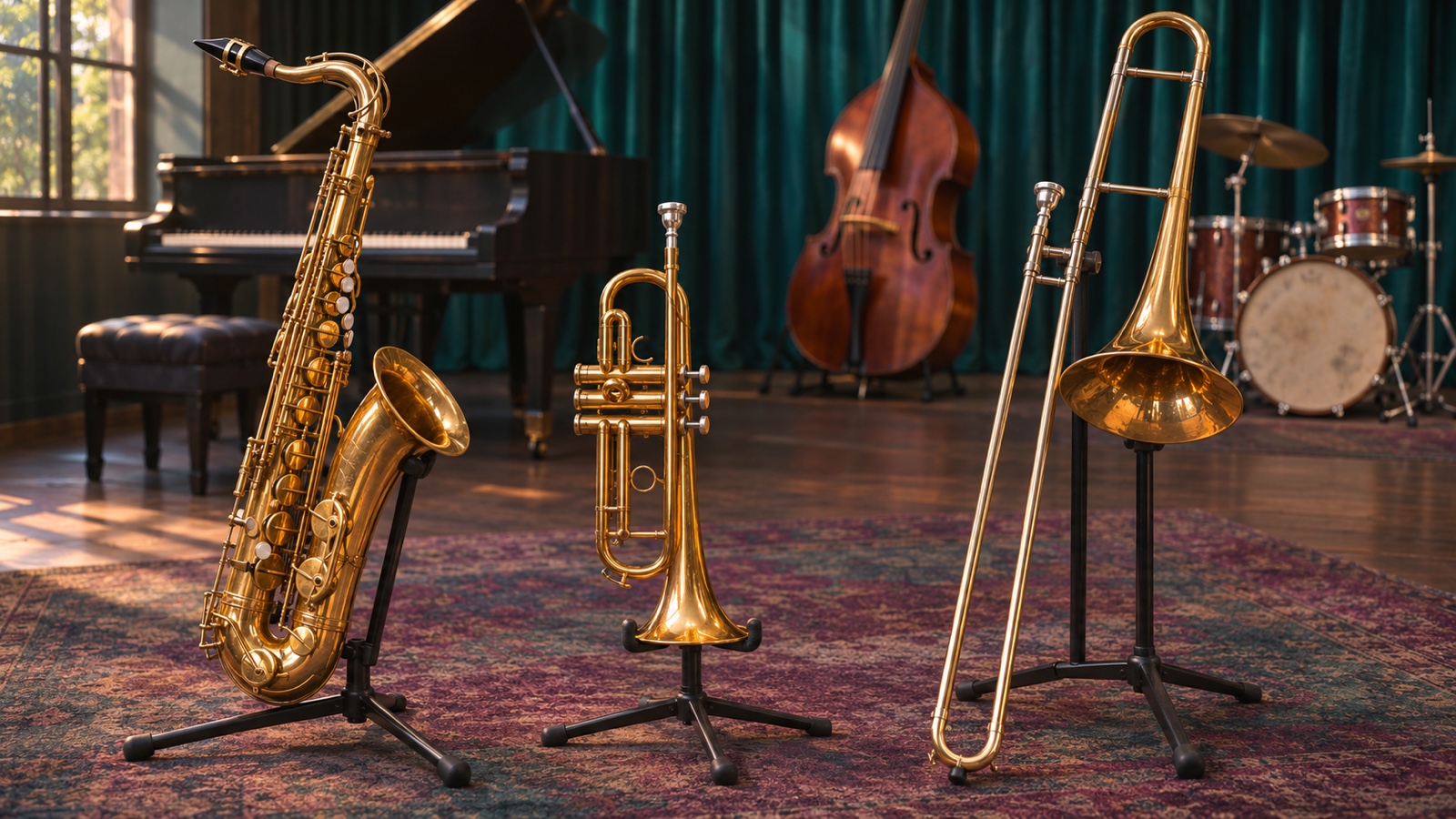
The saxophone section can include altos, tenors and a baritone. The players can share a melody or play different notes to make a chord. They may switch to clarinet or flute for some parts. The bright upper register of the trumpet can bring a melody to the front or add a short answering phrase above the ensemble.
A trombone player moves the slide to change pitch. Trombones can fill out the middle and lower notes of a chord or take over the melody. Piano, bass and drums form the core of the rhythm section. Bass and drums keep the beat while the piano adds chords or short phrases. Some bands add guitar, and section sizes vary by band and arrangement.
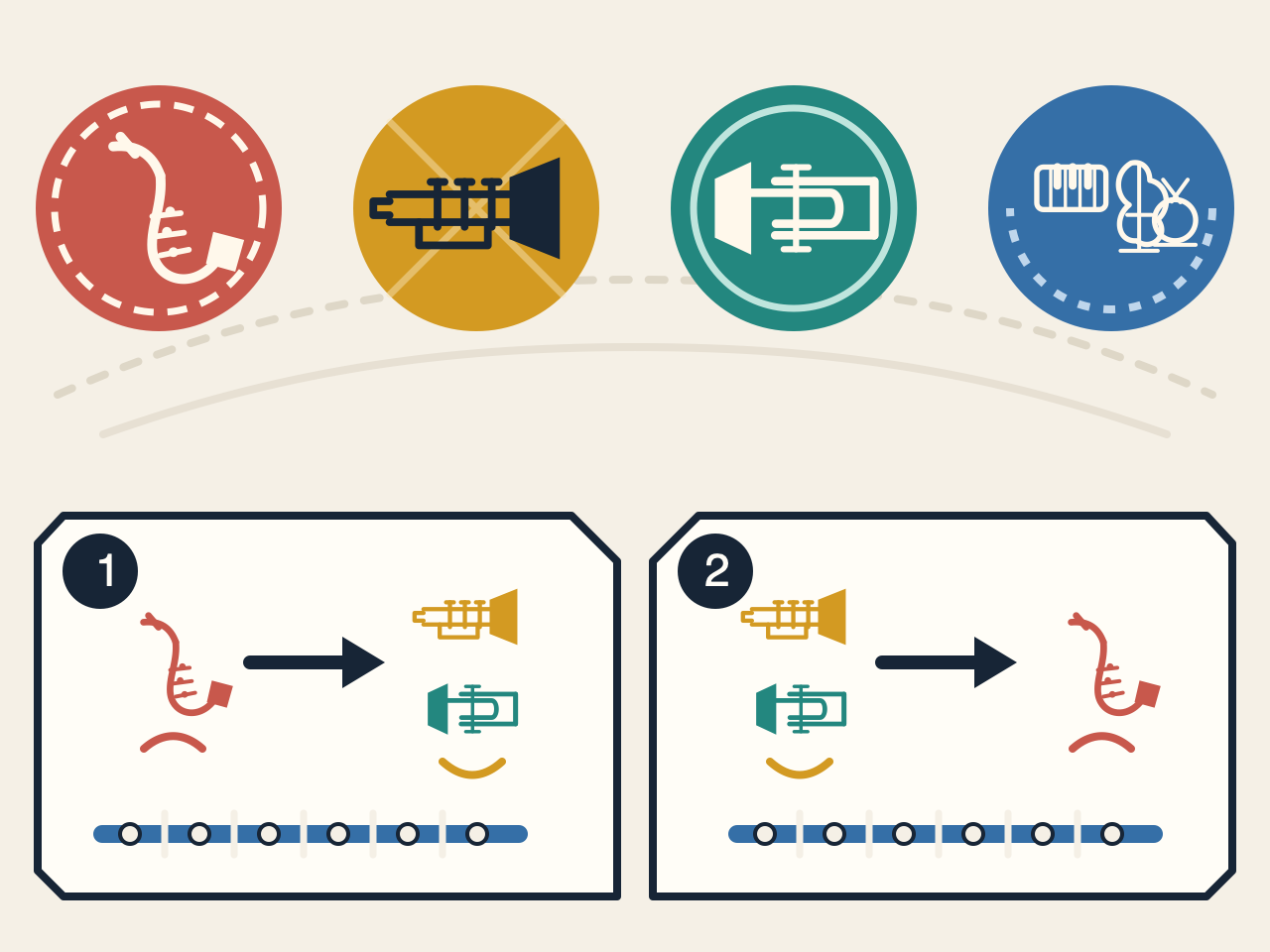
One common example has five saxophones, four trumpets, four trombones and four rhythm players on piano, bass, guitar and drums. That makes 17 players. The instruments at the top of the illustration represent their sections.
Listen for the exchange between saxophones and brass
In panel 1, the saxophones play a short phrase and the trumpets and trombones answer in the space that follows. In panel 2, the brass play first and the saxophones answer. Listen for where the phrase ends, then notice the change in tone on either side of that break. Counting the steady beat underneath helps you follow the handoff in both cases.
This exchange is called call and response. In Mary Lou Williams’s “Walkin’ and Swingin’,” the saxophones pick up a riff near the end that the brass played at the beginning. Later, the saxophones answer a brass call. You can follow the arrangement by listening for where that short phrase moves next.
The swing era through a landmark 1938 concert
By the end of the 1920s, small-group jazz and written arrangements for larger bands were both taking shape. Big band swing spread through dance halls in the 1930s and early 1940s. Grouping players into sections gave arrangers ways to build chords, place short phrases behind a soloist and pass the melody to another group within a single piece.
On January 16, 1938, clarinetist Benny Goodman and his band performed at Carnegie Hall in New York. The hall describes it as an early example of audiences buying tickets to listen to swing. A quartet, a trio and guests from other bands appeared alongside Goodman’s orchestra. The sound changes when the full band gives way to a small group during the same concert.
Compare the sounds in three modern BGM tracks
These are modern original tracks. “First Light on the Line” (3:18) was designed around the sound of a brass section playing together. Pick out a short phrase and listen for places where several layers seem to sound at once.
“Three Steps of Sun” (3:13) was conceived around the sound of a muted trumpet. A mute fits into the bell and changes the tone. After focusing on the thickness of the full brass sound in “First Light on the Line,” try following one distinctive tone here.
“Two Coins and a Story” (2:41) draws on small-group jazz. Follow the saxophone melody on your first listen and hear how the bass carries the beat on the second. Start with a short stretch of similar length at the beginning of each track to make the tones easier to compare.
References
Find and download a track you like
Use the Big Band filter on the free BGM list to find more tracks. All three tracks here are free to download and royalty-free for commercial use, with no credit required. Standalone resale and redistribution, and use for AI training, are prohibited. Check the usage guide for the terms that apply to your project.
- 1
Three tracks for comparing brass and saxophone
Compare the sound of a full brass section, a muted trumpet and a saxophone melody, in that order.
These sounds from arcalune
The next time you listen to a large ensemble, keep track of the beat and choose one short phrase. When the same sequence of notes comes from another instrument, see which section has picked it up.
FAQ
- What is a big band?
It’s a large ensemble most often associated with jazz. A typical big band plays in four sections: saxophones, trumpets, trombones and rhythm.
- How many players are in each big band section?
One common lineup has five saxophones, four trumpets, four trombones and four rhythm players, for 17 in all. The lineup varies by band and arrangement.
- How do I hear call and response in a big band?
When a short phrase ends, listen for the instrument that comes in next. Notice whether the saxophones or the brass play first, then listen again for the continuing beat in the bass and drums.
- Can I use the featured BGM in commercial work?
Yes. The three modern original tracks allow commercial use without credit. Standalone resale and redistribution, and use for AI training, are prohibited. See the usage guide for details.