
What Is Jazz Fusion? 1970s History and Three Ways to Listen
Jazz fusion is music built on jazz improvisation and harmony that incorporates rhythms from rock, funk, and other styles, along with the sounds of electric instruments. When listening, focus on the parts the players change in the moment, the patterns repeated by the bass and drums, and the role of each instrument.
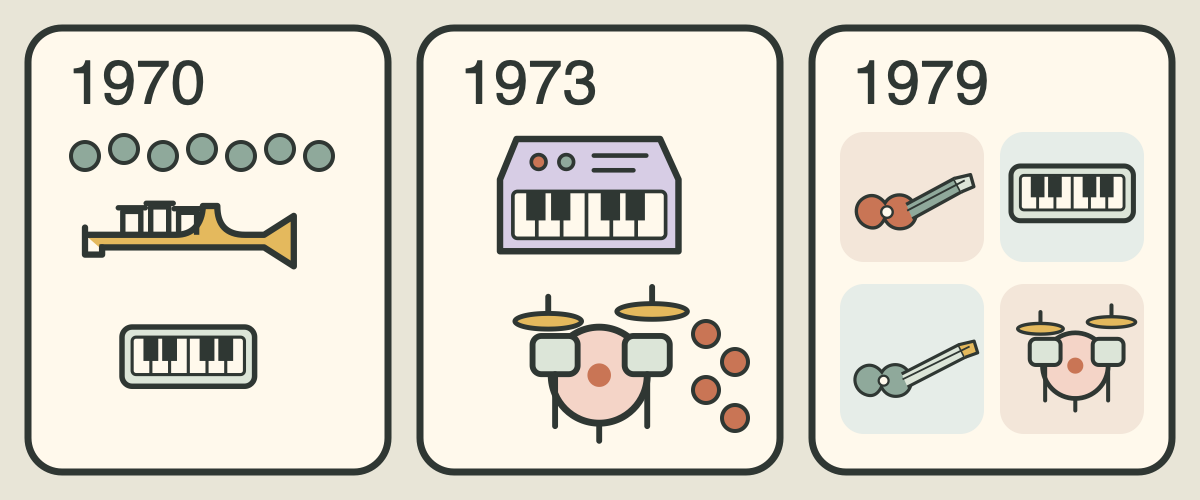
Bitches Brew from 1970, Head Hunters from 1973, and CASIOPEA from 1979 each present a different combination. After tracing their dates and lineups, we will apply the same approach to a modern fan arrangement of game music.
Where does fusion sit within jazz and jazz-rock?
Jazz covers a wide range of performance, from improvisation in small groups and big-band ensembles to fusion played with electric instruments. In fusion, listening to how jazz melodies and chords connect with forceful rock beats or repeating funk bass lines helps reveal the differences between tracks.
Jazz-rock is a term that focuses specifically on the connection between jazz and rock. Fusion can be used more broadly to include funk, soul, and other styles, so both names may be applied to the same work. In Japan, the terms crossover and fusion came into use from the 1970s onward.
Tracing three albums from 1970, 1973, and 1979
On Miles Davis's 1970 album Bitches Brew, trumpet and other horns overlap with electric piano, electric bass, and percussion. During the recording, prepared chords and rhythms served as starting points for improvisation. Afterward, Teo Macero and others edited the tapes. Both performance and editing shape the layered sounds and changes between sections.
On Herbie Hancock's 1973 album Head Hunters, keyboards and horns sit over funk rhythms. The repeating low part at the beginning of Chameleon is played on a synthesizer. Bassist Paul Jackson also appears on the album, making it possible to listen for which instrument takes on the bass role at different points.
CASIOPEA, Casiopea's 1979 debut album, is a Japanese example centered on four musicians playing guitar, keyboards, bass, and drums, with guest horn players. Following who handles the melody, chords, bass, and beat reveals how multiple instruments interact in a lineup different from those of the previous two albums.
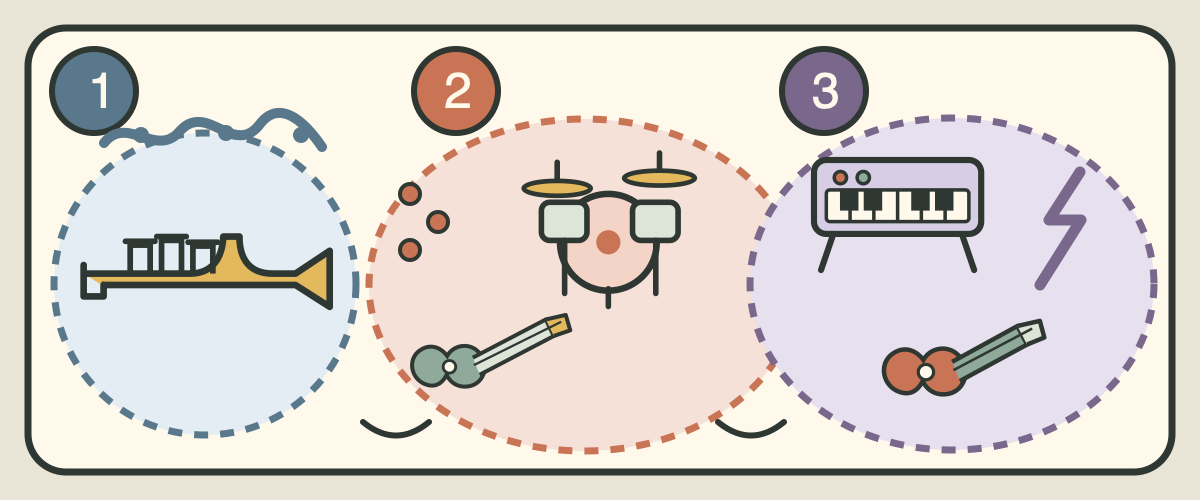
Listen in order for improvisation, bass and beat, then instrumental roles
On the first listen, learn the recurring theme, then shift your attention to solos and short responses. Follow how the length and placement of the melody change while the same accompaniment continues, or how another player answers briefly. This reveals where the players have room to introduce changes.
On the second listen, focus on the relationship between bass and drums. Hum the bass pattern while comparing the moments when the drums and accents arrive together with those when bass notes fall between the beats. You can also hear how much the upper melody moves while the bass pattern repeats.
On the third listen, follow who is responsible for the melody, chords, bass, and beat. Keyboards may support the harmony, guitar and horns may pass the melody between them, and one instrument may move into another role. Some tracks, such as Chameleon, use keyboards for the bass part.
Separate melody and rhythm in a modern fan arrangement
Our fan arrangement of game music, “Battle 2 - Jazz Fusion ver.”, runs for 3 minutes and 30 seconds. Listen from 0:00 on YouTube. According to its published description, a breath-controlled electronic instrument called an EWI and a clean electric guitar play the main melody together. Follow the shape of the melody first. On a second listen, focus on the slap bass and drums.
As the melody continues, listen for how separate lines from the electric piano and horns overlap with it. This also helps distinguish the role of each instrument. This fan arrangement is for listening only.
You do not have to follow every instrument at once. After recognizing the theme, move to the bass and drums, then listen to the relationship between melody and accompaniment. You can compare works with different lineups in the same order.
FAQ
- Is fusion a type of jazz?
It is music built on jazz improvisation and harmony that incorporates rhythms from rock, funk, and other styles, as well as the sounds of electric instruments. The balance of these elements differs from one work to another.
- What is the difference between jazz-rock and fusion?
Jazz-rock often refers to the connection between jazz and rock, while fusion is used as a broader term that can also include funk, soul, and other styles. The same work may be described by both names.
- What should I listen for first in fusion?
Listen first for changes in the theme and improvisation, then for the beat supported by bass and drums, and finally for the roles of keyboards, guitar, and other instruments. Focusing on one aspect at a time makes comparisons easier.