What Is Swing in Jazz? Eighth Notes, Rhythm, and History
In jazz, “swing” can refer to a rhythmic feel created by note spacing and accents. For example, when a beat contains two eighth notes, playing the second one a little later than the midpoint creates a long–short pattern even though the tempo stays the same.
“Swing jazz” is also the name of music widely heard in the United States from the 1930s through the mid-1940s. We will first compare the feel of eighth notes in a diagram, then look at what to listen for in bands of that era and in modern recordings.
Keep the tempo steady and compare where the second note begins
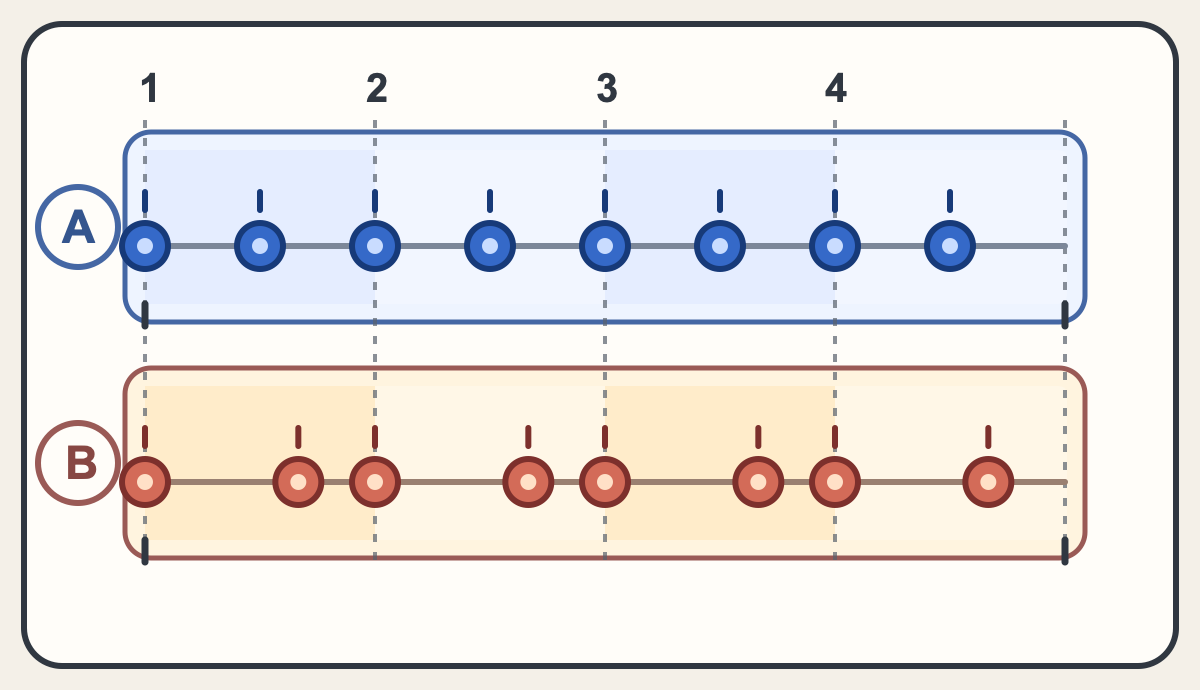
Keep a steady “1, 2, 3, 4” beat with your hand and add one more note between each beat. With straight eighth notes, that note falls halfway to the next beat. In one example of swing, you feel each beat in three parts and play on the first and third parts.
The positions of beats 1, 2, 3, and 4 are the same in A and B. Looking only at where each note begins, A has equal gaps from one note to the next. In B, the first gap is longer and the next is shorter. The beat boundaries stay in place, while the second note moves closer to the next beat.
To try it yourself, keep tapping the beat with your foot while clapping “TAH-ta, TAH-ta.” The speed of your foot does not change, but placing the second clap a little later changes how the handclaps flow.
How is this different from accents on beats 2 and 4 or from syncopation?
Clapping only on beats 2 and 4 changes which beats feel emphasized. When eighth notes swing, what moves is the position of the second note between the beats. In a performance that combines both, first count the beat in the bass or drums, then shift your attention to the smaller notes between those beats.
Syncopation places an accent where it is not usually felt strongly or holds a note across the next beat. Syncopation can still be used when the eighth notes are evenly spaced. Listen separately for when a note begins between the beats and for which note stands out.
The 2:1 ratio in the diagram is one way to hear the long–short feel. Measurements of jazz recordings found that the ratio varies with tempo and with the part a musician plays. The researchers provide two 125 BPM audio examples. Compare the reference version with a synthesized version that applies note spacing and beat-onset shifts measured in those recordings.
When swing jazz spread through dance halls
From the 1930s through the mid-1940s, swing bands were widely heard in dance halls and on the radio. Black bandleaders and arrangers had been developing ways to write for large ensembles before the music reached that broad audience. Fletcher Henderson and Don Redman gave the trumpet, trombone, saxophone, and rhythm sections distinct parts and created room for improvisation within written ensemble passages.
In recordings from that era, keep counting the beat in the low sounds and listen for the brass and saxophones trading short phrases. This makes it easier to hear the swing created by the group as a whole. Carnegie Hall’s history of swing bands includes the Count Basie Orchestra’s “One O’Clock Jump.”
Hear swing and bossa nova in modern recordings
The next two tracks are modern original background music released on this site. “Hat On, Into the Rain” is a 4:15 medium swing track featuring trumpet and saxophone. The track begins at 13:23 in the official video. From 13:27, follow the recurring low sounds and listen for long–short gaps in the mid- and high-register sounds between them.
“Ribbon and Brown Paper” is a 4:30 bossa nova track featuring nylon-string guitar. The track begins at 18:39 in the official video. From 18:43, look for notes that fall midway between the recurring sounds. After comparing these tracks with their different instrumentation, use the 125 BPM audio examples to hear the difference with the speed held constant.
Choose a track to match footsteps or hand movements in your video
For a walking scene, check whether the beat continues beneath the moments when each foot meets the floor. For a close-up of someone’s hands, listen for places where the sound of setting down an object or folding paper overlaps the music. Place both tracks under the same scene of about ten seconds and choose the one that makes the dialogue or movement easier to follow.
These two tracks are available on this site as free, royalty-free MP3 downloads. They may be used in commercial videos and streams within the terms of use. Credit is optional; redistributing the audio files on their own and using them for AI training are not permitted.
Count the beat first, then listen for where the notes between the beats begin. This lets you hear how the feel changes even when the tempo stays the same. When choosing a track, also test whether that feel suits the movement and dialogue in your video.
FAQ
- What does swing mean in jazz?
It can mean the rhythmic feel created by note spacing and accents. When a beat contains two eighth notes, placing the second one later than the midpoint can create a long–short pattern. The term also names swing jazz, the music that spread widely in the United States from the 1930s through the mid-1940s.
- Are swing eighth notes always played in a 2:1 ratio?
No. The 2:1 ratio is an example for learning to divide a beat into three parts. Measurements of recordings show that the long–short ratio changes with the tempo and the part being played.
- Is accenting beats 2 and 4 also swing?
It is one element that supports the swing feel. Emphasizing beats 2 and 4 and shifting where the second note begins within each beat are separate things that you can listen for independently.
- Can I use the two featured tracks in commercial videos?
Yes. The two tracks distributed on this site are royalty-free assets that may be used in commercial videos within the terms of use. You can save the free MP3 files from their track pages, and credit is optional.