

What Is Rock Music? A Guide to Its History, Riffs, and Rhythm
Rock grew out of the rock and roll of the 1950s and came to encompass many ways of playing and writing music. Blues, rhythm and blues (R&B), country, and gospel all helped shape its early sound.
We will trace this history through three examples from film, television, and albums. Then we will count four beats and learn to distinguish a short repeating riff, the lead melody in the foreground, and the roles of the drums and bass.
How this list was chosen
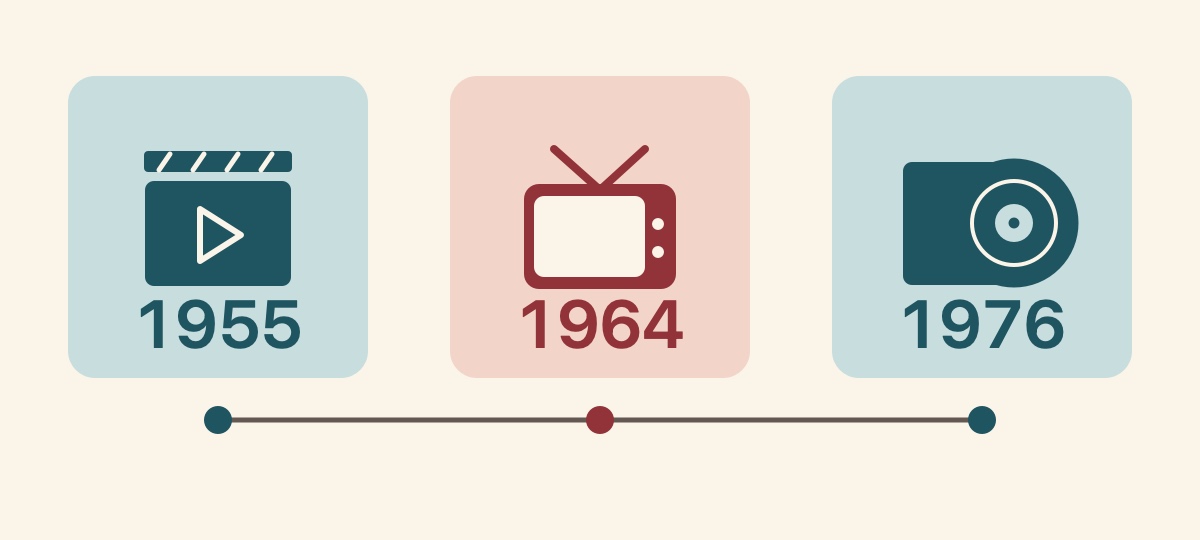
- Follow a 1955 film, a 1964 television appearance, and a 1976 punk album in chronological order.
- Use the rhythm diagram to follow beats 2 and 4 in each bar, then look beyond speed and volume for other listening points in three rock background tracks.
From rock and roll to rock: a wider range of sounds and songwriting
The term “rock and roll” was used for music that became popular with young people in the United States in the mid-1950s. Performers combined blues and R&B vocals and rhythms with elements such as country playing and storytelling in different ways.
“Rock” is a broader name that also covers music that developed later. It includes danceable songs built on short repeating riffs, songs layered in the studio, and ballads that let a melody unfold at length. Following how its sounds and creative methods expanded over time reveals the range of music gathered under the same name.
The early meeting of gospel, blues, and country
Before rock and roll became widespread, Sister Rosetta Tharpe paired gospel singing with powerful guitar playing. Her 1944 recording of “Down by the Riverside,” preserved by the Library of Congress, is one example where both can be heard.
Chuck Berry’s 1955 song “Maybellene” was based on the country song “Ida Red.” The Rock & Roll Hall of Fame describes Berry as bringing together blues, R&B, and country. Listen, too, for how the sung words and short guitar phrases alternate over the same rhythm.
Bill Haley & His Comets recorded “Rock Around the Clock” in 1954. Performers from different backgrounds were active at the same time, so the spread of rock and roll becomes clearer when several of them are considered side by side.
Discovering rock through film, television, and albums
In 1955, “Rock Around the Clock” played over the opening of the film Blackboard Jungle. A recording that had already been released reached a wide audience of young moviegoers.
On February 9, 1964, the Beatles made their first appearance on the U.S. television program The Ed Sullivan Show. Viewers could watch the band perform together. Later, on the 1967 album Sgt. Pepper’s Lonely Hearts Club Band, the group layered sounds in the studio to create textures beyond those of a stage ensemble.
In 1976, the Ramones released their self-titled debut album. Guitar, bass, drums, and vocals drive its run of short punk songs. By then, rock had room for both layered studio production and songs that made a few instruments count.
Listen for the riff, lead melody, and accompaniment in turn
A riff is a short musical pattern repeated within a song. It may be played by a guitar, bass, keyboard, or another instrument, and it stays in the ear because the same rhythm or sequence of notes returns. Start by remembering one short phrase near the beginning, then listen for its return after the vocals or lead melody enter.
The lead melody is the vocal or instrumental line heard in the foreground of a passage. The accompaniment supports it with the beat, bass, and harmony. A riff may itself come to the foreground or repeat beneath a lead melody. Within the same short passage, move your attention from the foreground line to the returning sound and then to the sounds supporting the beat to follow each role.
Count two bars of four beats and separate the drums from the bass
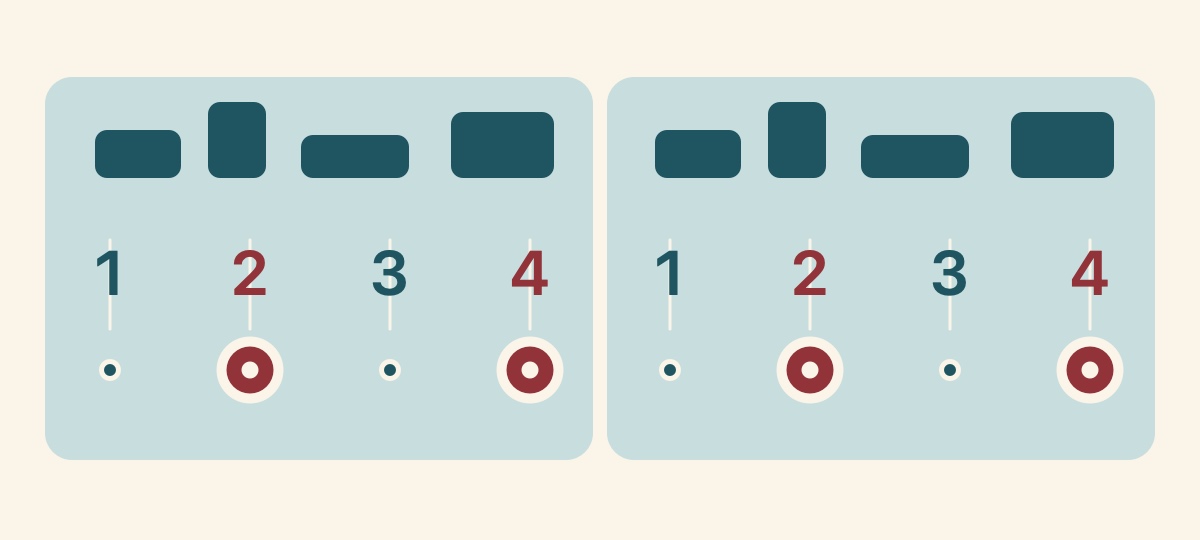
Count “1, 2, 3, 4” twice and clap on 2 and 4. Emphasizing the second and fourth beats in 4/4 is called a backbeat. In a basic rock example, a short, sharp snare sound marks these beats.
Next, listen for the low thump of the bass drum. A basic example places it on beats 1 and 3. The number and position of the hits vary from song to song. The bass instrument plays notes that can ring out or change pitch. Replay the same passage and listen for the drum hits and bass notes in separate passes.
The top row of the diagram represents the same riff returning in each bar. The bottom row provides beat numbers and snare markers. Keep clapping on 2 and 4 while visually following where the shape in the top row restarts. This helps you hear repetition separately from the beat.
References
Hear short repetitions and lead melodies in three rock background tracks
“Impulse” (2:44) is a powerful, emotional rock background track. Starting at 40:29 in the compilation video, choose one sound in the foreground and listen for where the same short pattern returns.
“At the End of the Cry” (2:46) is an emotional, powerful rock ballad. Starting at 58:16 in the same video, listen for sounds that ring out and sounds that cut off quickly.
“They Are Not Waiting For Orders” (3:29) is a background track in which the guitar carries the lead melody. Starting at 1:36:47 in the other video, listen for sounds that fall between beats or stress a normally weak part of the beat. This displacement of rhythm is called syncopation.
Using the three featured tracks in videos and streams
Each of the three featured tracks can be downloaded individually for free and used royalty-free under the audio usage guide. Within the permitted scope, there is no additional royalty for each use, and no credit is required in commercial or noncommercial videos or streams.
Reselling or redistributing the audio on its own and using it for AI training are prohibited. The conditions described here apply to these three tracks from this site. Check the audio usage guide before using them.
References
- 1
Compare three sides of rock
Listen for a short pattern that returns and the lead melody, then compare all three tracks in the same order.
These sounds from arcalune
When you hear an unfamiliar song, begin by counting just two bars of four beats and finding the sounds on beats 2 and 4. Then move your attention in turn to the short returning riff, the lead melody in the foreground, and the low accompaniment. This makes it easier to follow how songs differ within the broad name of rock.
FAQ
- What kind of music is rock?
Rock is a broad range of music that developed from 1950s rock and roll. It includes songs with short riffs and powerful rhythms, layered studio works, and relaxed ballads.
- What is the difference between rock and rock and roll?
Rock and roll is a term for music shaped by contact among R&B, country, gospel, and other traditions that gained wide support among young people in the mid-1950s. Rock is the broader name used for the many styles that later branched from it. Their boundaries overlap depending on the period and context.
- Who invented rock?
The rock and roll of the 1950s grew from the work of many singers and musicians connected with blues, R&B, country, gospel, and other traditions. Sister Rosetta Tharpe, Chuck Berry, and Bill Haley & His Comets are examples that help trace that history.
- What is a riff in rock?
A riff is a short musical pattern repeated within a song. It may be played by a bass or keyboard as well as a guitar, and it can function as the lead melody or as part of the accompaniment.
- How should I listen to rock rhythm?
Count two bars of four beats and first use the snare on beats 2 and 4 as a guide. Then listen separately to the low bass drum and the pitched sound of the bass. The feel of the beat and the drum positions vary by song.
- Can I use the three featured tracks in videos or streams?
Each of these three tracks can be downloaded individually for free and used royalty-free under the audio usage guide, with no additional royalty for each permitted use. No credit is required in commercial or noncommercial videos or streams. Reselling or redistributing the audio on its own and using it for AI training are prohibited.