
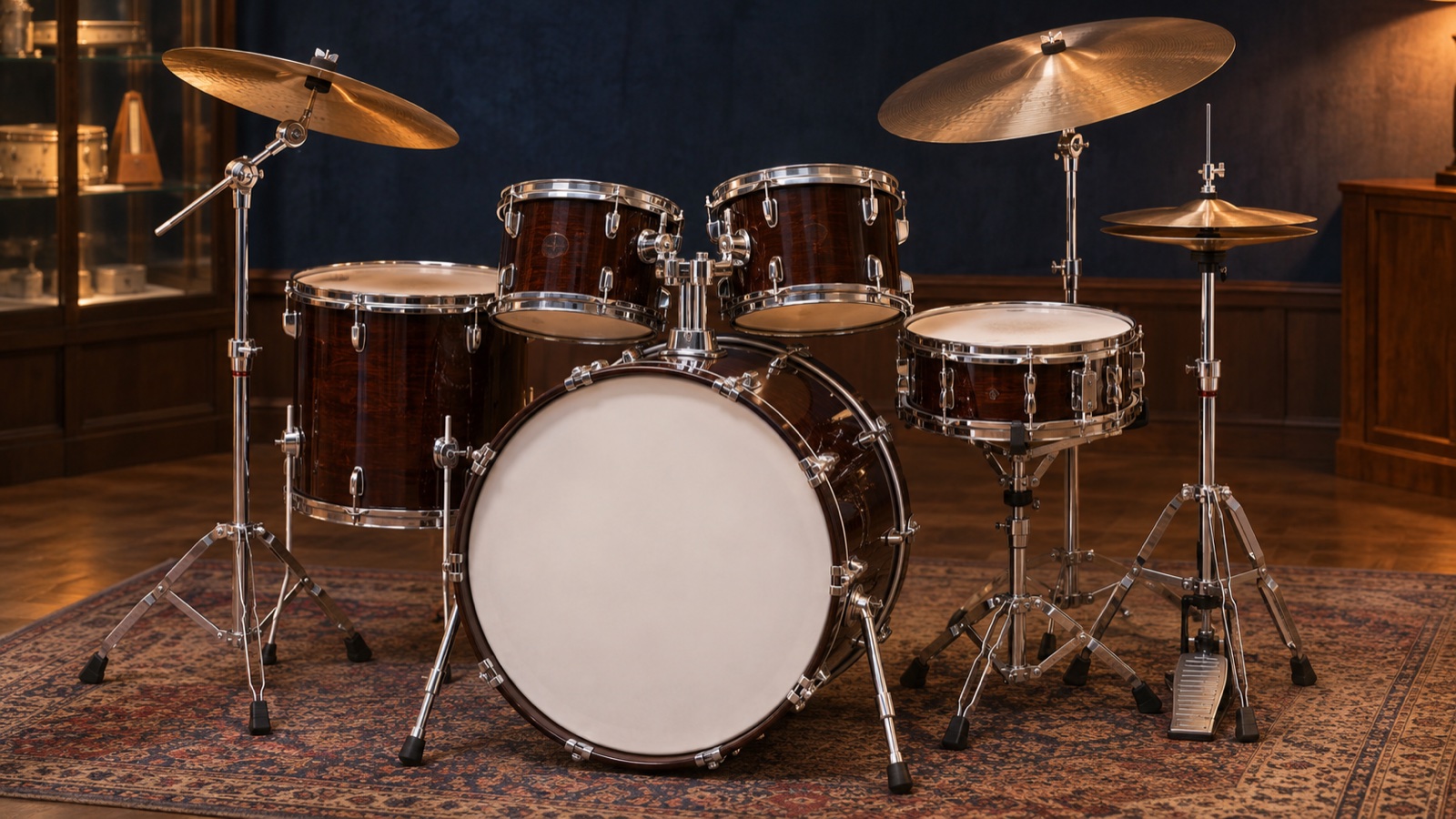
What Is a Drum Kit? Parts and How the Pedals Work
A drum kit combines drums and cymbals so one person can play them. If you do not know a part's name, start with the pedals at the player's feet, then look at the drums in the center and the cymbals around them.
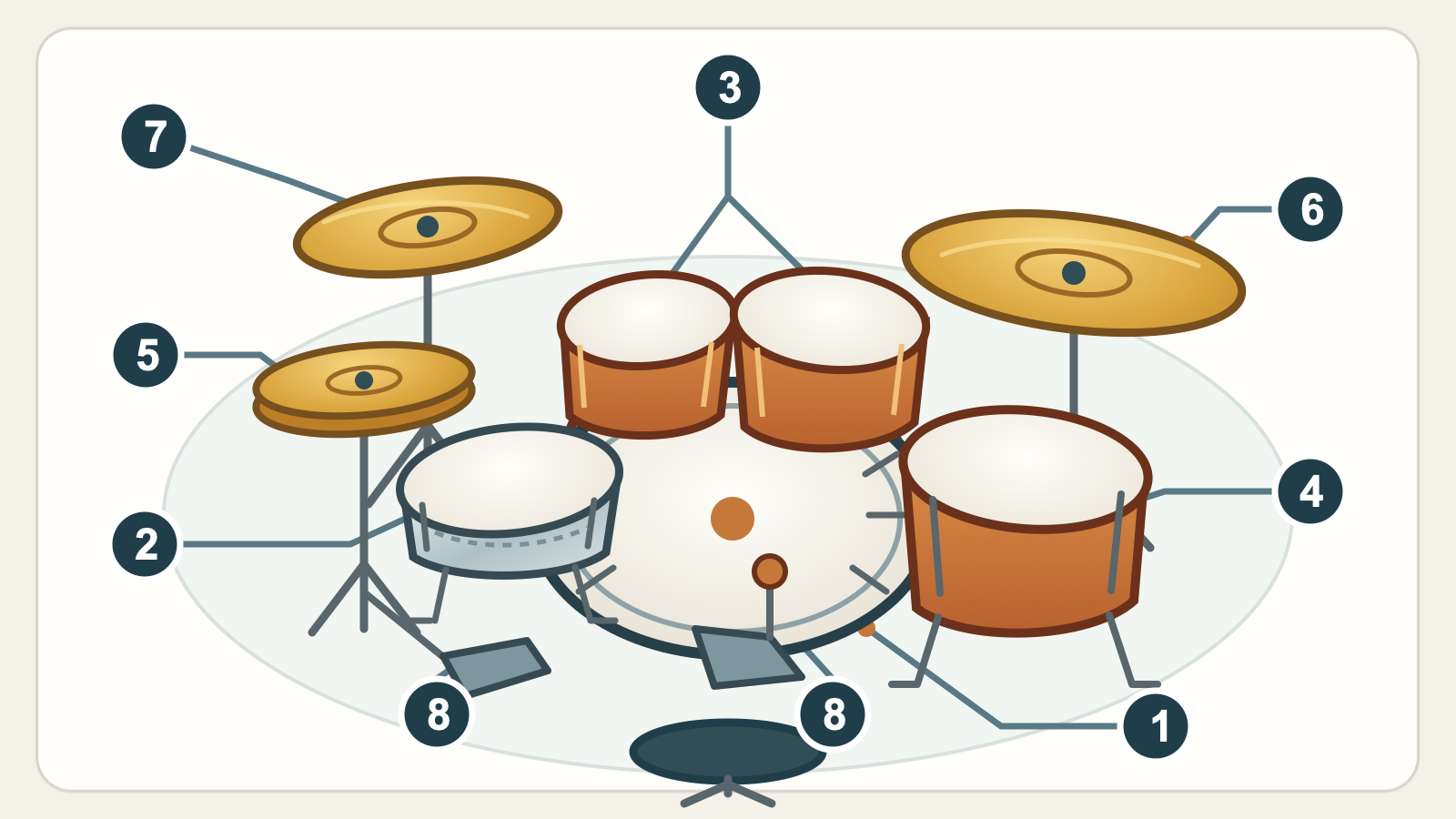
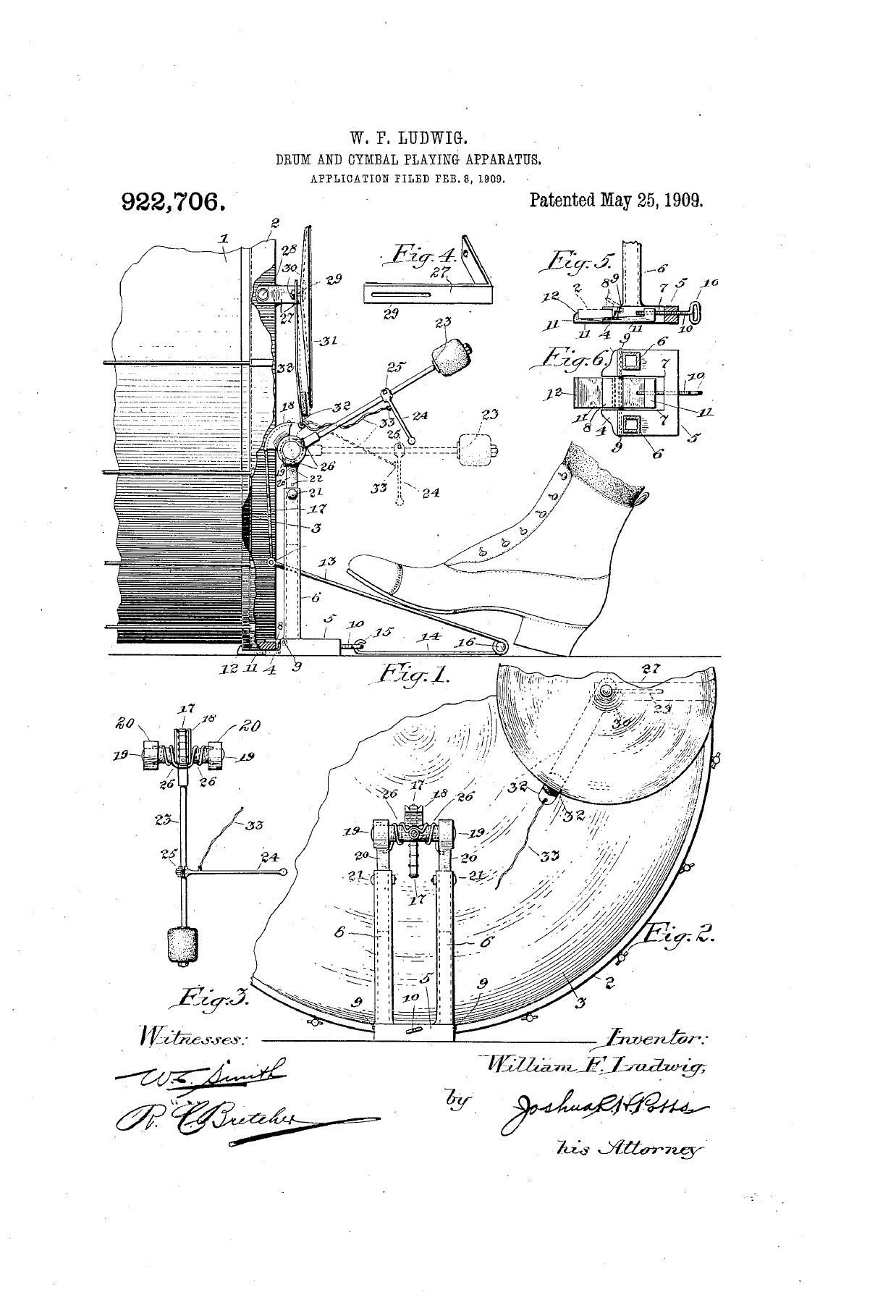
Use the diagram below to locate the bass drum, snare, toms, hi-hat, ride and crash. Comparing the two modern pedals with the 1909 patent drawing also shows how a player's feet can operate drums and cymbals.
Find the drum kit parts numbered 1 through 8
The diagram shows one example of a right-handed kit from the player's seated position. 1 is the bass drum, 2 is the snare drum, 3 marks two rack toms and 4 is the floor tom standing on its legs. The drums spread out from the center, and the player reaches them with both hands and feet from the seat at the bottom.
5 is the hi-hat with its two cymbals, 6 is the ride and 7 is the crash. 8 marks two pedals. From the player's point of view, the left pedal controls the hi-hat and the right pedal controls the bass drum.
The number and position of toms and cymbals vary by player. The diagram shows one arrangement in which the right foot plays the bass drum.
References
The right foot plays the bass drum and the left foot controls the hi-hat
The 8 on the right side of the diagram is the bass drum pedal. Pressing it with the right foot moves the beater forward to strike the vertical drumhead on 1. The player can add a low sound with one foot while both hands move among the snare, toms and cymbals.
The 8 on the left is the pedal connected to the hi-hat at 5. Pressing it with the left foot closes the two cymbals, while easing off opens the gap between them. The player can strike them with a stick while they are closed or open, and can also make a sound by closing the two cymbals with the foot.
Identify the snare by its wires and the toms by their range of pitches
The snare drum at 2 has snare wires touching the lower drumhead. A strike on the top head sends vibrations to the lower head and makes the wires rattle. This is a useful clue when listening for a short, crisp sound or a roll that joins repeated strokes together.
3 marks the rack toms mounted above the bass drum, while 4 is the floor tom standing on legs to the right. This kit has two rack toms. Diameter and drumhead tension affect the sound, so playing several toms in sequence makes their changes in pitch easier to hear.
References
The ride keeps a pattern going while the crash adds an accent
A common use of the ride cymbal at 6 is to continue a steady pattern with the tip of the stick. Listen for a sound that moves the beat forward while keeping each stroke distinct to understand the ride's role.
A common use of the crash cymbal at 7 is to spread a broader sound at the beginning of a piece or at a transition, creating an accent.
Some cymbals can serve both purposes. During a performance, find passages where a repeated pattern continues and places where a wider sound emphasizes a transition. This makes the two roles easier to distinguish.
Find each part's sound from 0:01 to 0:12 in the official lesson
A Smithsonian Folkways lesson explains how to listen to Baby Dodds playing drums on “Spooky Drums No. 1.” The track was released in 1951 and lasts 2 minutes 24 seconds.
The first passage identified by the lesson runs from 0:01 to 0:05. Follow the low bass drum first, then find the snare in the same passage. Move your attention to the cymbal at 0:06, then follow the toms in sequence from 0:07 to 0:12.
Early jazz encouraged mechanisms that let the feet operate more than one percussion instrument
By the late nineteenth century, performers had begun using a foot to play the bass drum while their hands played the snare. The Smithsonian lesson describes how such mechanisms spread through early jazz in New Orleans.
In U.S. Patent 922,706 dated May 25, 1909, pressing one pedal moves two beaters for a bass drum and a cymbal through a chain and shaft. In Figure 1, 13 is the foot pedal, 17 is the chain, and 23 and 24 are the arms of the two beaters. The National Museum of American History holds a foot pedal from around 1909 to 1910 that corresponds to this patent.
The device in the drawing mounts one cymbal on the rim of the bass drum. On a modern hi-hat, a pedal on a separate stand opens and closes the gap between two cymbals. Return to the first diagram and compare what each foot-operated mechanism moves.
Compare brushes in a full track with a standalone snare roll
Open “Footprints at the Warehouse” (4:14) on the official YouTube video at 17:41. The track description identifies upright bass and brushes. Follow the low notes first, then listen again with your attention on the brushes.
“Drum Roll 1” lasts about 2 seconds and starts at 6:13 in the official YouTube video. It is a short standalone snare roll, so you can hear how repeated strokes join into a single sound.
Royalty-free material for monetized videos
“Footprints at the Warehouse” and “Drum Roll 1” are royalty-free materials available as free downloads. You may use them in monetized videos and streams. No usage fee or credit is required.
Copyright remains with the rights holders. Redistribution or sale of the audio by itself and use as AI training material are prohibited. See the material usage guide for the full terms.
References
- 1
Brush and snare roll examples
Listen for brushes in the track, then hear a short snare roll on its own.
Use it forDrums, Listening comparison
These sounds from arcalune
When watching a drummer, first look for the pedal under each foot. Then follow the hands as they move from the snare to the toms and cymbals. This helps you match each movement with the sound you hear.
FAQ
- How many instruments does a drum kit need?
There is no fixed number. The diagram shows a bass drum, snare, two rack toms, a floor tom, hi-hat, ride, crash and the left and right pedals. Other kits may have more or fewer toms and cymbals.
- What do the two drum kit pedals operate?
In a basic right-handed setup, the right pedal moves the bass drum beater and the left pedal opens and closes the two hi-hat cymbals. Other layouts, including left-handed setups, may reverse their positions.
- What is the difference between a snare drum and a tom?
A snare drum has wires touching its lower head, adding a crisp rattle. Several toms with different diameters and drumhead tensions can be arranged together to create movement between higher and lower sounds.
- What is the difference between a ride cymbal and a crash cymbal?
The ride mainly continues a steady pattern, while the crash mainly accents a transition in the music. Their roles can overlap depending on the cymbal and playing technique, so also look at how each one is used during the performance.
- Can I use the featured track and sound effect commercially?
Both are royalty-free and may be used in monetized videos and streams. They are free to download and do not require credit. Redistribution or sale of the audio by itself and use for AI training are prohibited.