
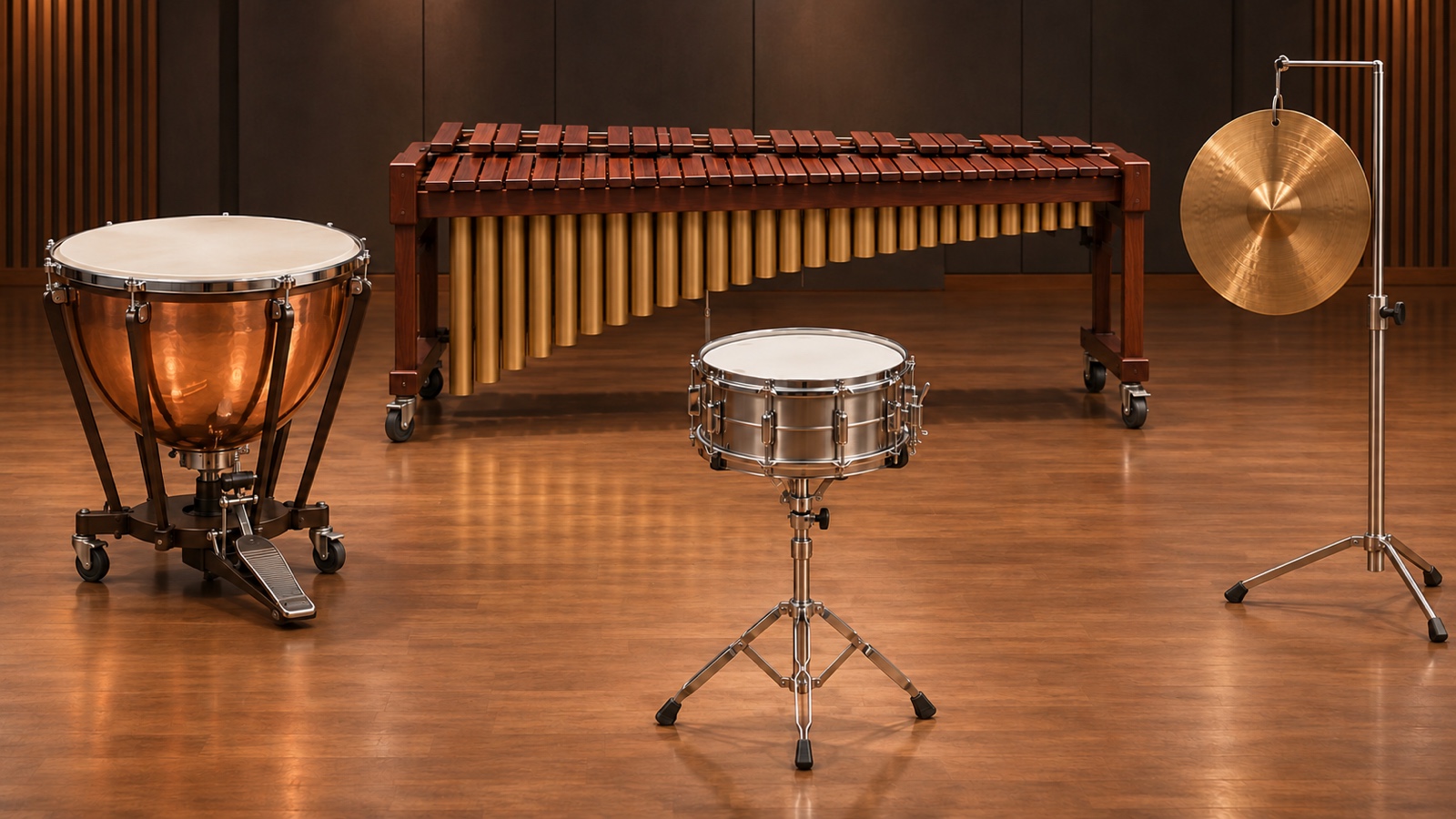
What Types of Percussion Instruments Are There? Six Examples and How They Produce Sound
Percussion instruments can produce sound by being struck, shaken, or scraped. Six common examples are timpani and snare drums, whose membranes vibrate, marimbas and glockenspiels, whose bars vibrate, and cymbals and triangles, whose metal bodies vibrate.
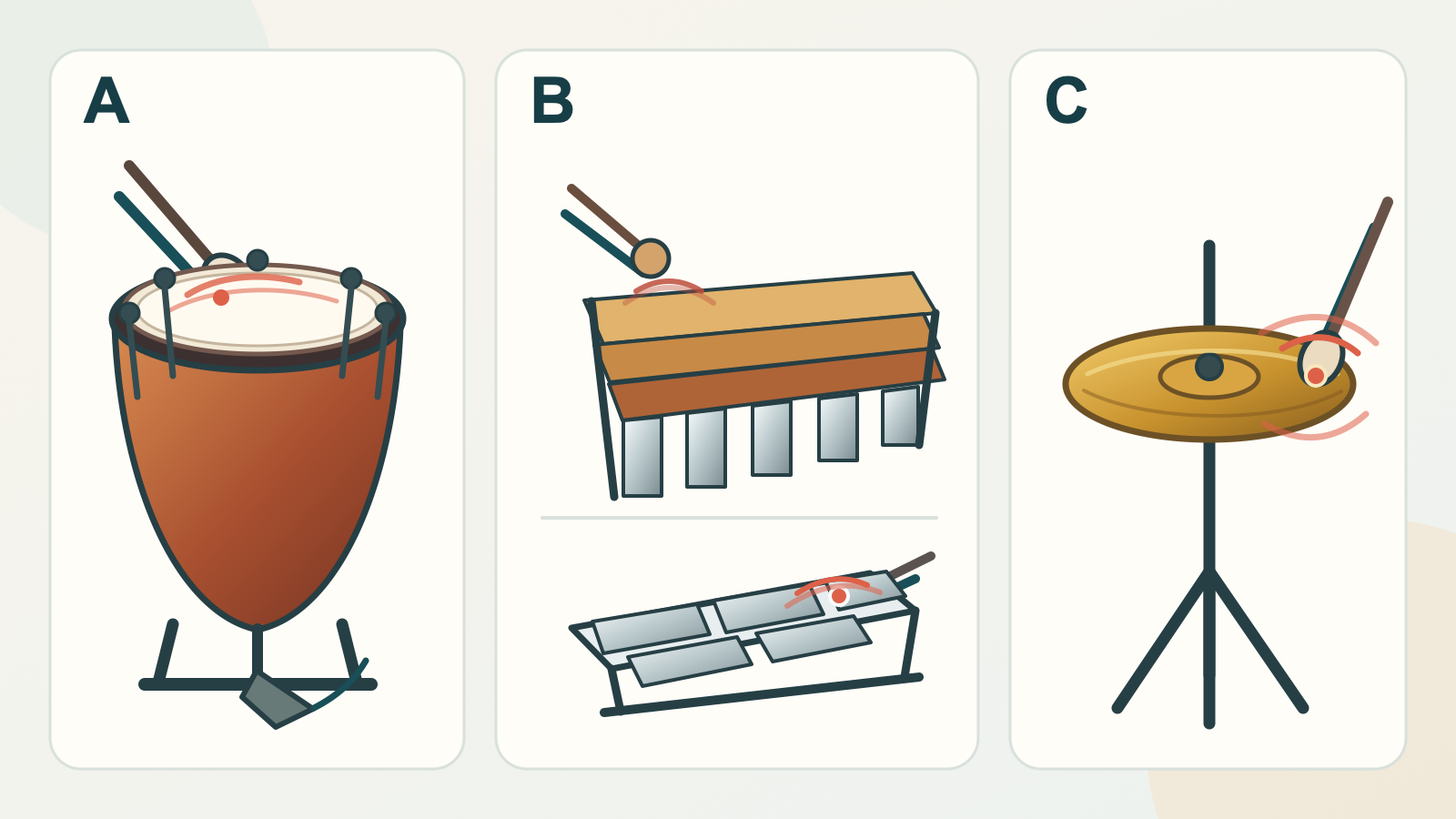
The timpani and snare drum both use membranes, but they use pitch differently in music. Use the diagram to see what vibrates, then listen to three tracks and one sound effect to hear the roles percussion instruments can play.
What vibrates and how pitch is used
To identify the form of a percussion instrument, first find the part that is struck and set into vibration, such as a stretched membrane, a wooden or metal bar, or the metal body itself. In the diagram, A shows the timpani membrane. B shows the marimba’s wooden bars above and the glockenspiel’s metal bars below. C shows the metal plate of a cymbal mounted on a stand.
In written music, timpani, marimba, and glockenspiel produce specified pitches to support harmony or carry a melody. A typical snare drum, concert cymbal, or triangle is often used for timbre, rhythm, or to mark a division in the music. You may perceive a pitch in these instruments, but performers have limited opportunities to select a specific named note while playing them.
This article compares instruments that are struck. The percussion family also includes instruments such as maracas, which produce sound when shaken, and the güiro, whose surface is scraped.
Timpani and snare drums make their membranes vibrate
A timpano is played by striking a membrane stretched across a bowl-shaped shell with a mallet. With the same membrane, increasing the tension raises the pitch and reducing it lowers the pitch. On a pedal timpano, the player can adjust the membrane tension with the foot pedal and change pitch during a performance. In an orchestra, timpani are also used to reinforce low notes and the beat.
A snare drum has upper and lower membranes, with snare wires touching the lower one. When a stick strikes the upper membrane, vibrations pass to the lower membrane and make the snare wires sound. This short, crisp sound can emphasize the beat or connect sounds in a roll.
Marimbas have wooden bars and glockenspiels have metal bars
A marimba is played by striking wooden bars tuned to different pitches with mallets. Larger bars are arranged at the lower end. Beneath each bar, the air inside a resonator vibrates in response to the bar. The player selects bars to perform melodies and chords.
A glockenspiel is played by striking tuned metal bars with mallets. Its range is generally higher than that of a marimba, and its bright sound is used for melodies and short accents. To tell them apart, first look at whether the bars are made of wood or metal, then listen to the range each instrument covers.
Cymbals and triangles sound their metal bodies
Orchestras use pairs of cymbals that are struck together and suspended cymbals, in which a single plate hangs from a stand and is struck with mallets or other beaters. The metal plate vibrates and projects the sound. A clash can emphasize a turning point in the music, while repeated strokes on a suspended cymbal can gradually build the sound.
A triangle is a triangular metal rod with one open corner, struck with a metal beater. Its sound contains multiple frequency components and its clear, high sound is used as an accent. Where and how hard it is struck, and when the player stops the resonance by hand, all change how it rings.
Early kettledrums used screws around the rim to tension the membrane
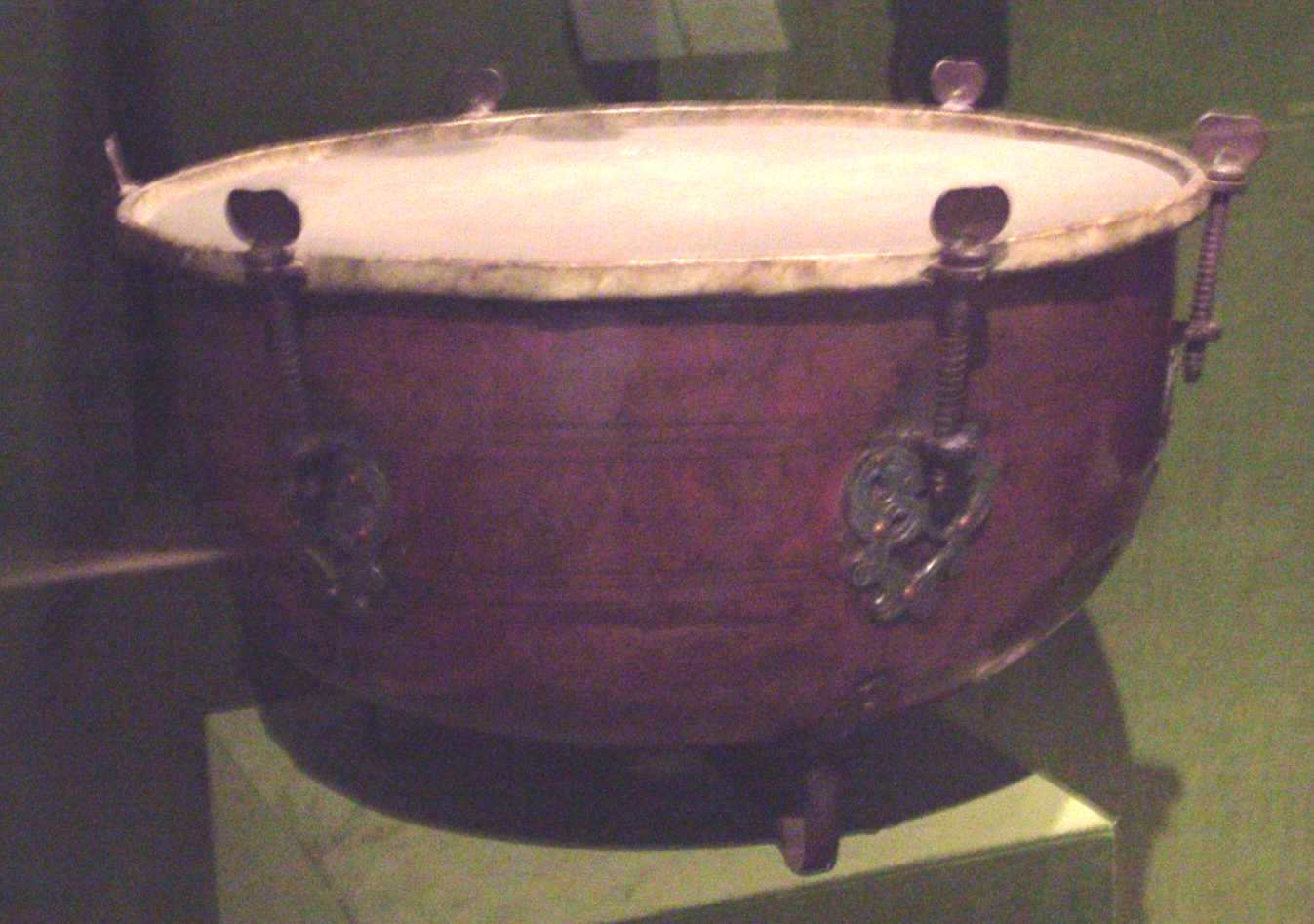
The kettledrum in the photograph is believed to have been made in Germany in the late 18th century. A membrane is stretched across its bowl-shaped copper shell, with screws around the rim to adjust its tension. The museum record lists six tensioning screws.
A screw-tensioned instrument is adjusted at one point around the rim at a time. On a pedal timpano, multiple adjustment points move together, allowing the player to change the membrane tension with the foot pedal. Compare the screws around the rim in the photograph with the pedal at the bottom of diagram A to see two different mechanisms for adjusting the tension of the same membrane.
Hear melody and accents in three tracks and one sound effect
The time shown with each track or sound effect is the length of the material itself. Each YouTube link shows where that material begins within a longer video. The roles of the instruments are based on the published descriptions of each item. Listen for sounds that carry a melody and sounds that emphasize a beat or transition.
“The Mountain of Trials” (3:38) depicts a storm in the mountains. Listen for the timpani, which the published description compares to the roar of the mountain.
“Cross-Referencing” (2:25) is intended for research and analysis scenes. The marimba carries the main melody over a calm beat.
“Sun in the Rope's Arc” (2:17) is gentle pop for warm, relaxed scenes, led by a glockenspiel melody.
“Cymbal Crash 1” (about 2 seconds) is a sound effect containing a single crash-cymbal stroke. Try placing this isolated sound at the end of a video or at a transition to add an accent.
References
Use all four items royalty-free
The three tracks and one sound effect featured here are free to download and may be used in monetized videos, streams, games, and other projects within the scope of the usage guide. There is no additional fee each time you use them, and credit is optional. Reselling or redistributing the material on its own and using it for AI training are prohibited.
References
- 1
Hear percussion in three tracks and one sound effect
Listen for timpani in a dramatic scene, melodies on tuned bars, and a single cymbal crash.
Use it forTimpani, Marimba, Glockenspiel, Cymbals
These sounds from arcalune
When looking at an instrument, identify where it is struck and which part vibrates. In an ensemble, follow changes in pitch to hear melody and harmony, then listen to how sounds begin and fade to recognize beats and transitions in the music.
FAQ
- What types of percussion instruments are there?
Examples include timpani and snare drums, whose membranes vibrate, marimbas and glockenspiels, whose bars vibrate, and cymbals and triangles, whose bodies vibrate. Some percussion instruments are also played by shaking or scraping them.
- Are there percussion instruments that let players select a pitch?
Timpani produce specific pitches by changing membrane tension, while marimbas and glockenspiels do so by using tuned bars. Typical cymbals and snare drums are used mainly for beats and changes in timbre.
- What does a timpani pedal change?
The pedal changes the tension of the membrane. With the same membrane, increasing the tension raises the pitch and reducing it lowers the pitch. The pedal lets the player adjust the pitch during a performance.
- What is the difference between a marimba and a glockenspiel?
A marimba has wooden bars with resonators, while a glockenspiel uses metal bars. Both are struck with mallets. A glockenspiel generally covers a higher range than a marimba.
- Can I use the three tracks and sound effect featured here in monetized videos?
All four items may be used in monetized videos within the scope of the usage guide. They are available as free downloads, and credit is optional. Reselling or redistributing the material on its own and using it for AI training are prohibited. See the usage guide linked in the article for full terms.