
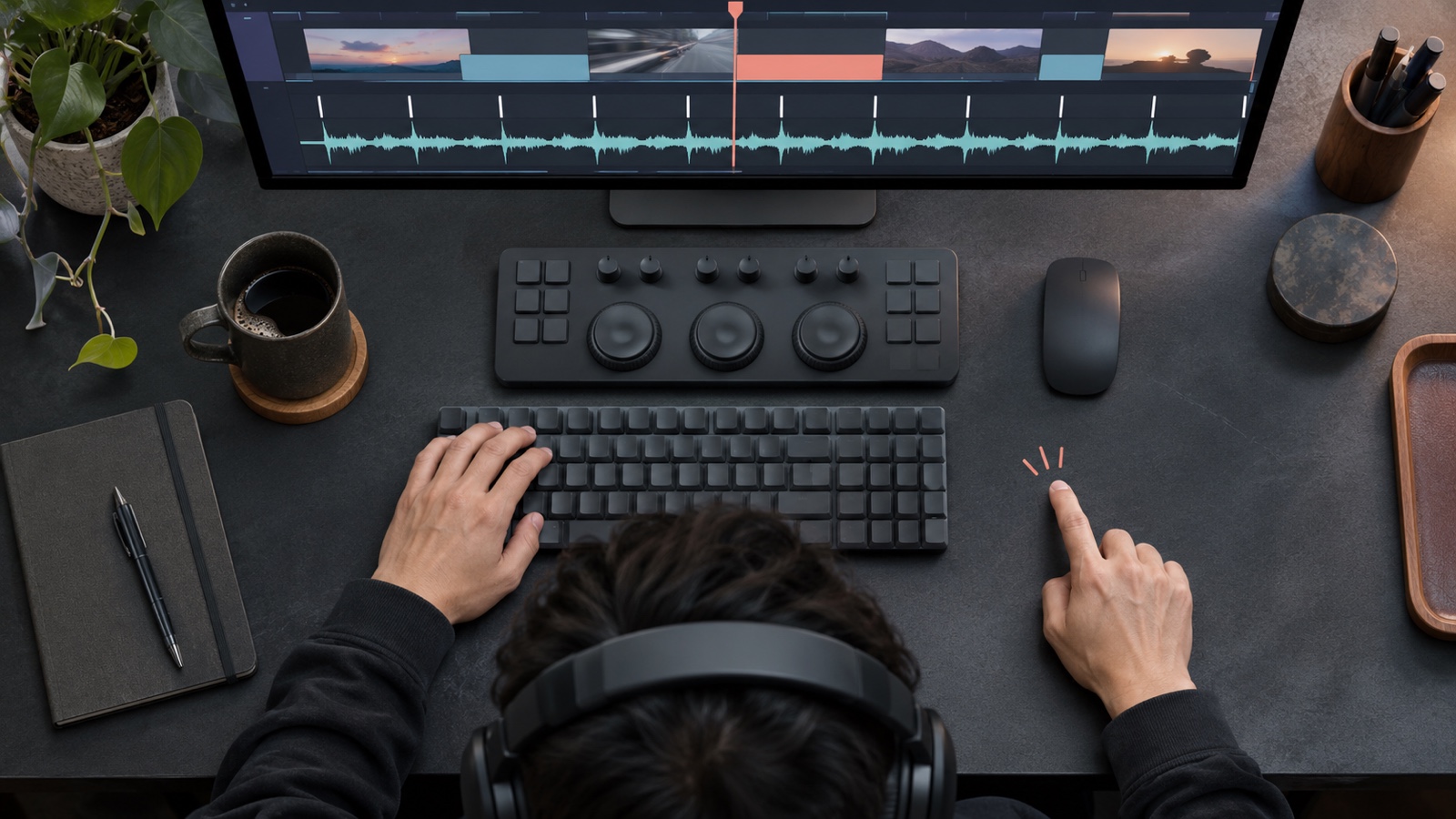
What Is BPM in Music? How to Measure It and Sync Video Cuts to the Beat
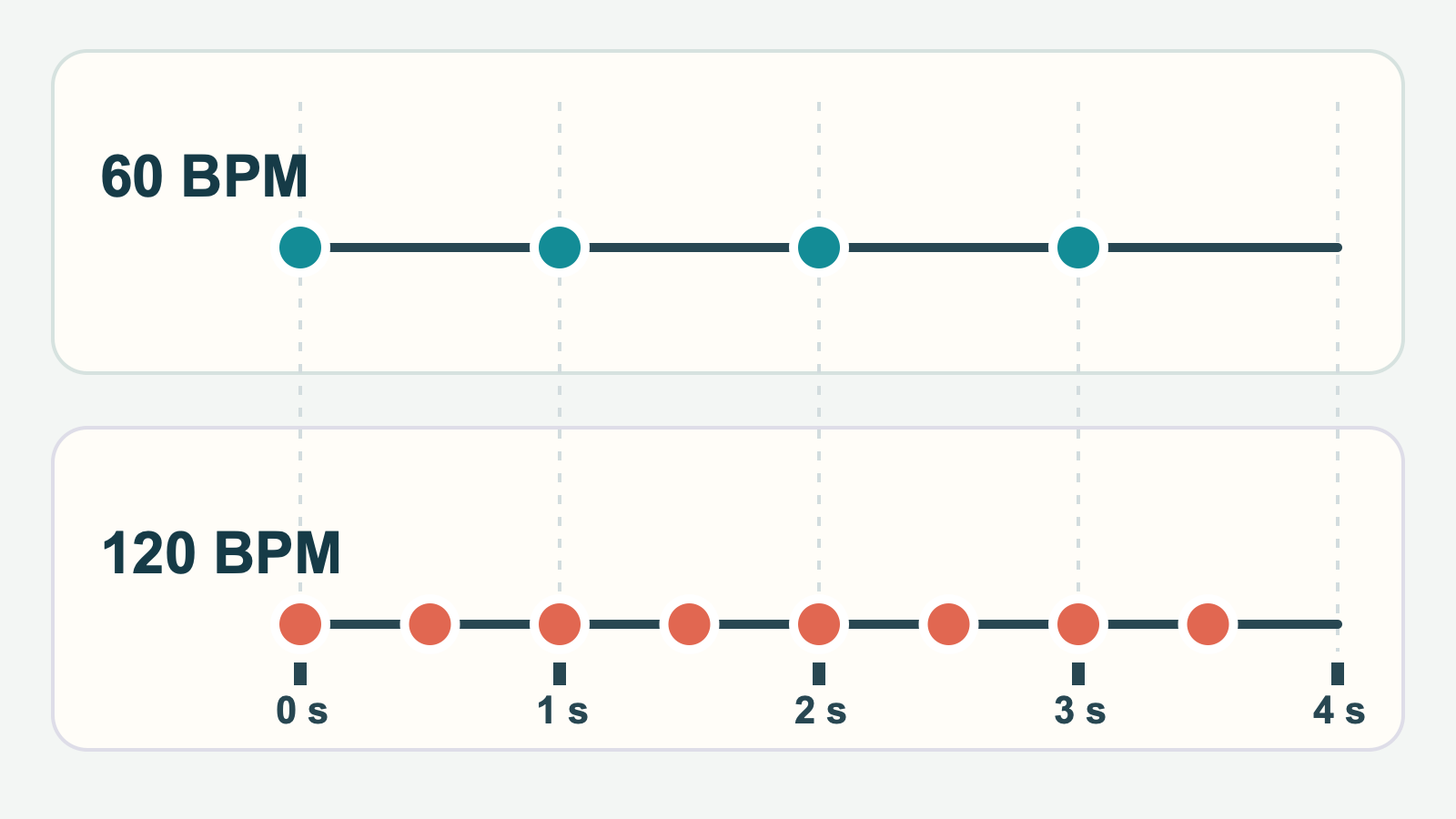
In music, BPM, or Beats Per Minute, indicates how many beats are counted in one minute. At 60 BPM, a beat arrives every second, while at 120 BPM, a beat arrives every 0.5 seconds. BPM helps you compare the speed of tracks and decide where to place the next cut in a video.
To find a track’s tempo, tap your finger at a steady interval with the music and measure that interval. First, compare beat intervals in the diagram. Then learn how to count taps and convert the length of beats and measures into frames for a 30 fps video.
60 BPM Is One Beat per Second, and 120 BPM Is Two
When the tempo is constant, the duration of one beat in seconds is calculated as 60 ÷ BPM. One beat lasts 1 second at 60 BPM and 0.5 seconds at 120 BPM. At 120 BPM, 2 beats take 1 second and 4 beats take 2 seconds.
The diagram compares the beats that begin within the same 4-second interval. At 60 BPM, 4 beats begin at 0, 1, 2, and 3 seconds. At 120 BPM, 8 beats begin every 0.5 seconds from 0 through 3.5 seconds. The 4-second mark is the end of the interval shown.
References
Tempo Is Speed, While Meter Groups the Beats
Tempo is the speed at which music progresses, and BPM expresses that speed as a number of beats per minute. At 120 BPM with a quarter note as one beat, each beat lasts 0.5 seconds. Two eighth notes or four sixteenth notes can fit within it. Adding more notes does not change the underlying beat every 0.5 seconds.
Meter indicates how many beats are grouped together. At the same 120 BPM with a quarter note as one beat, a measure of 4/4 has 4 beats and lasts 2 seconds, while a measure of 3/4 has 3 beats and lasts 1.5 seconds. The beat interval remains 0.5 seconds, but the interval at which the beginning of the measure returns changes.
If a score says “♩=120,” the duration of 120 quarter notes fits into one minute. If it says “♪=120,” the eighth note is the unit for that number. Read the number and the note together when interpreting a tempo marking.
When Measuring by Tapping, Count the Intervals Between the First and Last Taps
Choose a section where the beat is easy to follow and tap once per beat with the music. Measure the elapsed time from the first tap to the last. If you tap 10 times, there are 9 intervals between the taps.
Use the formula BPM = (number of taps − 1) × 60 ÷ elapsed seconds. If 6 seconds pass from the first to the last of 10 taps, the result is 9 × 60 ÷ 6, or 90 BPM. If 8 beat boundaries are visible in a waveform, there are 7 intervals between them.
A small tapping error has a greater effect on the result in a short section, so measure another section and compare the values. If the tempo changes during a track, record the section in which you measured it.
References
If the BPM Is Double or Half, Check Which Beat You Counted
The same track may produce readings of 90 BPM and 180 BPM. Tapping along with smaller subdivisions doubles the reading, while tapping every other accented beat halves it.
First, use the bass or drums as a guide to find a steady beat. Then follow groups of 2, 3, or 4 beats and listen for where the first beat of the group returns. Check whether you can continue counting the same way in another section, and record both the beat unit you chose and the range you measured.
At 120 BPM, One Beat Is 15 Frames in a 30 fps Video
For a constant-tempo track, use the formula frames per beat = frame rate × 60 ÷ BPM. In a 30.00 fps video with a 120 BPM track whose beat unit is the quarter note, one beat is 15 frames and 2 beats are 30 frames. One 4/4 measure has 4 beats and lasts 60 frames, or 2 seconds.
After placing markers on the beats, look at where a movement or line of speech ends and try changing scenes after 1, 2, or 4 beats. For example, you can sync the moment an item is set down with a beat, then leave 4 beats before moving to the next scene.
If you repeatedly round a fractional interval to the same whole frame, the discrepancy grows later in the video. Use the beat times in the track as the reference and choose the closest frame for each marker. Where the tempo changes, listen to the beat and place new markers.
A Metronome from around 1821 Also Has a Scale for Choosing the Speed
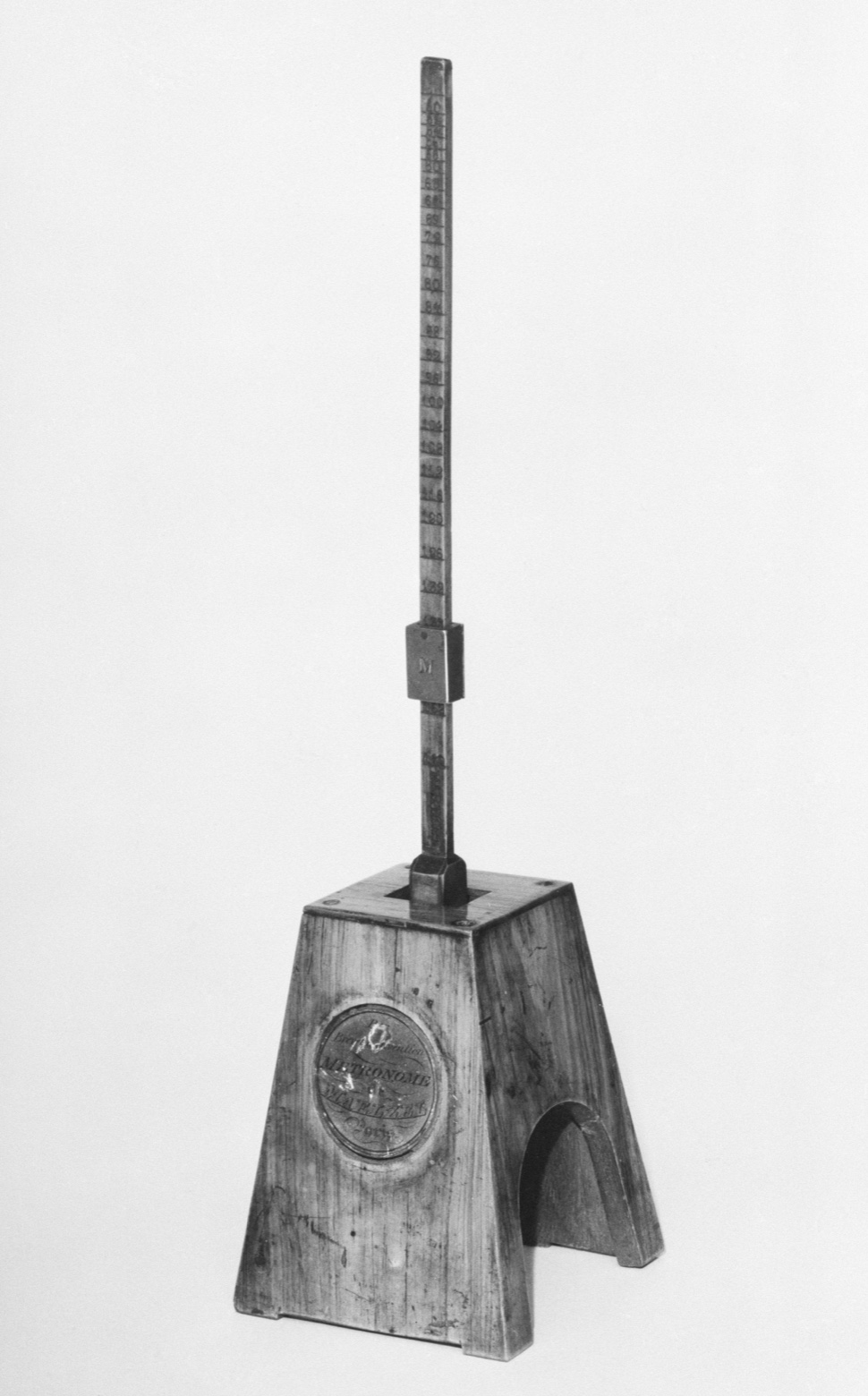
The photograph shows a metronome made in Paris around 1821. A marked rod extends from its wooden base, with a weight attached partway along it. A mechanical metronome changes the pendulum’s speed by adjusting the position of the weight, producing beats at a steady interval.
To repeat the tempo written in a score at the same speed, check both the beat unit and the number first. Looking at the number and then listening to the actual beat to confirm the speed can also help verify a result measured by tapping.
Compare Tempos in Background Music for Endings, Conversation, and Sports
You can listen to the following three tracks from their respective starting points in the same YouTube video containing 50 tracks. The estimates for the first two tracks were derived from repeating onset intervals in two 30-second sections of each downloadable WAV file. The section times below are counted from the beginning of each track, while the YouTube start times are counted from the beginning of the full video.
“Switch It Off, Keep the Glow” (3:39) is intended for the end of a day. Measurements of the 20–50-second and 140–170-second sections revealed cycles corresponding to approximately 65–72 BPM. Listen to the relaxed spacing and try leaving different numbers of beats for the lingering sound to find where an ending cut fits.
“The Sun Moves to the Corner” (3:22) is suited to the background of café conversations or work. Measurements of the 20–50-second and 120–150-second sections revealed cycles corresponding to approximately 94–97 BPM. Use changes in the conversation as cues and practice placing cuts after 2 or 4 beats.
The description of “First Light on the Line” (3:18) lists it at 132 BPM. It is intended for the start of a match or a highlight in a sports video. Use the opening brass as a cue and try syncing the image where the action begins with the beat.
References
The Three Featured Tracks Are Royalty-Free and Available for Commercial Use
All three tracks are free to download and may be used within the scope of the media usage guide in monetized videos, streams, and games. There is no fee for each use, and credit is optional. Reselling or redistributing the audio by itself and using it for AI training are prohibited. Check the media usage guide for the latest terms before use.
References
- 1
Compare the spacing between beats in three tracks
Try a closing scene, a café conversation, and a sports opening. Count each track’s beats to try different intervals between cuts.
Use it forClosing scene, Conversation, Sports opening
These sounds from arcalune
Tap along with a track and verify the value in a section where the same beat continues. In a video, first place markers on the track’s steady beat, then try aligning cuts after 1 beat, 2 beats, or at the beginning of a measure.
FAQ
- What is BPM in music?
It is the number of beats per minute. At 60 BPM, one beat lasts 1 second. At 120 BPM, one beat lasts 0.5 seconds.
- How do you measure a track’s BPM?
Tap once per beat in a section where the steady beat is easy to follow. Subtract 1 from the number of taps to get the number of intervals, multiply by 60, and divide by the seconds elapsed from the first tap to the last. If the interval between 10 taps is 6 seconds, the result is 9 × 60 ÷ 6, or 90 BPM.
- What is the difference between BPM and tempo?
Tempo is the speed at which music progresses, while BPM expresses that speed as a number of beats per minute. In a score, read the number together with the note that defines the beat unit.
- What is the difference between BPM and meter?
BPM indicates the speed of the beats, while meter indicates how the beats are grouped. At 120 BPM with a quarter note as one beat, one 4/4 measure lasts 2 seconds and one 3/4 measure lasts 1.5 seconds.
- How many frames is one beat when syncing a 120 BPM track to a 30 fps video?
At a constant 120 BPM with a quarter note as one beat, one beat is 15 frames at 30.00 fps. One 4/4 measure has 4 beats and is 60 frames long.