
What Are Woodwind Instruments? How Flutes and Three Other Woodwinds Produce Sound
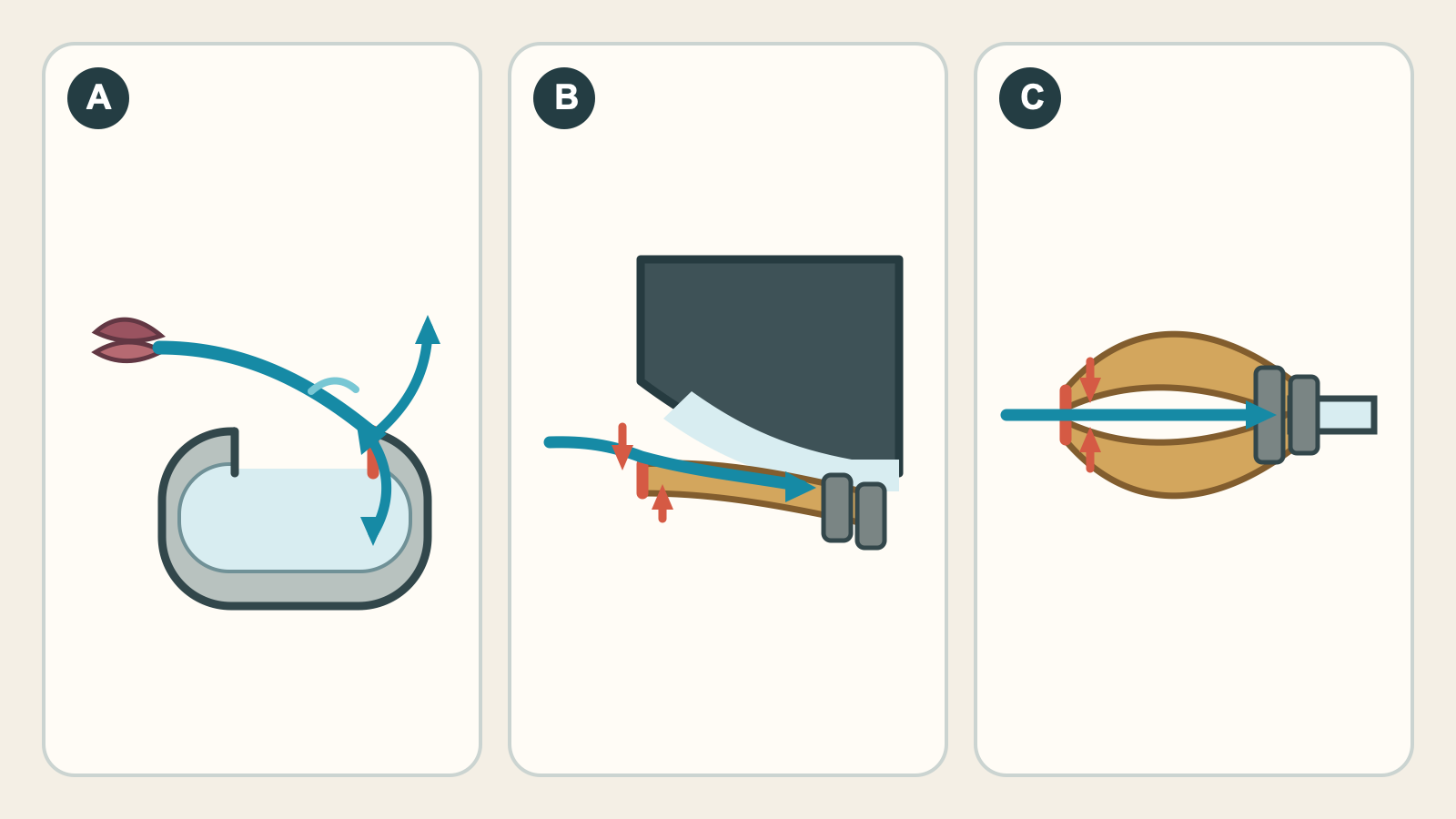
You can understand how woodwind instruments produce sound by looking at where the player blows. A flute directs breath at the edge of a hole, while a clarinet vibrates a single reed. On the oboe and bassoon, two reeds facing each other vibrate. In each case, this motion couples with vibrations in the air inside the tube to produce sound.
Compare an embouchure-hole edge, a single reed, and a double reed
On a flute, the player forms a narrow airstream with the lips and directs it toward the far edge of the embouchure hole in the side of the tube. The airstream oscillates to the inside and outside at the edge, making the air inside the tube vibrate.
A clarinet has a thin single reed attached to its mouthpiece. The reed vibrates, changing the gap through which the breath enters. An oboe and a bassoon place two reeds face to face; breath passes through the gap between their tips, making them open and close. A reed is a thin vibrating strip at the point where the player blows.
Why are metal flutes and saxophones woodwinds?
The name woodwind is related to the fact that many of these instruments were once made of wood. Metal flutes today still produce sound by directing breath at the edge of the embouchure hole. A saxophone is a woodwind that combines a brass body with a single reed.
On a trumpet, which is a brass instrument, the player's lips vibrate against the mouthpiece. When comparing materials and sound-producing mechanisms, examine the body and the mouthpiece separately.
The oboe and bassoon differ beyond the reed
An oboe's double reed connects to its narrow body through a short metal tube. A bassoon's double reed is fitted to a curved metal tube called a bocal. Beyond it, the instrument's long bore doubles back at the bottom.
On all four instruments, opening and closing tone holes with the fingers or keys changes the effective length of the resonating air column. First identify what vibrates at the mouthpiece, then compare the length and shape of the tube and its keys to see both the shared principle and each instrument's construction.
Wood and metal in flutes using the 1847 system
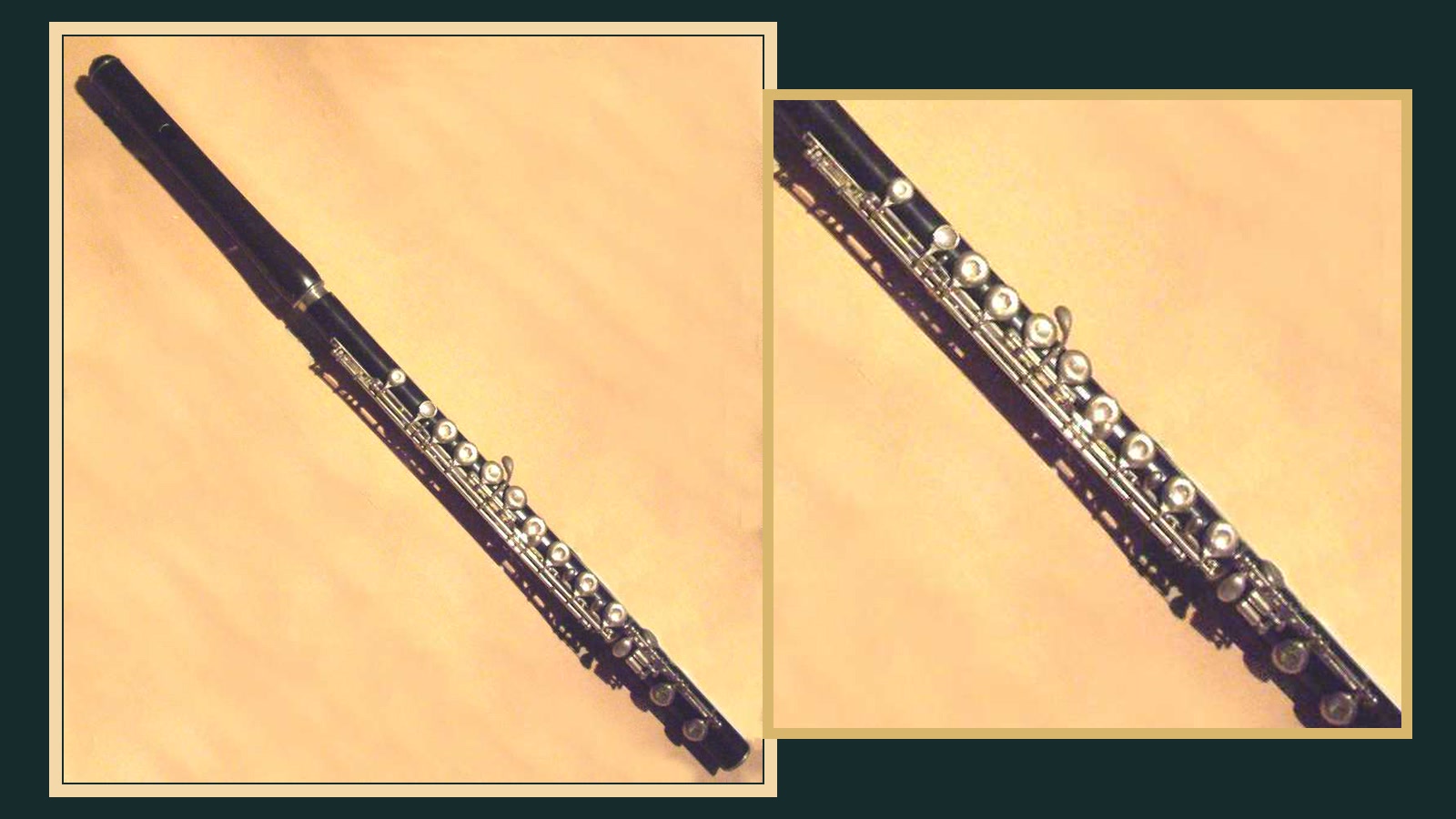
In the nineteenth century, Theobald Boehm improved the flute's bore profile, tone-hole layout, and key mechanism. The Library of Congress holds a flute with a brass tube that Boehm made in 1847.
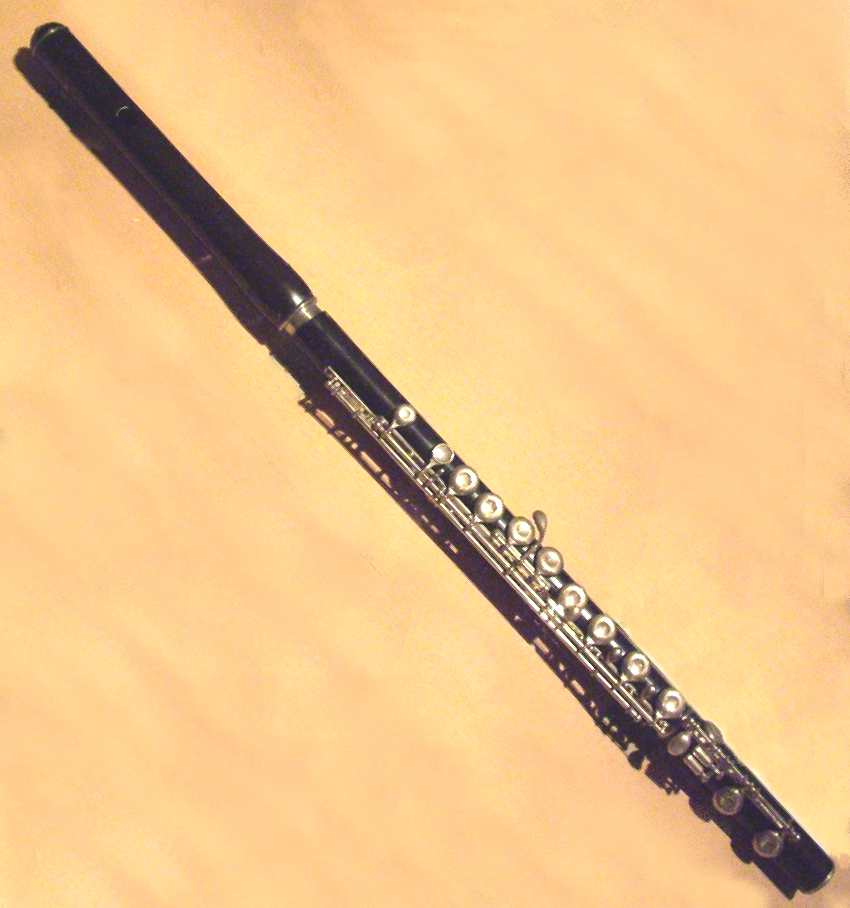
The flute in the photograph was made by the Boehm & Mendler workshop around 1870. According to The Metropolitan Museum of Art, it uses wood and silver while incorporating the 1847 system. The same system can be seen in both a metal-tube instrument and one made with wood.
Follow the woodwind melodies in four tracks
Listen for the woodwind melodies identified in the published descriptions of four modern BGM tracks. “Sheets in the Wind” begins at 12:52 on YouTube. In this gigue in 6/8, follow the flute's skipping melody.
At 25:45 in the same video, “A Crust in the Kitchen” is a relaxed andante. Notice how the notes in the clarinet melody are spaced.
“Aria for a Letter to the Master” begins at 44:42. Listen to the oboe melody moving at an unhurried pace in this siciliano aria.
“Thin Air, Thin Rations” begins at 1:19:42. In this BGM for a mountain road in 5/8, the bassoon carries the lead melody. Across all four tracks, follow the woodwind melody and how it overlaps with the surrounding accompaniment.
Download the four tracks and explore ensembles that include woodwinds
You can listen to and download each track from the cards below. All four are royalty-free, may be used commercially at no cost, and require no credit. Reselling or redistributing the audio on its own and using it to train AI are prohibited. Check the usage guide for details.
For ensembles where woodwinds join strings, brass, and percussion, read the orchestra article. To compare a small woodwind trio with a string quartet or harpsichord, start with the classical music article.
- 1
Four tracks with flute, clarinet, oboe, and bassoon
Follow the woodwind melody against the beat and accompaniment in a jig, an andante, a siciliana, and a track in 5/8.
Use it forChores, A break, Letter writing, Mountain path
These sounds from arcalune
Start at the mouthpiece and distinguish the embouchure-hole edge, single reed, and double reed. In each track, follow the woodwind melody, then listen for another instrument taking it over and for the way it overlaps with the accompaniment.
FAQ
- Why is a metal flute a woodwind instrument?
A flute is a woodwind that produces sound by directing breath at the edge of its embouchure hole. Its tube can be made of wood or metal.
- Is the saxophone a woodwind instrument?
Yes. It is a woodwind with a brass body and a single reed that vibrates in the player's airstream.
- How do clarinet and oboe reeds differ?
A clarinet has one reed attached to a mouthpiece. An oboe has two reeds facing each other, with breath passing between them.
- Do the oboe and bassoon both use double reeds?
Yes. On a bassoon, the double reed connects to a curved metal tube, followed by a long bore that doubles back at the bottom.
- Can I use the four featured tracks in monetized videos?
All four can be downloaded free of charge, used commercially, and require no credit. Reselling or redistributing the audio on its own and using it to train AI are prohibited.