
What Is a Clarinet? Its History, Sound, and How It Works
The clarinet is a woodwind instrument that makes sound when the player's breath sets a single reed attached to the mouthpiece vibrating. Most of the bore is nearly cylindrical, so its change into the upper register differs from that of the saxophone, whose bore is closer to a cone.
A diagram of the bore and written-note examples show that difference. We will trace the instrument's history through an 18th-century clarinet, then follow the clarinet melody in two tracks with different arrangements.
A single reed sets the air column vibrating
When the player blows, the tip of the reed fixed to the mouthpiece bends and vibrates. The gap through which the air passes widens and narrows, setting the air inside the tube into vibration. Opening and closing tone holes with the fingers and keys changes the effective length of the vibrating air column and lets the player select the pitch.
The bore remains almost the same width through most of the instrument, then widens near the bell at the lower end. The bell affects how the lowest notes sound in particular. Tone also changes with the reed and bore shape, as well as the player's embouchure and airflow.
The chalumeau developed into a clarinet with keys
The chalumeau, considered a predecessor of the clarinet, is also a single-reed woodwind. The birth of the clarinet is often attributed to modifications made around 1700 by the Nuremberg instrument maker Johann Christoph Denner, and early clarinets made it possible to use a higher register as well.
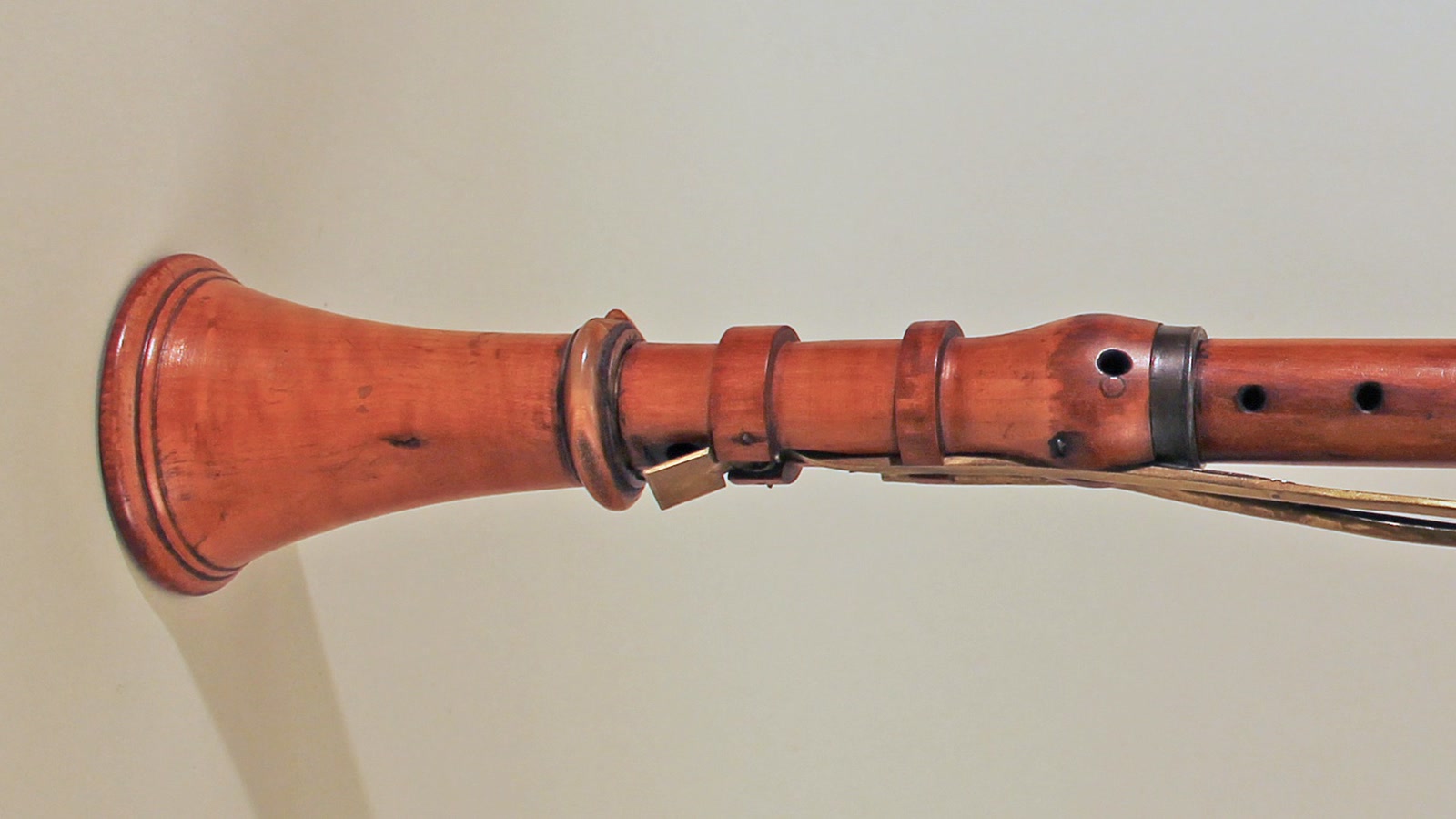
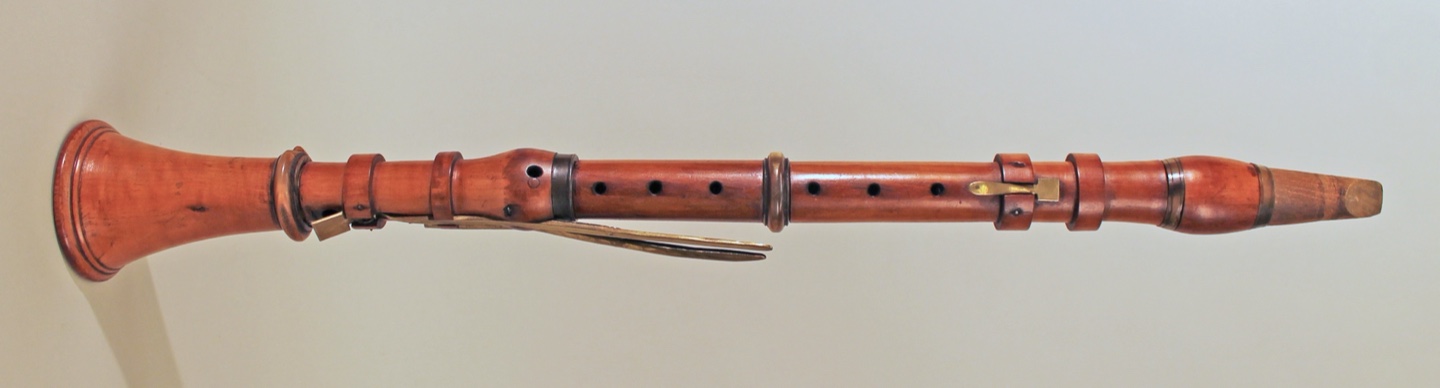
The photograph shows a clarinet in C from the second half of the 18th century. Tone holes run along its boxwood body, with brass keys for holes that cannot be covered directly by the fingers. The long metal lever extending toward the bell can be seen in the photograph.
In the mid-19th century, clarinetist Hyacinthe Klosé and instrument maker Louis-Auguste Buffet improved the keywork. It became known as the Boehm system because they adapted ideas Theobald Boehm had developed for the flute.
Why does the clarinet rise by a perfect twelfth?
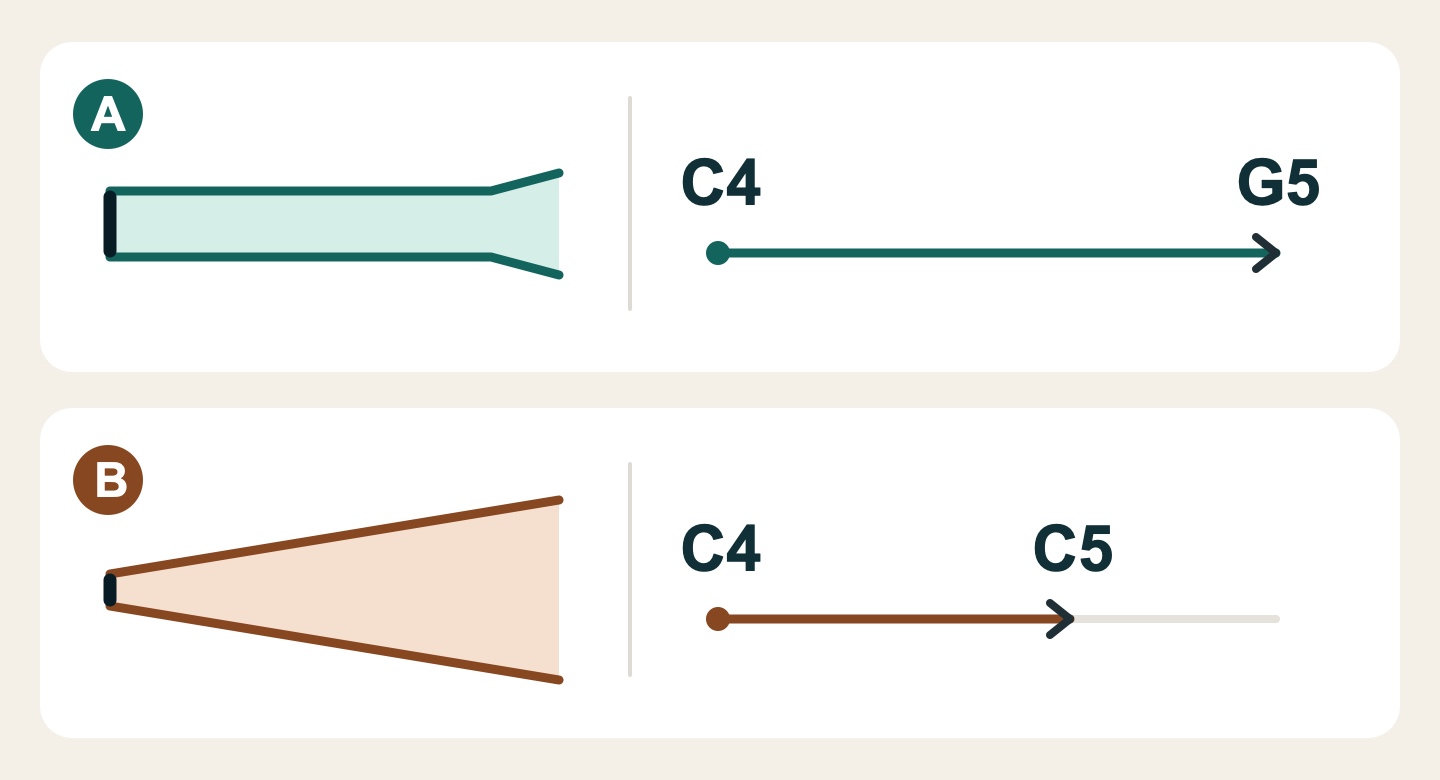
Pressing the register key opens a small vent near the mouthpiece and weakens the resonance of the lower note. In an ideal cylindrical-pipe model closed at the mouthpiece end, the next readily excited resonance has a frequency approximately three times that of the lower note. The interval is a perfect twelfth, which combines an octave and a perfect fifth.
The diagram compares register changes using simplified models of the bore. A shows a cylindrical bore like that of a clarinet, moving from written C4 to G5. B shows a conical bore like that of a saxophone, moving from written C4 to C5 one octave higher.
Real instruments have bells and tone holes, and players also adjust their fingering and breath when changing registers. Yamaha's comparison experiment lets you hear how differently the pitch rises in a straight tube and a tube that widens toward its end.
Listen to the start of each note to hear the tone
Begin with the manufacturer's demonstration and listen to one low note and one high note at a time. Separate what you hear into the attack as the note begins, the resonance while it is sustained, and the change as the pitch rises. This makes the differences easier to notice.
When comparing the sound in music, start with a passage where few other instruments are playing. The arrangement changes how the clarinet sounds when it carries the melody and how it blends with the instruments beside it.
Hear the clarinet melody and the pause in two tracks
The next two tracks are arrangements produced by this site that feature the clarinet. To hear how the pitch changes on a physical instrument, use the manufacturer's demonstration above. In the tracks, follow the clarinet melody and notice how the other instruments join it.
“Soda Water at the Café” runs for 4 minutes 30 seconds. Its description says that the shamisen responds to the clarinet melody. Start at 21:44 in the official YouTube video, follow the melody first, then listen for the shamisen interjections.
“A Beat of Sunlight” runs for 2 minutes 32 seconds. Its description identifies it as jazz with the clarinet playing a comical melody. Start at 39:19 in the official YouTube video and listen to the opening of the melody and the one-beat space later in the track.
Save the two featured tracks for free
“Soda Water at the Café” is available as an MP3 and “A Beat of Sunlight” as a WAV, both as free downloads. Both are royalty-free and may be used in commercial projects such as videos, streams, and games within the terms of use.
Credit is optional. Reselling or redistributing the audio on its own and using it for AI training are prohibited.
To find the characteristic sound of the clarinet, first hear low and high notes in the demonstration, then follow the melody in a track. The instrument reveals different sides of its sound when the breath starts a note and when the melody passes to another instrument.
FAQ
- How does a clarinet produce sound?
The player's breath sets a single reed attached to the mouthpiece vibrating, and the resulting pressure changes couple with the vibration of the air inside the tube. Opening and closing the tone holes changes the resonance conditions and selects the pitch.
- Why does a clarinet rise by a perfect twelfth?
In an ideal cylindrical-pipe model closed at the mouthpiece end, the next readily excited resonance has a frequency approximately three times that of the lower note. The written example rises from C4 to G5, a perfect twelfth spanning 19 semitones. Tone holes, fingering, and breath also matter on a real instrument.
- Do the clarinet and saxophone both use a single reed?
Yes. Both make sound with a vibrating single reed. In simplified bore models, the cylindrical model like a clarinet rises by a perfect twelfth, while the conical model like a saxophone rises by one octave.
- Who improved the keys of the Boehm-system clarinet?
Hyacinthe Klosé and Louis-Auguste Buffet improved the system in the mid-19th century. They adapted a system that Boehm had devised for the flute.
- Can I use the featured clarinet background music commercially?
“Soda Water at the Café” and “A Beat of Sunlight” may be used commercially within the terms, and credit is optional. Reselling or redistributing the audio on its own and using it for AI training are prohibited.