
What Is Polka? Two-Beat Dance Steps, History, and Three Tracks
Polka is a dance that spread from Bohemia, now part of the Czech Republic, and the music written for that dance. In one basic step, the dancer divides two beats into four smaller counts, moves a foot on the first three, and waits before the next step on the fourth.
We will follow the footwork in a diagram based on a nineteenth-century dance manual and look at polkas written as piano music beyond the ballroom. Three modern tracks then let you compare woodwinds, plucked strings, and a bellows-driven concertina as they carry the beat.
Move the feet three times within two beats, then wait
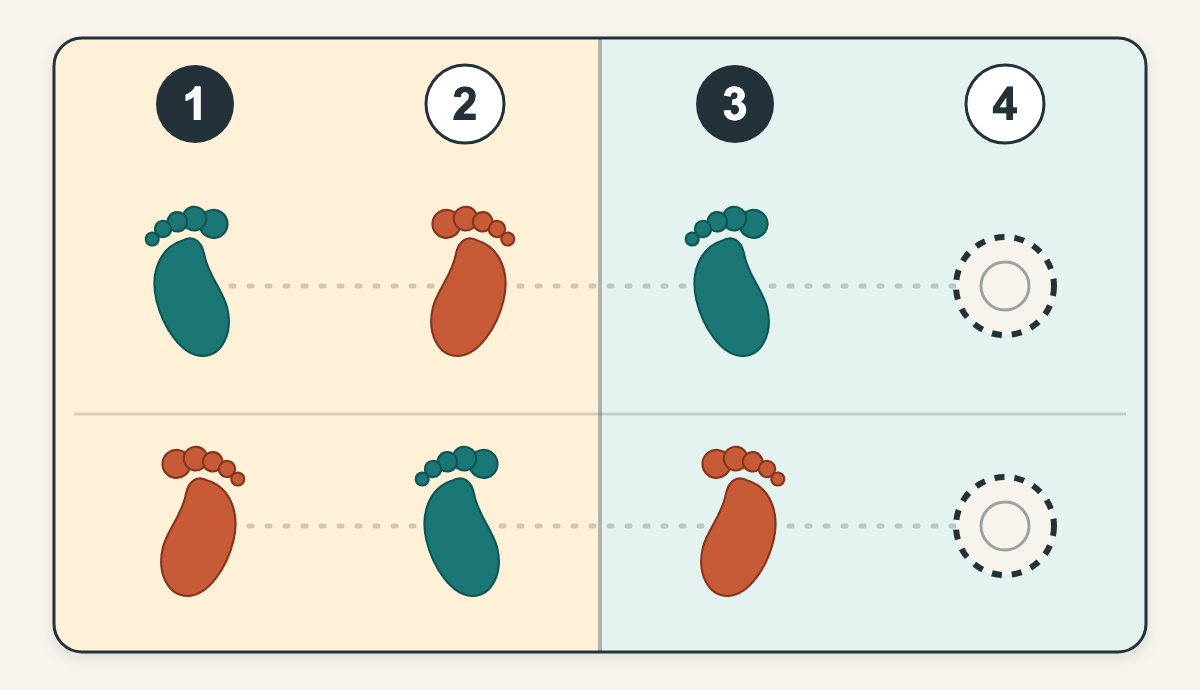
A dance manual by L. De G. Brookes, published in New York in 1867, describes polka music in 2/4. When one measure is divided into four eighth-note positions, the first two belong to the first beat and the next two to the second.
In the manual’s forward-moving example, the dancer makes a slight hop on the right foot while sliding the left foot forward on the first count. The right foot slides on the second, the left again on the third, and the dancer waits before the next step on the fourth. In the next measure, the order is reversed to right, left, right. The footprints in the diagram show the foot that slides.
Try counting evenly as “one-and-two-and.” On the final “and,” wait before sending the next foot forward but keep counting aloud. This wait is a footwork instruction; it does not mean that the accompaniment must fall silent.
A Bohemian dance spread to social gatherings and piano music
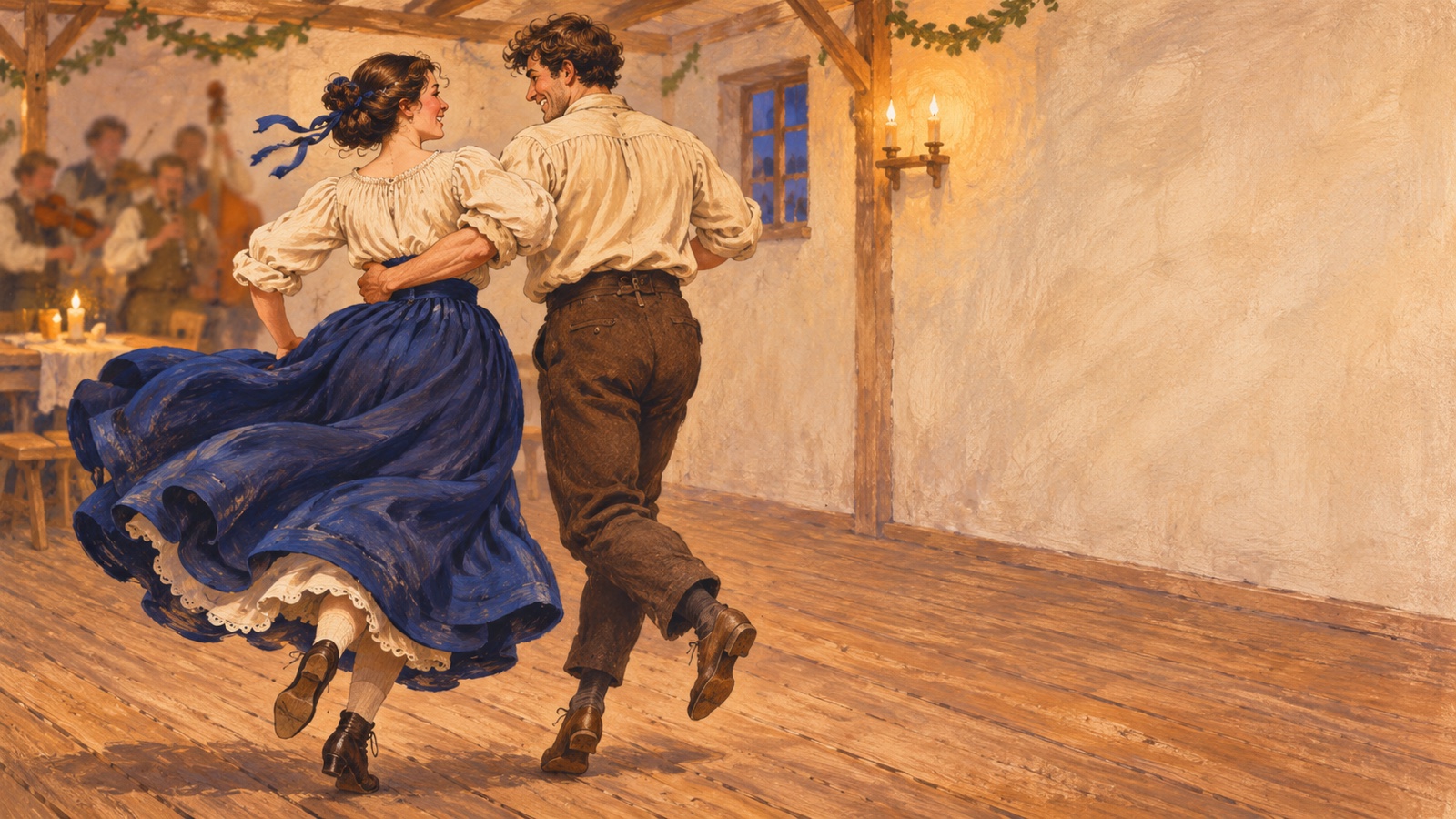
During the nineteenth century, polka spread from Bohemia and was danced at social gatherings across Europe and America. Brookes records its spread from Prague to Vienna and Paris and recalls performances in New York. The same manual explains not only the steps but also where partners place their hands while dancing together.
Czech composer Bedřich Smetana completed the piano collection Czech Dances I in 1877, and its first edition was published in 1879. The collection contains four polkas. In the Czech National Museum catalogue, their tempo markings differ: the third is marked “Allegro” and the fourth “Lento.” Even pieces bearing the same dance name can vary in the pace and motion they express at the piano.
Compare a waltz’s three beats with polka’s three foot movements
A typical waltz is in triple meter and can be counted “1, 2, 3.” In Brookes’s polka, the two main beats continue while the feet make three movements. To feel the difference, tap the table twice while saying “one-and-two-and,” then tap three times while saying “1, 2, 3.”
Marches are another kind of music that may use two beats. When comparing pieces, listen not only to the meter but also to the dance or scene for which the music was written and to how the accompaniment supports the positions where the feet move.
Hear three polkas led by woodwinds, plucked strings, and concertina
“Breakfast Polka” is a 4:14 track featuring flute, clarinet, and bassoon. It begins at 4:17 in the official video. Shift your attention between the higher and lower woodwind lines and compare which sound comes forward in a scene with continuous movement, such as morning preparations.
“Silver Polishing Polka” is a 4:15 track distinguished by plucked strings. It begins at 21:27 in the official video. Listen to how each sound begins and fades to hear a texture different from the woodwinds. If the video shows hands at work, you can choose which sound will mark the movement.
“Hammer and Lamplight” is a 2:47 polka-style background track for a mining town, with a concertina playing the melody. It begins at 19:31 in the official video. Follow how the melodic notes are sustained to compare them with the sound of plucked strings.
References
Compare how the three tracks enter the same scene
For a video or game, place each track under the same few seconds just before a character opens a door. A scene that uses sound to highlight hand or foot movements may call for a different instrumental color and entry point from one that establishes the atmosphere of a room or town first.
The three tracks featured here are royalty-free assets from this site. You can save them for free and use them in commercial videos, streams, and games within the terms of use. Credit is optional. Redistributing the audio files on their own and using them for AI training are not permitted.
When comparing the tracks, find the two main beats first. On a second listen, follow where each instrument begins and how long its notes last.
FAQ
- What is polka?
Polka is a dance that spread from Bohemia in the nineteenth century and the music written for that dance. It was danced at social gatherings and also became piano music, as in Smetana’s Czech Dances I.
- What time signature does polka use?
Polka is primarily associated with 2/4. In the example from the 1867 dance manual, the two beats in one measure are divided into four counts. The feet move on the first three, then wait on the fourth.
- Does the music stop when the dancer waits in polka?
In the manual’s example, the wait on the fourth count applies to the foot movement. The beat continues. Whether the accompaniment or melody sounds at that moment depends on the piece.
- Can I use these free tracks in commercial videos?
Yes. “Breakfast Polka,” “Silver Polishing Polka,” and “Hammer and Lamplight” are royalty-free assets from this site that may be used in commercial videos within the terms of use. The first two are available as free MP3 files, and “Hammer and Lamplight” as a free WAV file.