
What Is a Minuet? Triple Meter, Dance Steps, and the Famous Minuet in G
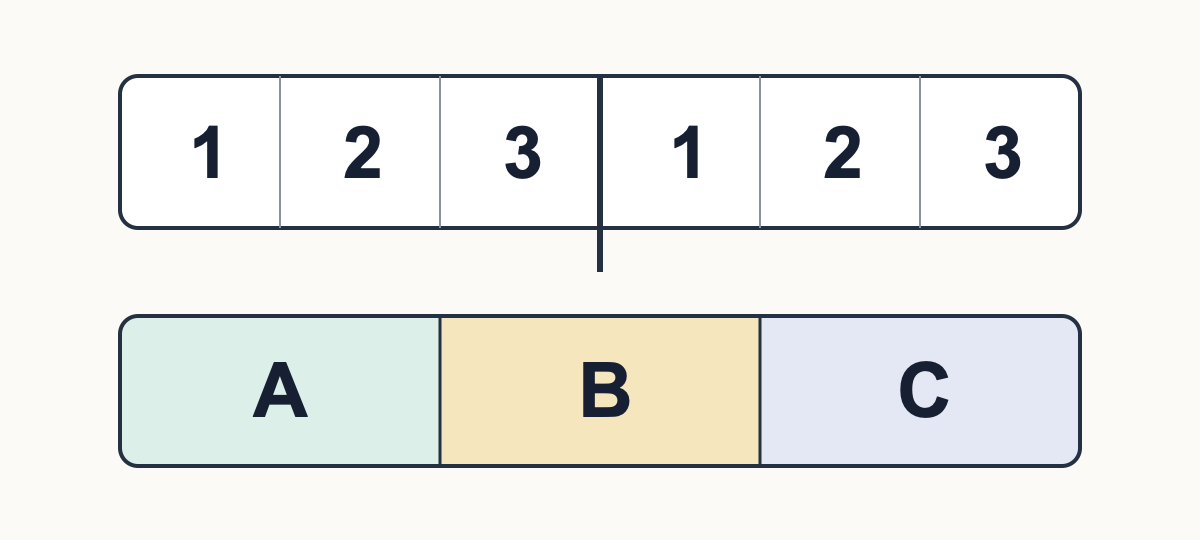
The minuet is a dance in triple meter that was performed at French courts and balls in the 17th and 18th centuries. Music written for the dance, as well as instrumental pieces that adopted its form, also came to be called minuets. An 18th-century dance manual gives an example in which one complete pattern of footwork unfolds while ‘1, 2, 3’ is counted twice.
First follow the manual’s forward step in the diagram, then listen to the Minuet in G. Often called ‘Bach’s Minuet,’ the piece survives in the Notebook for Anna Magdalena Bach and is now attributed to Christian Petzold.
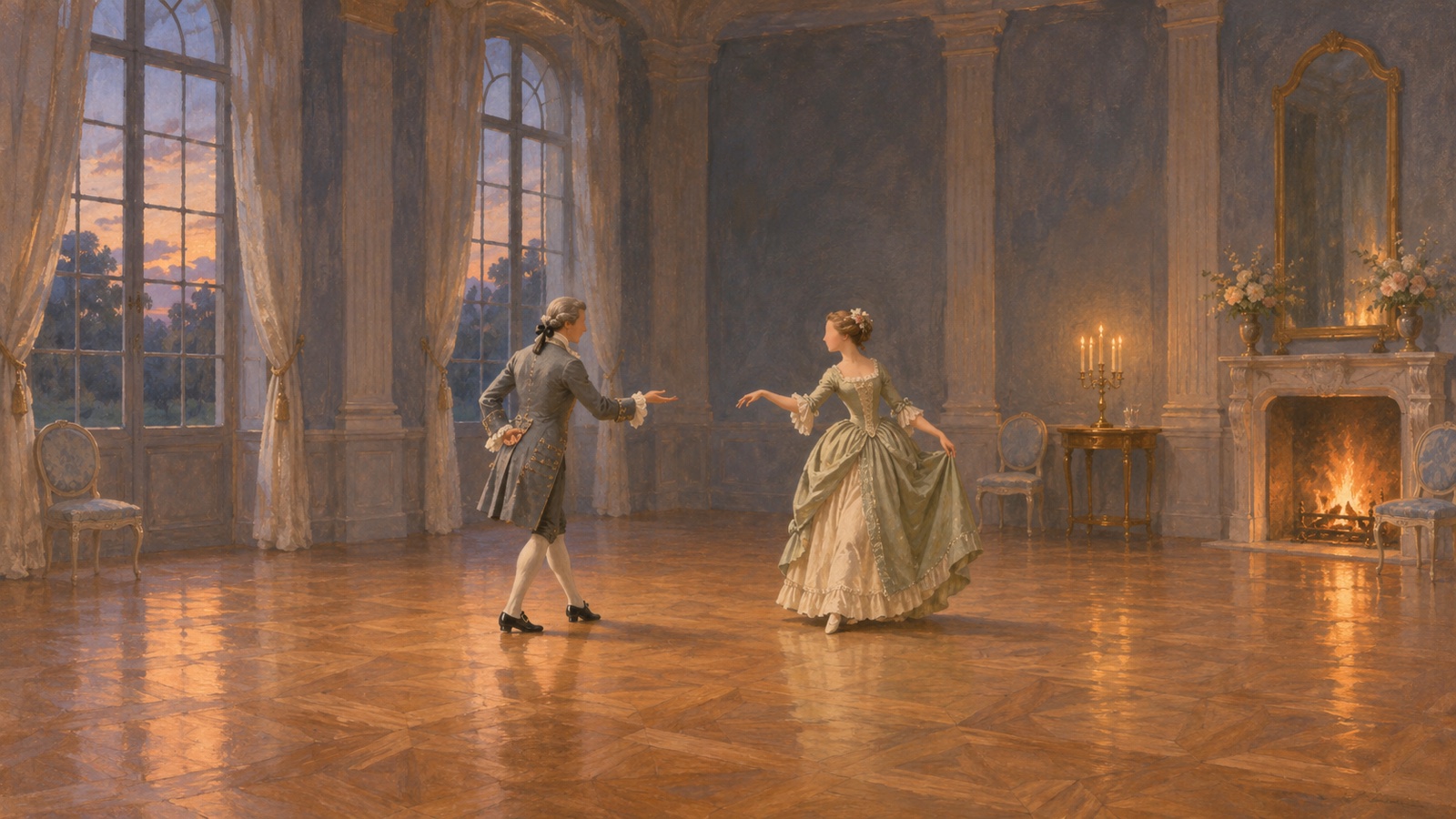
In the 18th-century minuet, two dancers faced one another
At the French court, Jean-Baptiste Lully wrote music for minuets. The dance teacher Pierre Rameau’s 1725 manual Le maître à danser teaches minuet steps alongside walking and bows. The Library of Congress holds the 1748 edition.
In the dance described by Rameau, the two dancers trace a Z-shaped path, then change from joining right hands to left hands and both hands. When listening to an instrumental minuet, imagining the dancers changing their distance and orientation can also help you follow the music’s course.
The name used in the ballroom remained attached to pieces played by instruments alone. Petzold’s work is a short keyboard piece. In the third movement of Mozart’s Symphony No. 40, an orchestral minuet is followed by a middle section called the Trio. Music that once guided dancers thus also developed into a form designed to be heard within an instrumental work.
Four foot movements fit into two bars of triple meter
In 3/4 time, the quarter note is one beat and each bar contains three beats. Count the top row of the diagram as ‘1, 2, 3 | 1, 2, 3.’ In one example of a forward step described by Rameau, four foot movements form a single unit across these six beats.
On pages 77–79 of the 1748 edition, the span of six beats is divided into three equal parts. A begins with the right foot and B with the left. In both parts, the dancer bends the knee and rises. In C, the dancer takes two steps, right and then left. Together, C’s two steps last as long as either A or B. Because B crosses the bar line, the diagram shows where the musical bars and the divisions of the body’s movement do not coincide.
Public material by dance researcher Tormod Dalen includes a minuet performance using several kinds of steps. While watching Video 1, try to follow both the music’s groups of three beats and the way the dancer groups the footwork into complete units.
How the couples move in two dances with triple meter
The count ‘1, 2, 3’ can also be used for a waltz. Compare Rameau’s minuet with a slow French waltz reconstructed from Thomas Wilson’s 1816 manual. After focusing on one complete unit of footwork in the minuet, watch how the dancers’ hold and orientation change in the waltz. This reveals differences between the dances that their shared triple meter alone cannot show.
Who wrote the Minuet in G once called ‘Bach’s Minuet’?
The Minuet in G discussed here is a keyboard piece catalogued as BWV Anh. 114. It was copied under the heading ‘Menuet’ on page 44 of the Notebook for Anna Magdalena Bach, whose cover bears the date 1725. The notebook also contains music by composers outside the Bach family, and the catalogue of the Bibliothèque nationale de France lists this G-major piece as a work by Christian Petzold.
In volume 65 (1979) of the Bach-Jahrbuch, researcher Hans-Joachim Schulze reported its correspondence with a Petzold suite preserved in another manuscript. The G-minor minuet that appears alongside the G-major piece in the notebook is BWV Anh. 115.
In a recording by the Netherlands Bach Society, Shuxian Ding performs the two pieces on harpsichord. First learn the opening melody of the G-major piece by ear. When you listen again, count in threes while following the lower notes. In the G-minor piece that follows, listen for the points where the melody divides into phrases and you will hear that it is a different work, even though both are minuets.
A morning theme returns at night in two modern minuets
Our tracks ‘Curtains Up at Seven’ (4:14) and ‘The Last Candle’ (4:15) appear in the same video depicting a day in a manor house. The morning scene of opening the curtains begins with a bright string quartet, and the theme returns quietly at night as the candle is extinguished. Move between the start of the video and 53:16 to compare how the same theme can be used in morning and night scenes.
‘Bread and Soup Minuet’ (4:00), introduced as music for a late-night meal at an observatory, features violin and oboe. Listen to it after the string-quartet example and compare which instrument catches your ear at the start. This can help you choose music for a meal or break scene.
For videos and games, check the free MP3s and usage terms
Our three tracks are royalty-free materials with no additional fees based on the number of uses or plays. You can save the MP3s for free and use them in commercial videos, streams, and games within the usage terms. Credit is optional. Redistribution of the audio on its own and use for AI training are prohibited. The harpsichord performance and dance reconstructions can be viewed through their respective publishers.
In dance footage, follow the footwork across two groups of ‘1, 2, 3.’ In a keyboard piece, listen for how the melody and lower notes overlap within the same beats to recognize the minuet’s triple meter.
FAQ
- What kind of music is a minuet?
It is music for the minuet, a dance in triple meter, or an instrumental piece that adopts its form. Rameau’s dance manual gives an example with four foot movements across two bars of triple meter.
- Are the minuet and the waltz the same?
Both can be in triple meter. Comparing Rameau’s minuet with a reconstruction of a 19th-century French waltz reveals differences in the footwork and in how the two dancers hold one another.
- Who composed the Minuet in G known as ‘Bach’s Minuet’?
BWV Anh. 114 is now attributed to Christian Petzold. It is a keyboard piece copied into the Notebook for Anna Magdalena Bach.
- Can I use free minuet background music commercially?
The tracks ‘Curtains Up at Seven,’ ‘The Last Candle,’ and ‘Bread and Soup Minuet’ introduced here are royalty-free materials whose MP3s can be saved for free and used commercially within the usage terms.