
What Is a Shakuhachi? A Guide to Japan’s Bamboo Flute
The shakuhachi is a flute held vertically. The player blows against a cut edge called the utaguchi at the top of the tube. Traditionally made of bamboo, the common Fuke shakuhachi has four finger holes in front and one at the back. Its name comes from one shaku and eight sun, about 54 cm. This standard length is one of several used to suit different keys and pieces.
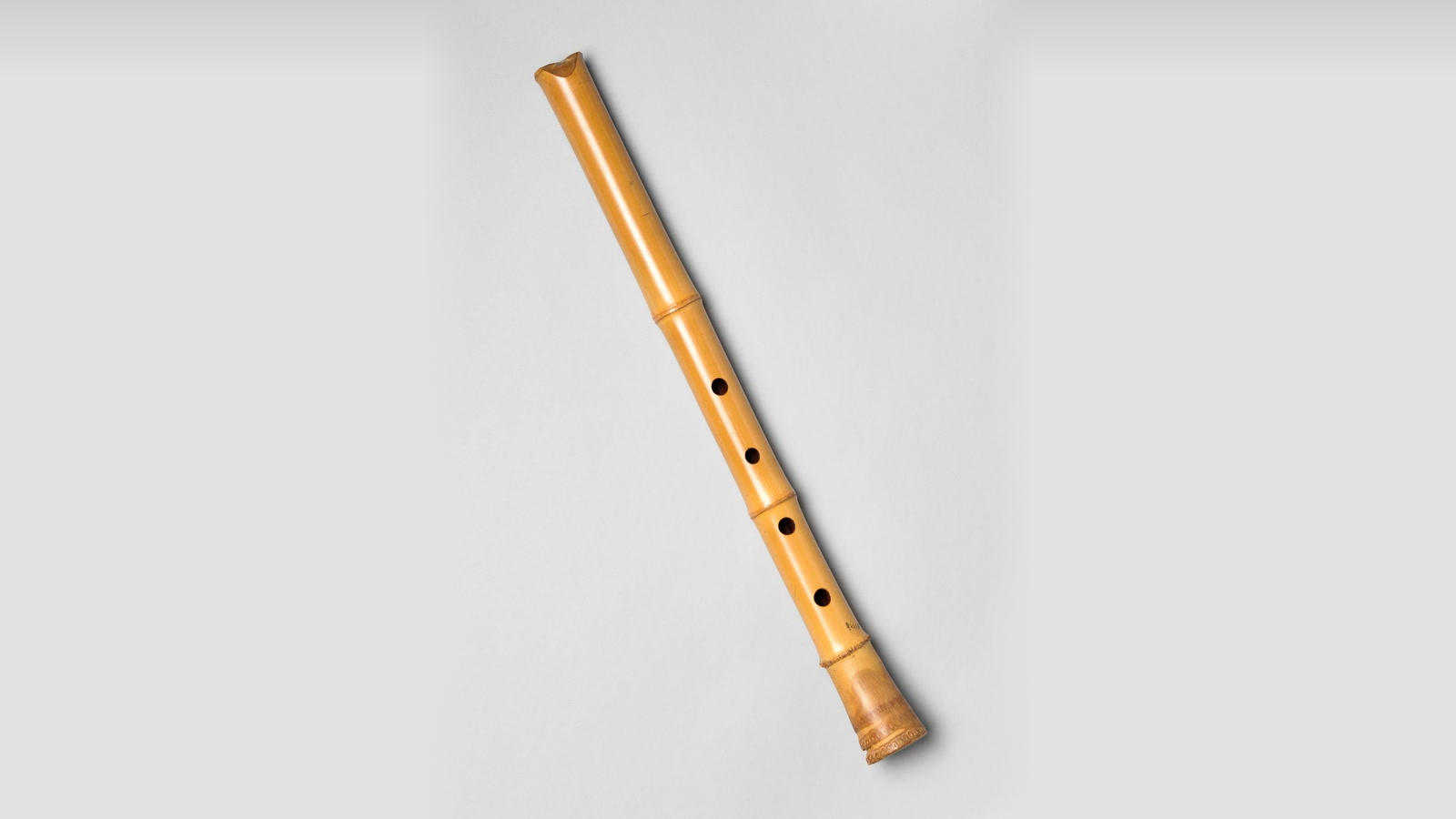
Find the blowing edge and four front holes
The Metropolitan Museum of Art’s 19th-century shakuhachi is 55.2 cm long. In the photograph, follow the instrument from the angled blowing edge at the top past the four front holes to the thicker bamboo root end.
Players also use shorter flutes, such as the one-shaku-six-sun tube. Shorter tubes generally have a higher fundamental pitch, and longer tubes a lower one. If a concert program lists the tube length, use it as a guide to what you hear when you compare two flutes.
Five finger holes, plus breath and angle
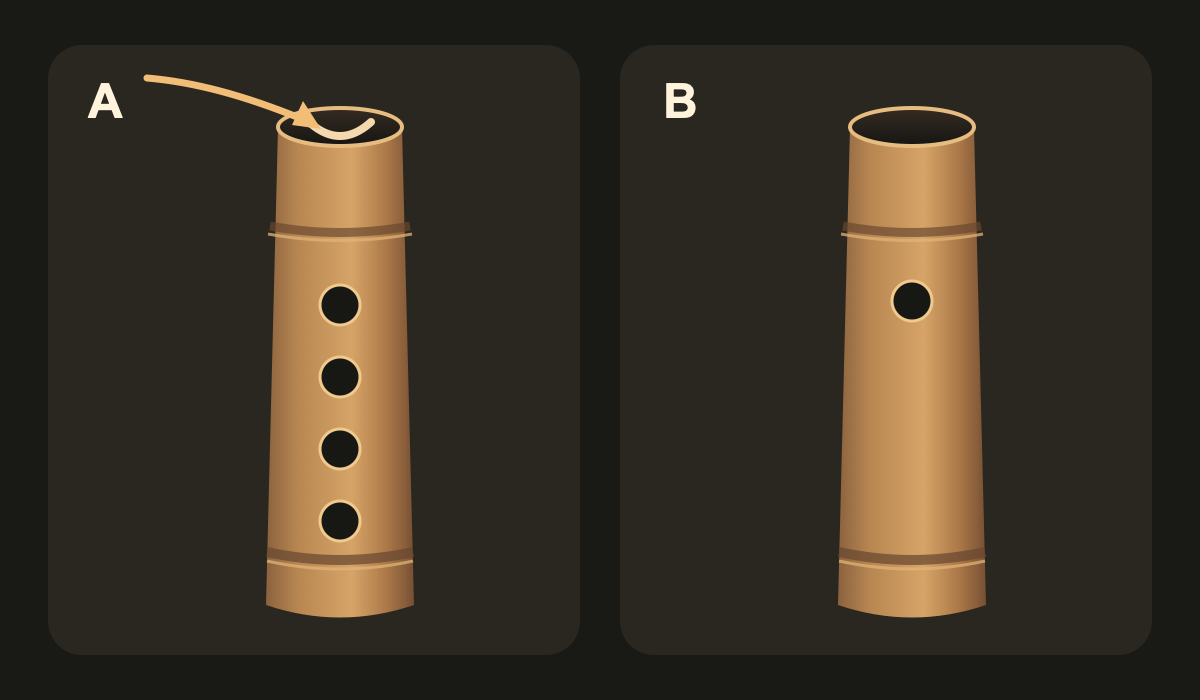
A shows the front, and B shows the back. At the edge marked in A, air from the lips splits, with some entering the tube and some passing outside. This produces the sound. Cover and uncover the four front holes with the fingers and the back hole with the thumb to change pitch.
The force of the breath, the angle of the chin and the way the holes are covered also affect pitch and tone within a single note. Start with one held note. Listen for the moment it begins, how much breath you hear as it continues and the way it dies away.
Six holes on surviving flutes from the Nara period
Some eighth-century shakuhachi used in gagaku court music had one more hole than the common flute today. A 44.2 cm instrument in the Hōryūji Treasures at the Tokyo National Museum has six holes. Ancient flutes preserved in the Shōsō-in also have five in front and one at the back.
The hitoyogiri, with five holes and a single bamboo node, appeared in medieval Japan. The ancient shakuhachi, the hitoyogiri and the common Fuke shakuhachi of today share a name, with distinct shapes and histories.
From Edo-period honkyoku to Meiji-era ensembles
A tradition credits a Kamakura-period Zen monk with bringing the Fuke shakuhachi from Song China. The Japan Arts Council dates the making of this type of flute to around the late 16th century and the formation of the Fuke sect, whose komusō monks played it, to the latter half of the 17th century.
In the Edo period, komusō played pieces now known as classical honkyoku as part of their practice. Typically played solo, these pieces stretch notes in a flexible rhythm. The first Kurosawa Kinko collected and organized pieces from different regions, laying the groundwork for the Kinko school.
After the Fuke sect was abolished in 1871, the flute reached a broader public and ensemble playing with koto and shamisen grew. In 1896, Nakao Tozan founded the Tozan school and wrote new honkyoku.
Hear how two players shape long notes
The National Theatre’s recordings include the Kinko-school Shika no Tōne, performed by two shakuhachi players in 2020, and the Tozan-school Iwashimizu, recorded in 2023. In Iwashimizu, listen for the main melody (honte) and the second part (kaete) that joins it.
Start by following one player from the start to the end of a long note. On a second listen, notice when the other player comes in. Do they answer once the first note has faded, or while its sound is still hanging in the air?
Three roles for the shakuhachi in background music
Compare the role of the shakuhachi sound in three of our AI-generated background tracks. Follow the long notes in Moon over the Veranda (40:09). In Rain on the Pass (22:12), listen for the exchanges between biwa and shakuhachi. In A Book of Poems (17:11), listen for where the shakuhachi and cello timbres overlap.
If you want music for a video, try a short stretch of each track under the same voice-over. Notice which sounds come through between phrases. Choose a track according to whether you want the flute to stand out or to blend with other instruments.
All three tracks are royalty-free and available as free individual downloads. The usage terms allow commercial use, including in monetized videos. Credit is optional. Selling or redistributing the audio on its own or using it for AI training is prohibited.
- 1
Japanese-style tracks with shakuhachi sounds
Hear the flute out front, in dialogue with biwa and blended with cello. Open each track to preview or download it.
These sounds from arcalune
Find the blowing edge in the photo and diagram, then follow a note from its first breath to its last in a recorded performance. Pay attention to the space between notes and you can follow the breath in a solo or an ensemble.
FAQ
- How long is a shakuhachi?
The standard one-shaku-eight-sun tube is about 54 cm. Other lengths include one shaku and six sun. Shorter flutes generally have a higher fundamental pitch and longer flutes a lower one.
- How many holes does a shakuhachi have?
The common Fuke shakuhachi has four finger holes in front and one thumb hole at the back. Some surviving Nara-period instruments have five front holes and one rear hole.
- What should I listen for in the shakuhachi’s sound?
Follow the beginning of the note, the breath in its sustained sound and the way it fades. Breath strength, chin angle and how the player covers the holes can alter the pitch and tone.