

Koto vs. Qin: How They Work, Koto History and 13 vs. 17 Strings
The 13-string instrument often called okoto in Japan is generally the koto, written 箏. To compare it with the seven-string qin, written 琴, look first between the strings and the body. The koto has a movable bridge for each string. On the qin, pressing a string down to the body at different points gives different pitches.
Why can two different characters mean koto?
In earlier Japanese, koto was a broad name for string instruments, including the biwa. The character 箏 fell outside the list of characters in common use, so writers have also used 琴, which can be read koto. When a concert listing uses 琴, look for clues such as 13 strings or movable bridges.
As instruments, a standard Japanese koto and a seven-string qin are distinct. The Japanese wagon, another instrument whose name includes 琴, has six strings and bridges and is used in gagaku court music. The number of strings, the bridges and how the player makes a note tell you more than the spelling alone.
Tuning the koto with bridges and stopping a string on the qin
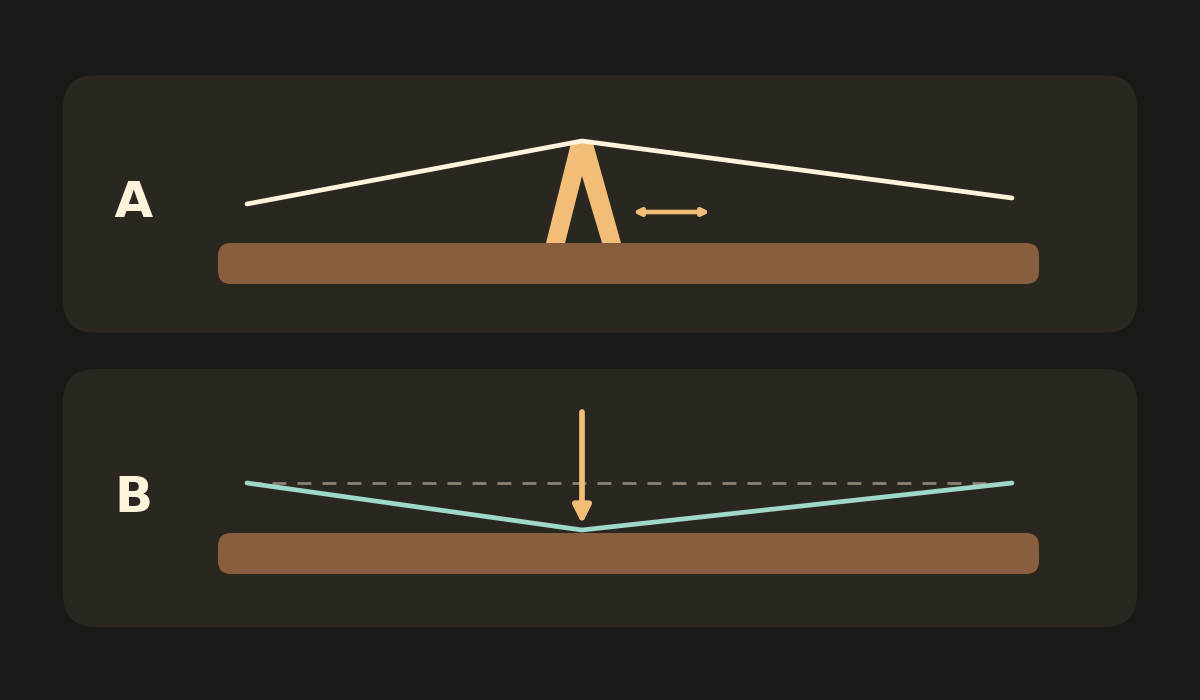
A koto player sets a movable bridge called a kotoji between the body and each string. Before playing, moving the bridge changes the vibrating length on the plucking side and sets the pitch. The right hand plucks with finger picks. The left hand can also press on the other side of the bridge to increase tension and raise the pitch while playing.
For a stopped note on a seven-string qin, the left hand presses the string against the body and the right hand plucks. Moving that point of contact changes how much of the string vibrates, giving several pitches on the same string. The diagrams show A, koto tuning, and B, a stopped qin note.
From Nara-period court music to Edo koto music and modern ensembles
The koto reached Japan from Tang China during the Nara period and was used in gagaku ensembles. A separate object from the period, the seven-string qin dated 724 in the Tokyo National Museum, shows another kind of string instrument in use at the time.
In the early Edo period, Yatsuhashi Kengyo studied earlier koto music and helped establish early modern sokyoku through song suites and instrumental pieces in sections. Rokudan no Shirabe has traditionally been attributed to him, and its precise origin is unknown. By the mid-Edo period, sankyoku ensembles also brought koto and shamisen together with kokyu or shakuhachi.
In the Taisho period, Michio Miyagi developed the 17-string koto for the bass part in ensembles. A December 1930 record of his early Showa-era duet Haru no Umi lists Miyagi himself on koto and Seifu Yoshida on shakuhachi. Court ensembles, songs, solos and duets give different ways to hear the instrument.
13 strings for the standard koto, 17 for a bass role
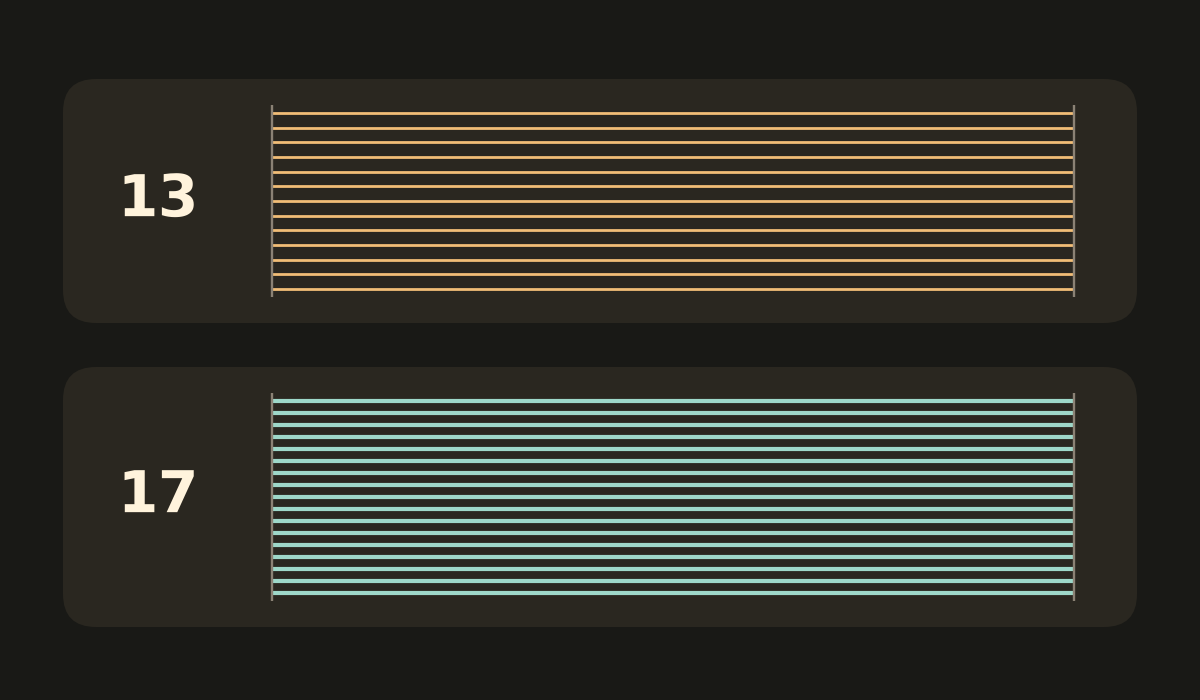
The standard koto has 13 strings. Michio Miyagi developed the 17-string jushichigen in the Taisho period to add a bass voice to ensembles. The extra strings came with thicker strings and a larger instrument. Today, pieces for solo jushichigen are also performed.
A recording with a known instrument helps you connect the string count with the sound. In the 17-string performance below, follow how the resonance of a low note leads into the next pluck.
Hear the pluck and decay in two university performances
Start with Chidori no Kyoku in the Traditional Music Digital Library. Listen to the instant the string is plucked and the time it takes the sound to fade. In the video, look for the plucking hand and the small bridges under the strings.
Hotaru, a solo for the 17-string koto from the same library, gives you a chance to hear the bass instrument on its own. Pick passages of similar length in the two videos and compare the start of the note and its decay. The recordings may differ in volume, so follow how each note unfolds.
Hear low notes, arpeggios and koto with piano in background music
Try our AI-generated background music that evokes Japanese instrument sounds. Footsteps in the Morning Fog (0:00) moves in low, separate notes reminiscent of a 17-string koto. A Fox on the Path Ahead (4:32) uses a koto-like arpeggio. Harbour Whistle at Dawn (0:00 in a separate video) pairs koto and piano sounds. Try the same spoken line over each and notice what the music does in the pauses.
The three tracks are royalty-free, free to download for commercial use and require no credit. Open a track page to save it. Standalone resale, redistribution and AI training are prohibited. See the usage guide for details and the Japanese background music collection and guide for more choices.
References
- 1
Background tracks with koto sounds
Compare low notes, arpeggios and the sound of koto with piano in our AI-generated tracks.
These sounds from arcalune
Look at the koto bridges and the hand that plucks. For a stopped qin note, watch where the left hand presses the string against the body. Then follow the beginning and decay of the notes to hear what the strings contribute in an ensemble or a backing track.
FAQ
- Are koto and qin the same instrument?
In everyday Japanese, okoto usually means the Japanese koto. A typical koto uses movable bridges for tuning. On a seven-string qin, the point where the player presses a string to the body determines its vibrating length.
- What does a koto bridge do?
It supports the string above the body. Moving the bridge before playing changes the vibrating length on the plucking side to set the pitch.
- What is the 17-string koto used for?
It was developed in the Taisho period to play the bass part in an ensemble. Its strings are more numerous and thicker than on a standard 13-string koto. It is also played solo.
- Can I use the examples in a video or livestream?
Our three background tracks are free to download and use commercially with no credit required. The university performances are for listening, and historical recordings are cited as sources.