
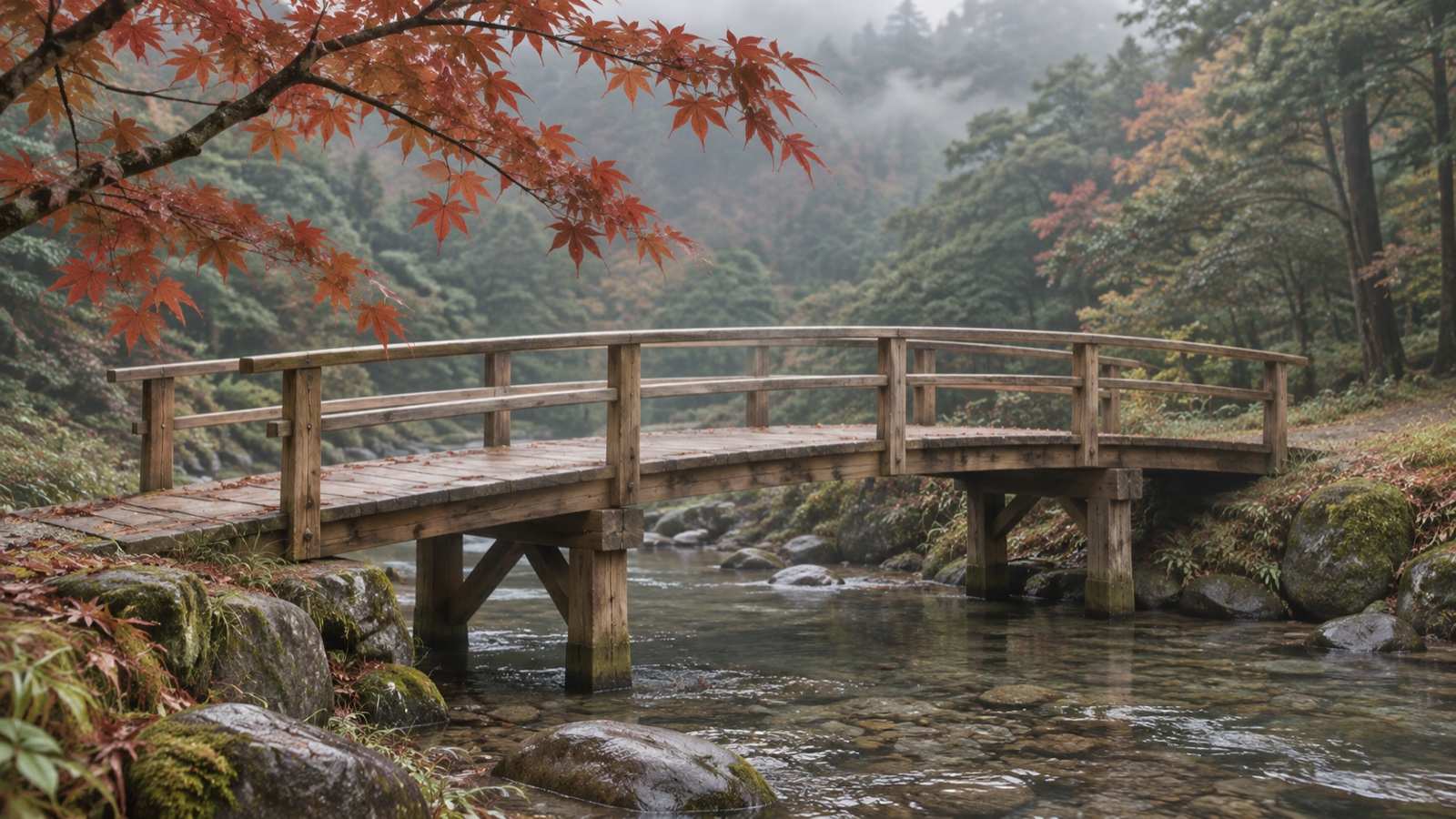
How to Choose 10 Japanese-Style Free BGM Tracks | Instruments, Fusion, and Scenes
Japanese-style free BGM cannot be chosen solely by asking whether it includes a Japanese instrument. Even within the same broad style, a track for rural scenery, one for a hidden village or food stall, one for a short festival scene, and one supporting tension or farewell each has a different job in the video.
This guide divides 10 downloadable Japanese-style BGM tracks into six groups. Use the places, actions, instrument combinations, pulse, intended uses, and total durations stated in their published descriptions to narrow down which candidates to try first.
When testing candidates, keep the footage and narration fixed, use the same point in the footage to bring in the music, keep the volume setting unchanged, and replace only the track. A title and duration do not determine whether movement and dialogue will fit. Listen on the track page or YouTube, then place the candidate under the material you will actually use.
How this list was chosen
- These 10 tracks come from the Japanese-style catalog and have a download route on their individual pages. The six groups classify scenes and comparison criteria; their display order is not a popularity ranking.
- Check instrument combinations and pulse in the published description, then compare them with movement and voice in your actual footage. Tracks sharing the Japanese tag may still serve different roles in a scene.
- Check the total track duration separately from the length of the segment that needs music. If one track must play once across the whole segment, choose one that meets that duration.
- Before using a track as production material, check the download button on its individual page and the latest audio usage guide.
After choosing a Japanese style, decide which place and action the footage must show
First, describe in one sentence what the music segment will show. For example: “show a misty mountain road as scenery,” “arrive at a hidden village,” “cook at a food stall,” “cross a bridge,” or “close a farewell scene.” Decide not only the place but also the action and the scene's role in the story. This tells you what to compare in the published descriptions beyond the title and Japanese tag.
Next, set the start and end of the segment that needs music and keep candidates long enough for it. Then place each candidate in turn under the same footage and voice. If none of these 10 fits, apply the same process to the Japanese-style BGM catalog. The RPG guide answers questions about battles, exploration, and story events in games, while the study guide covers lyric-free tracks for studying.
Natural scenery or a story about a road whose end cannot be seen
“Song of the Mountain Valley” runs 3:00. Its published description depicts a misty valley, terraced rice paddies, and sky reflected in water, and suggests footage of rural or countryside scenery. “Misty Approach” runs 3:05 and depicts mossy stone steps disappearing into dense fog, with story footage of a path whose end cannot be seen. The difference is not merely five seconds or shared nature tags, but the role given to the same landscape.
To compare them, keep the same footage of a misty mountain road or rural settlement and, if used, the same narration. Try “Song of the Mountain Valley” first when the segment introduces the landscape itself. Try “Misty Approach” first when the road moves the story toward an unknown destination. After swapping the candidates, use their track pages and YouTube start positions to decide which fits the actual footage.
Separate a hidden village from food-stall cooking even when both have a relaxed pulse
“The Village That Isn't on Maps” runs 3:19. Its published description identifies it as game-style BGM for a hidden village, with shakuhachi carrying the main melody over a relaxed pulse. “Two Skewers, Please” runs 3:33 and is game-style BGM for a food stall and cooking, with shinobue carrying the main melody over a similarly relaxed pulse. Along with the difference between shakuhachi and shinobue, the stated place and action can guide the first candidate you try.
If one video contains both arrival at a hidden village and cooking at a food stall, try “The Village That Isn't on Maps” for the place-introduction segment and “Two Skewers, Please” for the cooking segment. If one track must continue across the scene change, do not decide from only one of the two scenes; join both sets of footage and voice and test them as one sequence.
The Japanese-Western combinations and scenes differ even at the same 4:15 length
“Harbour Whistle at Dawn” and “Cinema Billboard Tango” both run 4:15. “Harbour Whistle at Dawn” is introduced as a track set in a port town morning where koto and piano overlap, intended for the start of work or reading. “Cinema Billboard Tango” is set where people gather before a billboard and combines violin and accordion with koto for a dazzling scene, with work that needs a lift among its uses.
Although their lengths match and both include koto, they do not have the same job in a video. First decide whether the footage should show morning preparation or the start of work, or a lively billboard or event where people gather. Keep that segment's footage and voice fixed, swap the tracks, and check whether the published instrument combination fits the actual scene.
Check first whether the 1:21 festival track covers the required segment
“Street Stall March” runs 1:21. Its published description presents a warm, lively Japanese-style track capturing the nighttime energy of a food-stall griddle, intended for footage of festival stalls. It is a candidate for short festival material when the segment that needs music—such as a stall sign, hands cooking, or the moment food is handed over—fits within 1:21.
However, if one playthrough must cover an entire 1:30 segment, it is nine seconds short. Under that condition, find another track at least 1:30 long. The duration display cannot tell you how a repeated use will connect, so listen and verify the join. Treat suitability for a short segment separately from the ability of one playthrough to cover a longer segment in full.
Test movement aligned to a pulse separately from a quiet scene
“Hands in the Stream” runs 4:30. Its published description calls it a beatless track using rin bell and koto harmonics, intended for rest or meditation. “Rope Bridge” runs 4:15 and is described as a tense track with shakuhachi over a quiet drum like a heartbeat, intended for tense scenes. Even with the same Japanese tag, their published pulse and scene differ.
Try “Hands in the Stream” first when showing ripples or resting hands without aligning the action to a regular pulse. Try “Rope Bridge” first when a step forward, the sway of the bridge, or the wait before the next step should read as tense action. The drum is not guaranteed to align precisely with the actual footsteps or cuts. Play both under the same footage, dialogue, and volume setting, then check both movement and voice.
For an ending, place the track under the final voice and footage instead of choosing by title alone
“Parting at Dawn” runs 4:44. Its published description depicts a monk saying farewell to a fox family at dawn, with shinobue and biwa joining shakuhachi and koto, and identifies it as suitable for a closing scene. Use the described scene, instrument combination, and 4:44 length as reasons to consider it—not merely the word “Parting” in the title.
Join the final line, the scenery after the farewell, and the footage moving into the title or credits, then place “Parting at Dawn” from its start position beneath the sequence. Check where the voice enters, where the footage ends, and which interval needs music to see whether both duration and scene fit. Do not adopt it from the name alone; decide with the actual voice and footage used for the ending held fixed.
Even when it is free and royalty-free, check the eligible track and terms before saving
Tracks with a download button on their individual pages may be used within the audio usage guide for commercial and non-commercial videos, streams, games, podcasts, advertisements, and more. There are no additional charges based on uses or plays, and credit is not required. All 10 tracks in this guide can be saved from their individual pages. When using one, still check that track's download button and the latest terms.
Royalty-free does not mean copyright has been waived or that every use is allowed without limits. Redistribution or sale of the standalone audio and use for AI training are prohibited. Arrangement and vocal tracks on the site are for listening only. Because terms can change, check the latest guide before saving and again before publishing.
Natural scenery and a road with no visible end
Compare the 3:00 and 3:05 tracks according to whether the place is shown as scenery or the road is used to move the story forward.
- 1
Scenery
A three-minute rural landscape and a 3:05 approach whose destination cannot be seen. Compare whether nature is shown as scenery or the road is used to carry the story.
Use it forrural and countryside scenery, misty mountain road, story opening
These sounds from arcalune
A hidden village and food-stall cooking
Look beyond their shared relaxed pulse and choose separately for the hidden-village setting and the act of cooking at a food stall.
- 2
Village & Cooking
A 3:19 track depicting a hidden village with shakuhachi and a 3:33 track depicting a food stall and cooking with shinobue. Keep the instruments distinct and choose separately for introducing a place and showing the act of cooking.
Use it forhidden village, food-stall cooking, hands preparing food
These sounds from arcalune
The start of the morning and dazzling Japanese-Western fusion
Although both run 4:15, compare their different instrument combinations and scenes against the actual footage and voice.
- 3
Japanese Fusion
Both run 4:15. Compare a track that depicts the start of the morning with koto and piano with one that depicts a dazzling scene using violin, accordion, and koto.
Use it forstart of the morning, work and reading, lively event, people gathering
These sounds from arcalune
A short scene showing festival stalls
Distinguish a segment that fits within 1:21 from a 1:30 segment that cannot be covered in full with one playthrough.
- 4
Festival
A 1:21 track depicting festival food stalls. It can be tried on a short stall scene. It is nine seconds too short to cover an entire 1:30 segment with one playthrough.
Use it forfestival stalls, hands cooking, short night-stall footage
These sounds from arcalune
Beatless quiet and tension with a drum pulse
Try a quiet rest or meditation scene and a tense bridge-crossing scene by considering the relationship between pulse and movement.
- 5
Quiet & Tension
A beatless 4:30 track using rin bell and koto harmonics, and a 4:15 track that signals tension with quiet drum and shakuhachi. Compare them for a quiet scene and a tense scene with movement.
Use it forrest by the water, meditation, crossing a bridge, tense movement
These sounds from arcalune
- Hands in the Stream4:30
- Rope Bridge4:15
Farewell and the close of a story
Test the 4:44 track over the final line, the scenery after the farewell, and the transition to the title or credits.
- 6
Ending
A 4:44 closing piece in which shinobue and biwa join shakuhachi and koto. Test it over the final line, the scenery after the farewell, and the transition to the title or credits.
Use it forfarewell scene, epilogue, title and credits, story ending
These sounds from arcalune
- Parting at Dawn4:44
Choose Japanese-style free BGM by first deciding the place, action, and story role the footage must show, not just whether a Japanese instrument is present. Then check the published instrument combination, pulse, and total duration, and swap candidates under the same footage and voice.
Choose a first candidate from the six groups—scenery, village and cooking, Japanese-Western fusion, festival, quiet and tension, and ending—and test it from the official track page and YouTube start position. Once you choose a track, check its download button and the latest audio usage guide again.
FAQ
- Should I choose Japanese-style free BGM by the name of the Japanese instrument?
Start by deciding the place, action, and story role the footage must show, not only the instrument name. Then narrow candidates using the published instrument combination, pulse, intended use, and duration, and test them under the same footage and voice.
- How should I choose between the equally long “Harbour Whistle at Dawn” and “Cinema Billboard Tango”?
The published descriptions combine koto and piano in “Harbour Whistle at Dawn” for the start of morning work or reading. “Cinema Billboard Tango” combines violin, accordion, and koto for a lively gathering and work that needs a lift. Although both run 4:15, choose which to try first from the role required by the actual footage.
- Can “Street Stall March” play once across a 1:30 festival video?
“Street Stall March” runs 1:21, so it is nine seconds short when one playthrough must cover the entire segment. It can be a candidate for a short stall scene within 1:21, but for the full 1:30 you need another track long enough. If you repeat it, listen and check the join.
- For a quiet scene with dialogue, should I use a beatless track or one with drums?
There is no universal answer. The published description calls “Hands in the Stream” beatless, while “Rope Bridge” uses quiet drum and shakuhachi for a tense scene. Swap them under the same footage, dialogue, and volume setting, considering whether movement should align to a pulse or the quiet scene should unfold without that alignment.
- Are all 10 tracks free for commercial use with no credit required?
Tracks with a download button on their individual pages may be used commercially or non-commercially within the audio usage guide, with no additional charge based on uses or plays and no credit required. Standalone redistribution or sale and AI training are prohibited, while arrangement and vocal tracks on the site are listening-only. Check the individual page and latest guide before use.