
What Does Acoustic Mean? Guitar Sound and History
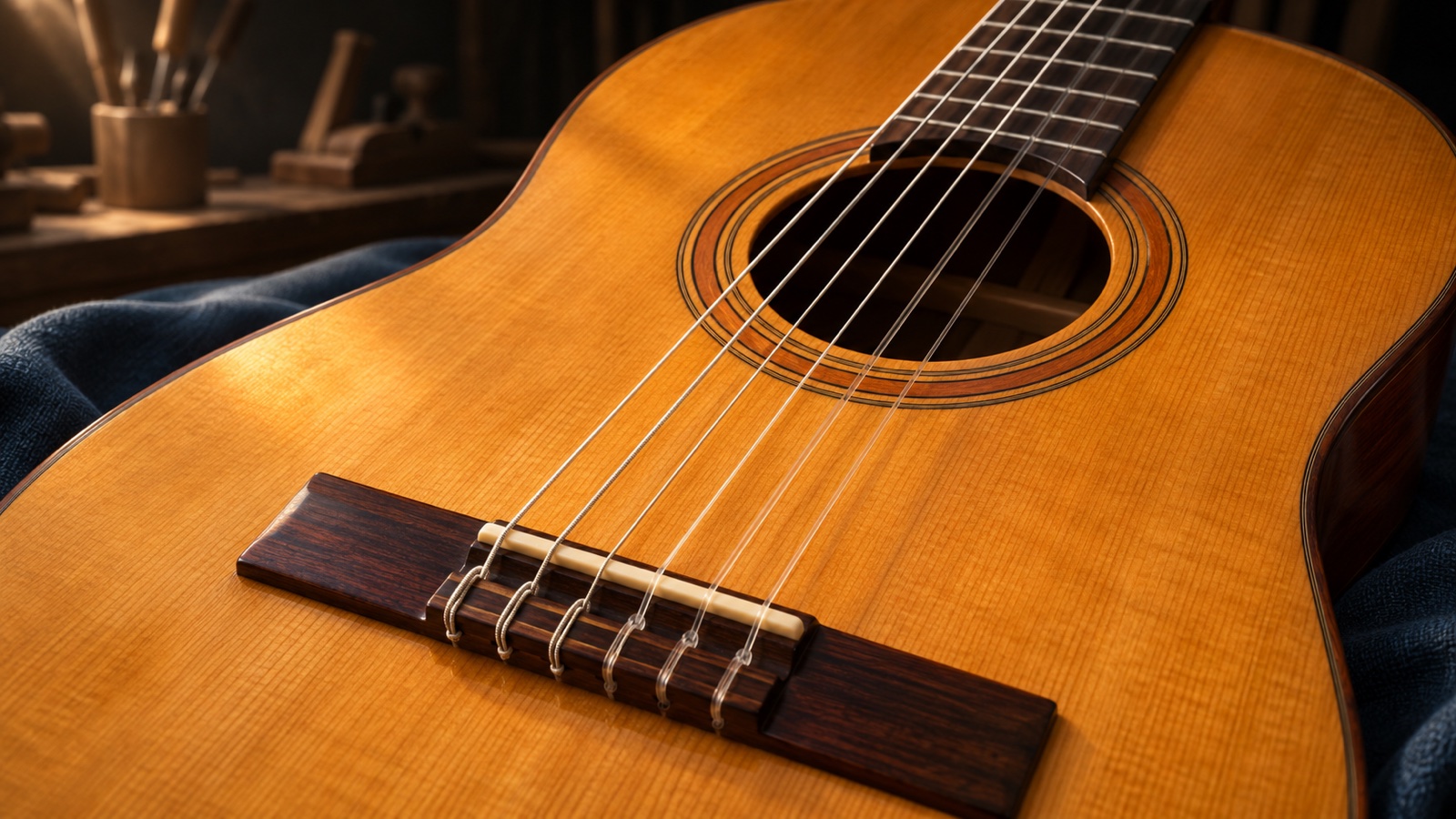
In music, an acoustic instrument is made to produce sound through its own vibrations without relying on electrical amplification. In an acoustic guitar, the strings pass their vibrations to the wooden top and body, which send sound into the air.
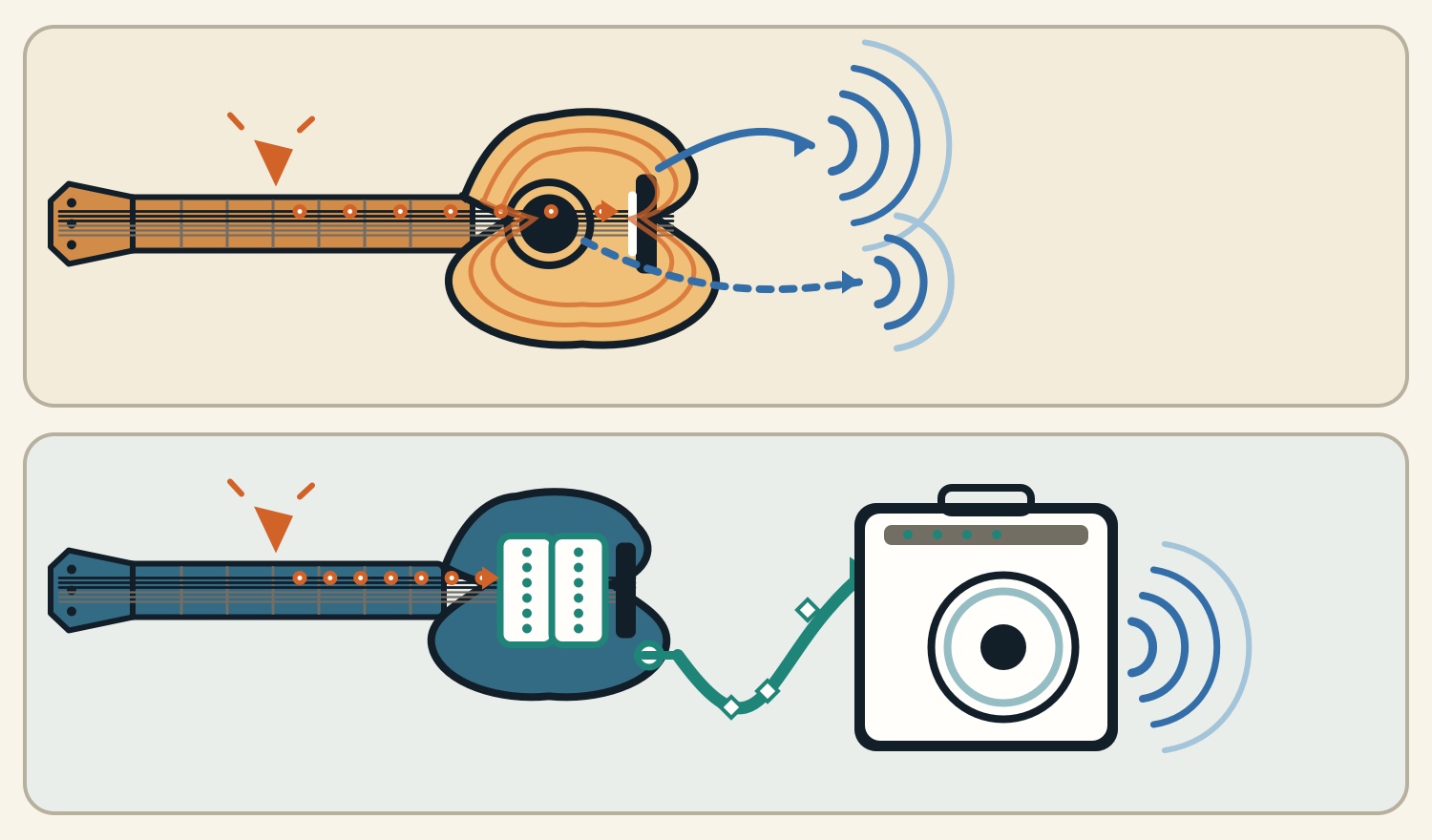
A typical electric guitar also has plucked strings, and its pickups turn their vibrations into electrical signals for an amplifier and speaker. Compare these paths in the diagram, then explore an 1859 guitar and hear three modern tracks.
Compare how the two guitars pass on vibrations
Pluck an acoustic guitar string and its vibration travels through the bridge to the top, also called the soundboard. The vibrating top and body radiate sound. The air resonating inside the body also sends sound out through the sound hole.
In an electric guitar with a magnetic pickup, a vibrating metal string changes the magnetic field near the pickup and induces an electrical signal in its coil. A cable carries the signal to an amplifier, and the speaker moves air to make sound. The diagram shows one common setup.
Microphones and pickups capture sound at different points
A microphone in front of the guitar captures sound after it has entered the air. A pickup fitted to an acoustic guitar can sense vibrations near the bridge, for example. A guitar that produces sound on its own can also be heard through a microphone or pickup and a sound system.
An acoustic version of a song tells you something about its arrangement or performance. If a band song is played with voice and acoustic guitar, listen for how the rhythm and chords beneath the voice change. Check the credits for the instruments or details of the recording.
An 1859 guitar and the arrival of magnetic pickups
The Barcelona Music Museum documents a guitar made by Antonio de Torres Jurado in Seville in 1859. The museum records that guitarist Miquel Llobet acquired it in 1916 and used it in his performing career. It is an example of a 19th-century guitar still being played in the 20th century.
Methods of turning the vibrations of metal strings into electrical signals spread in the 20th century. The instrument maker’s account dates the arrival of the magnetic pickup to the 1930s. Over time, guitar makers and players changed how sound was captured and sent to the audience as well as how instruments were built.
Listen for the guitar’s role in three modern tracks
Start with “Waking to First Snow” (4:14). As the fingerpicked solo begins, listen to the start of a note and the sound that follows. In “A Quiet Cup at the Window” (3:44), try following the guitar melody and then the cello.
“Steam Meets Window Light” (1:40) is a pop track where the guitar marks the rhythm. Compare how you hear the guitar when following a melody and when tapping to the accompaniment. These are contemporary tracks on our site. The listening prompts follow their catalogue descriptions.
References
Explore ensemble lineups or find acoustic music for your video
It helps to know both how a guitar makes sound and which instruments play in an arrangement. For lineups such as the string quartet, the chamber music diagram shows how many musicians play and which instruments they use.
The three tracks above are royalty-free and free to download. You can use them commercially in videos and streams, with no credit required. Redistribution or sale of the audio on its own and use for AI training are prohibited. Check the terms on the track page when choosing other music.
- 1
Three tracks for hearing the guitar’s role
Hear a guitar solo, a melody alongside cello and a rhythmic accompaniment.
These sounds from arcalune
FAQ
- What does acoustic mean in music?
An acoustic instrument is made to produce sound through its own vibrations without relying on electrical amplification. In a guitar, for example, the string’s vibration reaches the top and body through the bridge and spreads into the air as sound.
- Is an acoustic guitar still acoustic when recorded with a microphone?
Yes. The microphone captures the sound the guitar has already produced. The instrument’s way of making sound and the equipment used for recording or amplification are separate.
- How can I hear the difference in an acoustic version of a song?
Listen for the instruments supplying chords and rhythm around the voice or melody. The credits can tell you which instruments or recording methods were used.
- Can I use these acoustic tracks in commercial videos?
Yes. The three tracks are free to download and royalty-free for commercial use within the usage guide, with no credit required. Redistribution or sale of the audio on its own and use for AI training are prohibited.