
How Music Boxes Work | Cylinder and Disc Mechanisms and Their History
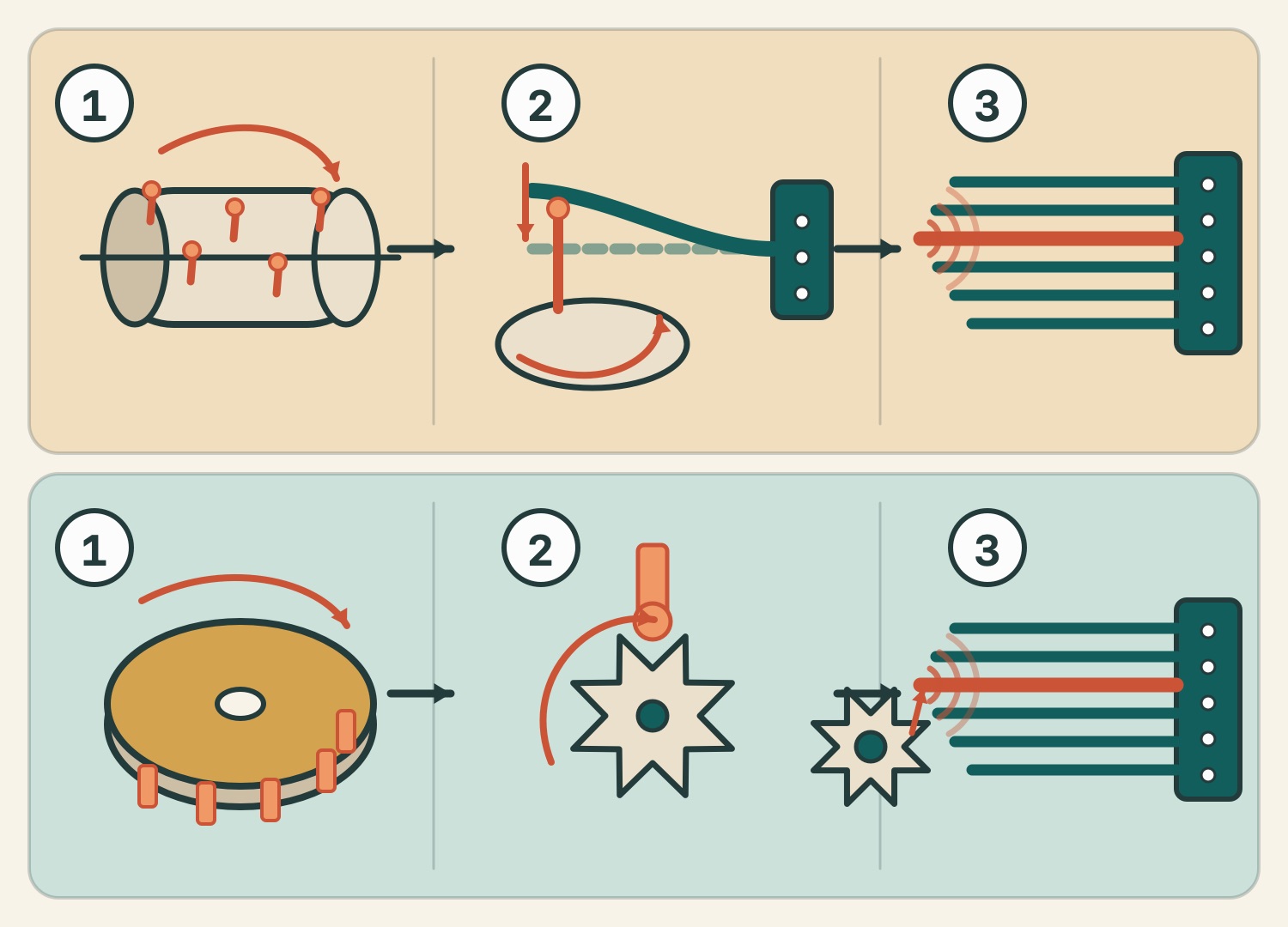
Inside a music box, one part determines which note plays and when, while another part vibrates to produce the sound. In a typical cylinder mechanism, pins arranged on a rotating cylinder pluck the metal teeth directly. In a disc mechanism that uses star wheels, projections on the underside of the disc turn small star-shaped wheels, which then pluck the teeth.
Both mechanisms produce sound through the vibration of metal teeth. To make the difference clear, the diagram divides the path from projection to tooth into three stages. We will also look at the exterior of a small music box made around 1820 and records from the period when owners gained ways to change the music.
What the mainspring turns and what actually makes the sound
In a common spring-driven mechanism, winding the key stores energy in a spring. As the spring unwinds, gears transfer that force to turn the cylinder or disc. The placement of each projection on the rotating part determines which tooth it reaches and when. After a full turn, the same pins or projections come around and can play the same sequence again.
The sound comes from the teeth of the comb. This row of metal resembles a comb, with each tooth fixed at the base and free to move at the tip. When a pushed tip is released, the tooth vibrates rapidly. Each tooth is tuned to a different pitch, so changing the order in which the teeth are plucked changes the melody.
Follow the cylinder and disc mechanisms from 1 to 3
In the top row, pins arranged on the surface of the cylinder approach the row of teeth as the cylinder turns. A pin's position along the cylinder's axis corresponds to the tooth it will pluck. The spacing around the circumference changes the moment when that tooth is plucked. If two pins pass the same axial position with only a short gap between them, the same pitch sounds twice in succession.
In the bottom row, small projections on the underside of the disc pass the star wheels as the disc rotates. When a projection turns a star-shaped wheel by one step, the tip of the wheel plucks the matching comb tooth. The distance from the center determines which wheel a projection reaches, while the spacing of projections along the direction of rotation determines the interval before the next note.
The mechanism presented in 1796 and a small object from around 1820
In 1796, the Geneva watchmaker Antoine Favre presented an automatic musical mechanism that used tuned metal teeth. Small musical mechanisms were also placed inside watches, rings, and snuffboxes. Music could therefore come from objects other than the familiar box that opens for listening.
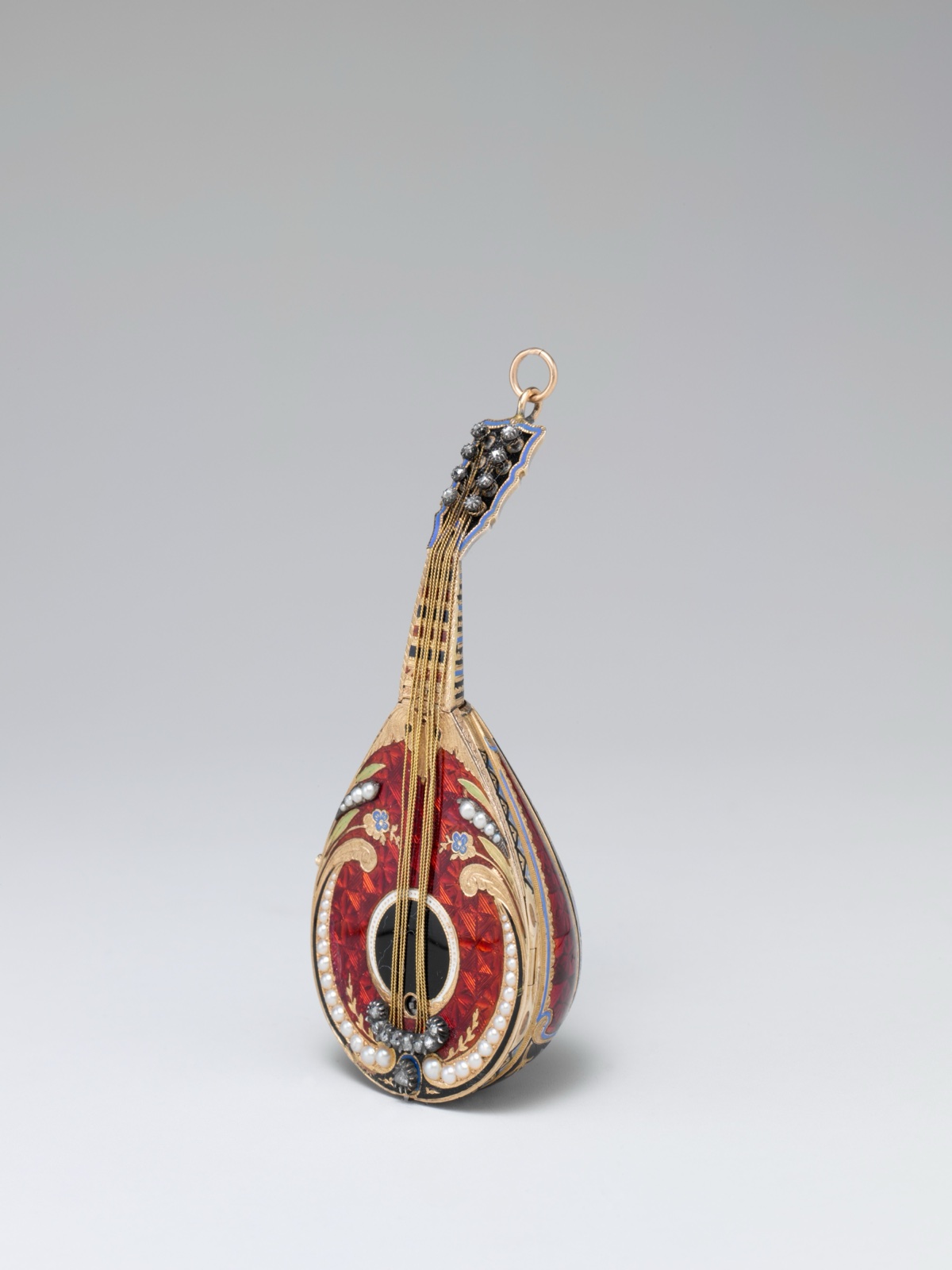
The museum dates this approximately 7 cm long object to around 1820 and identifies it as Swiss. It is a music box shaped like a mandolin, with a slender neck and a rounded body. The mechanism diagram above shows representative examples of two systems, while this photograph shows the exterior of the museum object.
By the late 19th century, both discs and cylinders could offer different tunes
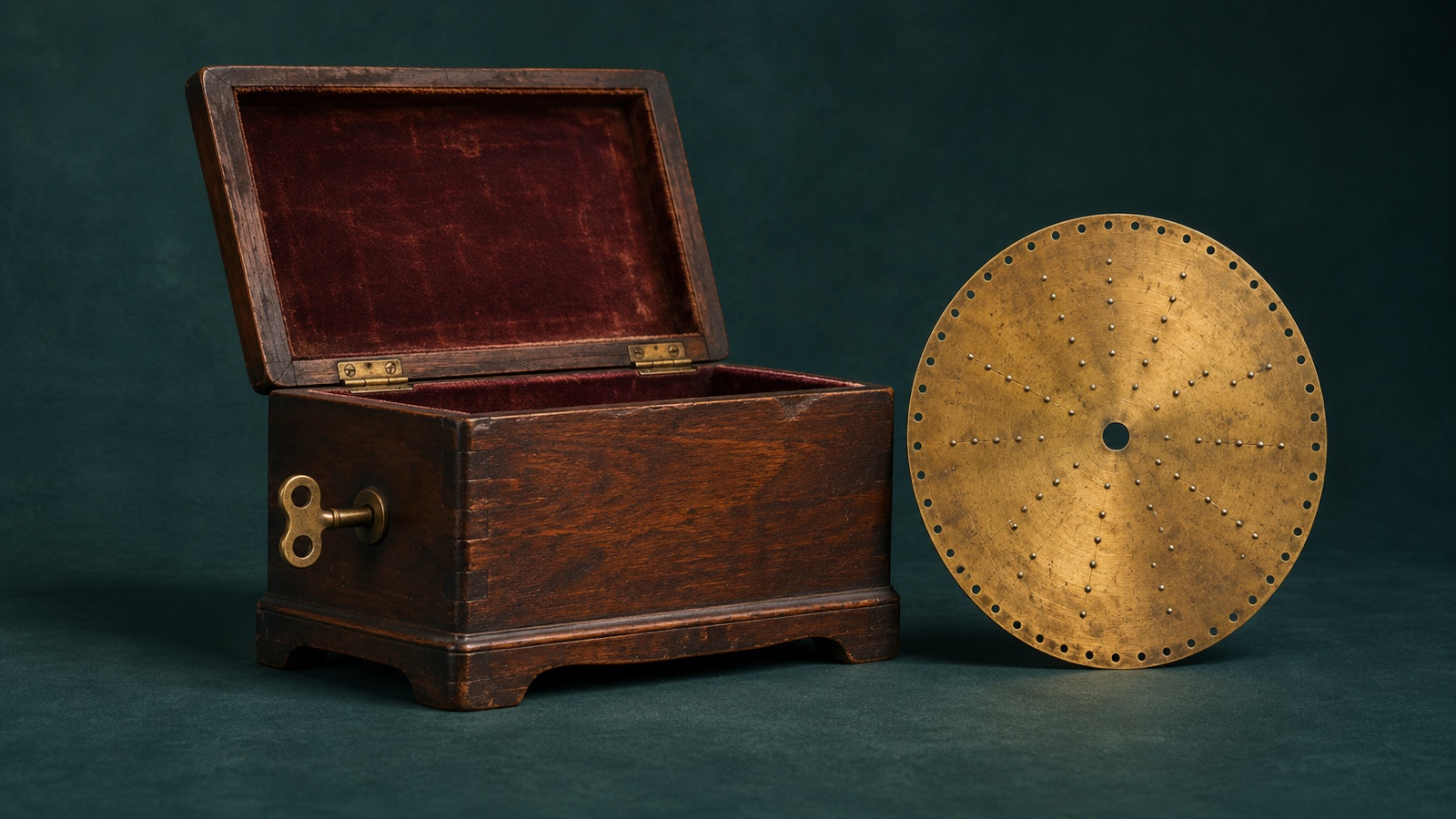
By the late 19th century, music boxes appeared in which owners could change the disc to play another tune. Amgueddfa Cymru – Museum Wales preserves a small disc-playing music box made in the late 19th century together with 18 discs. With additional discs, the same comb in the machine could play different tunes.
Cylinder mechanisms also gained ways to expand the choice of music. Some machines shifted the cylinder slightly sideways to use another row of pins, while others allowed the entire cylinder to be replaced. Even during the period when discs were becoming widespread, a catalogue from 1893 featured music boxes with interchangeable cylinders.
Compare two background tracks with a music box melody
The next two examples are modern background tracks that use a music box sound for the main melody. “Almost Out of Reach Now” (4:08) suits a scene that lingers on an old photograph before moving to the next shot. Follow the melody at the beginning and consider how long you want to hold the same image after each note sounds.
“A Summer That Ended” (3:33) is in triple meter. For example, try counting 1, 2, 3 as you decide when to move from one summer snapshot to the next. Even within a flashback, comparing a track that leaves more space for each photograph with one that moves the scene forward on a regular beat can make the choice easier.
Check the terms for both tracks before using them in videos or streams
The two arcalune tracks introduced here are royalty-free materials that allow commercial use without credit, and both can be downloaded free from their track pages. You may not redistribute or sell the material on its own, or use it as training material for AI. Before publishing a video or stream, check the usage guide and each track page for the latest terms.
- 1
Two Music Box BGM Tracks for Flashback Scenes
Compare a track that lets each photo linger with one that gives you a three-beat rhythm for changing images.
These sounds from arcalune
FAQ
- How does a music box produce sound?
It plucks metal teeth that are fixed at the base, and the released tips vibrate to produce sound. The placement of pins on a cylinder or projections on a disc determines which tooth is plucked and when.
- What is the difference between cylinder and disc music boxes?
In a typical cylinder mechanism, pins on the rotating cylinder pluck the comb teeth directly. In a disc mechanism that uses star wheels, projections under the disc turn those wheels, and the wheels pluck the comb teeth.
- Can the tunes in a music box be changed?
In machines that use interchangeable discs, changing the disc changes the tune. Some cylinder music boxes select another tune by shifting the cylinder sideways, while others allow the entire cylinder to be replaced.
- Can I use the featured music box background music in monetized videos?
The two tracks in this article allow commercial use and do not require credit. You may not redistribute or sell the material on its own, or use it for AI training. Check the track pages and usage guide before use.