
Royalty-Free Music for Mystery Videos | 3 Tracks
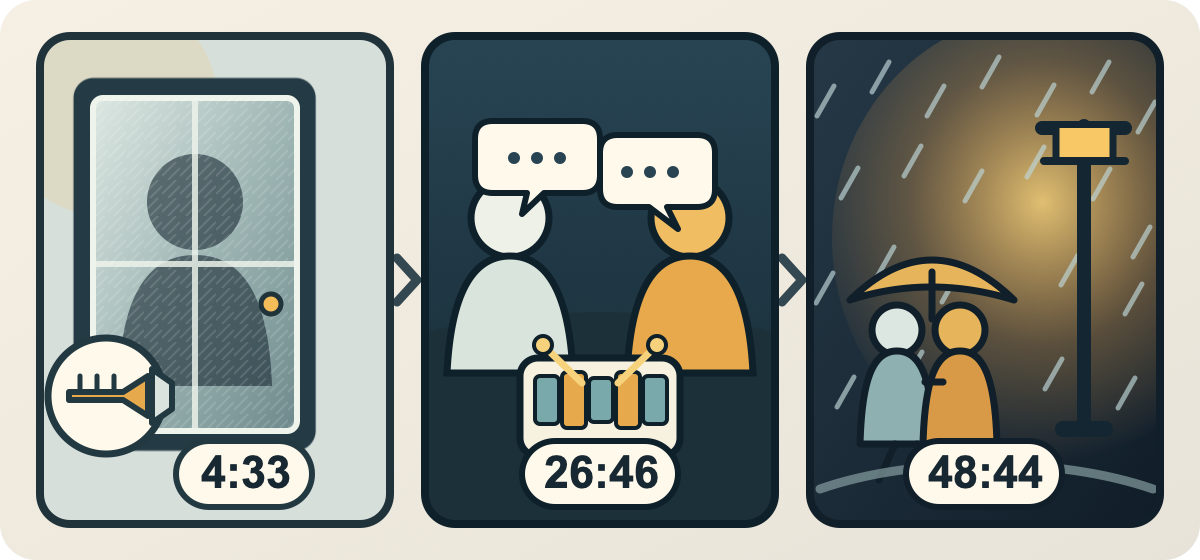
Give music a different job in each scene. Leave a question open at the start, make the clue easy to hear during questioning, and give the audience a moment to take in the ending. Try muted trumpet for a shadow behind a door, vibraphone for a conversation across a counter, and a warm ballad after the case is solved.
We selected three tracks from one official YouTube video that tells the same story. Listen from the start of each track while considering where to bring the music into your video and how to adjust it around dialogue. Each track page provides the download and current usage terms.
Give the music a different role in each scene
At the start, you can show a shadow behind a door and keep the visitor’s identity a mystery. In the conversation, make sure the line with the clue comes through clearly. After the reveal, let the final line finish before bringing the music in.
Place the dialogue and BGM on separate tracks in your editor. Make one version that lowers the BGM only during the line containing the clue and another that removes the BGM from that passage, then compare whether the same sentence remains clear.
If you want footsteps or a door sound to carry the scene and keep the fear going until just before the figure is revealed, the article on BGM for horror and ghost-story videos offers a different editing example.
Use “A Shadow at the Door” for tension at the opening
“A Shadow at the Door” runs for 4 minutes 14 seconds. Its public description pairs muted trumpet with a scene in which a client's shadow appears on an office door. You can hear it from 4:33 in the official YouTube video.
For example, let the music play under the door and shadow for the first four seconds of your edit. Lower the BGM just before the client begins speaking so the audience can hear the name and the first sentence of the request. Showing the door once more before the cut lets you move to the next scene without revealing the person's identity.
Use “The Barkeep Talks” for a clue-gathering conversation
“The Barkeep Talks” runs for exactly 4 minutes. Its public description pairs light jazz led by a buoyant vibraphone with a scene in which a clue is whispered across the counter. You can hear it from 26:46 in the official YouTube video.
Before the conversation begins, let viewers see the counter or the characters' hands for two or three seconds while the vibraphone is audible. Lower the BGM when a name or time that matters to the clue is spoken. Once the decisive line has ended, hold on the other person's reaction for about one second before cutting to the next scene. Bringing the music back during that moment gives both the line and the reaction their own space.
Use “Reunion in the Rain” for reflection after the resolution
“Reunion in the Rain” runs for 4 minutes 30 seconds. According to its public description, it is a ballad for a scene in which the client and singer embrace beneath a streetlight in the rain, with a modulation near the end. You can hear it from 48:44 in the official YouTube video.
After the line that reveals the answer to the case, leave about one second of space before bringing in the music. Pairing it with two people walking along a rainy street or with a door closing gives viewers time to reflect on the ending. If your end card still includes speech, try placing the sentence that explains the answer before the music and letting a short farewell be heard over it.
Royalty-free music and commercial use
The three featured tracks are royalty-free BGM available to download at no cost. Within the material usage guide, they can be used commercially and in monetized videos and streams. There is no per-use royalty, and credit is optional. Redistributing or selling the audio files on their own and using them for AI training are prohibited. Before using a track, check its page and the material usage guide for the latest terms.
Use the timestamped links to preview the tracks on the official YouTube video, which continues after each track. Download the audio for editing from the individual track pages.
References
- 1
Music for the opening, the questioning and the resolution
Listen in story order, from the first hint through the conversation to the scene after the reveal.
These sounds from arcalune
Try “A Shadow at the Door” when you want the opening to leave a question, “The Barkeep Talks” when the audience needs to hear a clue in conversation, and “Reunion in the Rain” for images that look back on the ending. Try lowering the music just before the line, cutting it during the line or bringing it back afterward. Use the same footage to hear which version keeps the words clear and suits the scene.
FAQ
- Which scene should I start with when choosing BGM for a mystery video?
Divide the video into the sense of a presence at the opening, a conversation that reveals a clue, and the lingering mood after the resolution. Start by deciding on one piece of information to emphasize, then change how the music enters depending on whether that information is dialogue or an image such as an expression or a door.
- Can BGM play under dialogue that contains a clue?
Lower the BGM just before the clue-bearing line and give the voice priority until that sentence ends. Compare a version with the BGM lowered against one with it removed, and check on a phone speaker whether the name or time can still be understood.
- How should I use BGM differently in mystery and horror videos?
In a mystery scene that communicates a clue, adjust the BGM so the dialogue remains clear. In a horror scene where a sound matters, you can lower the music before footsteps or a door sound. Choose according to the scene you want viewers to see and the sound you want them to hear.
- Can I use the three featured tracks in monetized videos?
Yes. Within the material usage guide, they can be used commercially and in monetized videos and streams. They are free to download, and credit is optional. Redistributing or selling the audio files on their own and using them for AI training are prohibited. Check the latest terms before use.